Keep an eye out for redwings this winter
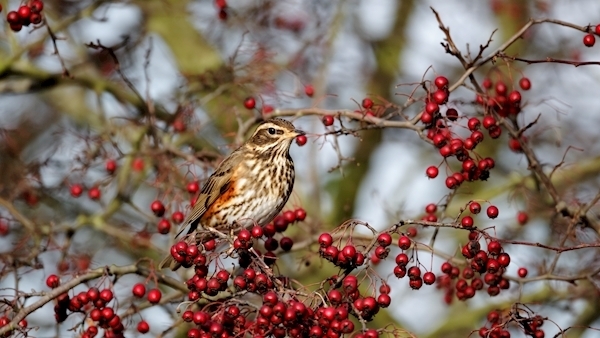
We hear a lot about the geese, ducks and swans that arrive here from colder climes for the winter, but much less about smaller birds that come here to escape harsher conditions in northern Europe.
Last week, while in a line of stopped traffic between Rathkeale and Adare, Co Limerick, I spotted some feeding activity in roadside hedges. The energetic birds were hopping from branch to branch and flying hither and thither, barely stopping for a second. On closer observation, they turned out to be redwings feasting on berries.
Birdwatch says redwings have already been recorded in many parts of the country this winter and they’ve come from Iceland, the Faroe Islands and northern Scandinavia. The redwing is a member of the thrush family. They migrate at night and the first birds in Ireland this year were reported from Tory Island, Co Donegal, on September 30.
Something peculiar is that, in winter, we have more redwing in Ireland than their better-known cousins, the resident song thrush or mistle thrush species. Surveys have recorded the redwing in 96% of the country.
Yet, many people are still unfamiliar with them. About the size of a song thrush, they have standout distinguishing features, notably creamy markings above and below the eye. And their red patches underwing become obvious when they’re in flight.
By now, the busy and sometimes noisy redwing should be obvious around the countryside. They tend to travel and feed in flocks. They eat berries and fruit in hedges and orchards when they first arrive in the autumn and move to feeding on worms and insects in fields as the winter goes on, all part of nature’s pattern whereby millions of birds annually migrate all over the globe. Moving from colder to warmer areas, they can find food to see them through the winter before they return home to breed.
People taking part in BirdWatch’s Irish Garden Bird Survey, this winter, are being asked to record the numbers of sick birds they see. Last year’s results showed that greenfinches fell to their lowest ever numbers as a result of finch trichomoniasis, a parasitic infection that kills infected birds.
Symptoms include fluffed up feathers, difficulty swallowing food with food sometimes stuck to their beaks, and an unusual reluctance to fly away when disturbed.
In the 1990s and early 2000s, greenfinches were recorded in around 90% of gardens each winter, but their numbers have plummeted and fewer than 60% of gardens had greenfinches last winter. According to Birdwatch, the parasite poses no threat to humans or other mammals, including cats, dogs, horses, cattle and sheep, and is strictly a bird disease.
The garden survey, meanwhile, continues until the end of February.
CONNECT WITH US TODAY



Be the first to know the latest news and updates