Snake’s bite much worse in deprived regions
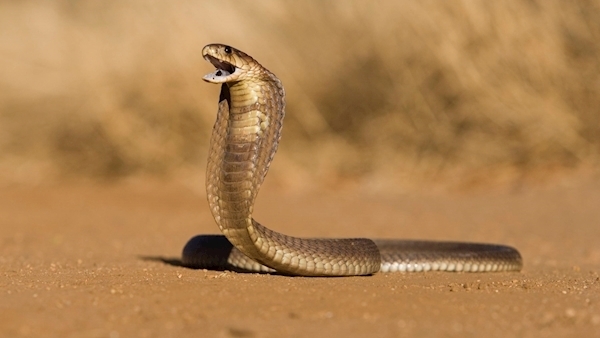
September19 was Snakebite Awareness Day, an initiative of the World Health Organisation (WHO). Each year, according to Médecins Sans Frontières, 5.4m people are bitten by snakes, with up to 2.7m incapacitated.

Snake’s bite much worse in deprived regions

September 19 was Snakebite Awareness Day, an initiative of the World Health Organisation (WHO). Each year, according to Médecins Sans Frontières, 5.4m people are bitten by snakes, with up to 2.7m incapacitated.

“Envenoming”, it claims, is “one of the most neglected tropical diseases”.

The WHO wants to halve these numbers by 2030.

People living in rich countries, where antivenom is readily available, have less to fear from close encounters of the serpent kind. Europe and North America report the lowest casualty figures, while snakebite fatalities are rare in Australia, which has some of the world’s most lethal stingers.

Clearly, the presence of poisonous snakes is not, in itself, the crucial risk factor.

Deprived areas of Sub-Saharan Africa and South Asia have a major problem. Subsistence farm workers, living in poorly built hovels, are most at risk and children playing in deprived rural areas are especially vulnerable.

Almost three million biting incidents are recorded in India each year, and 50,000 victims die. Most snakes, however, are harmless. Of the world’s 3,500 species, around 600 are venomous, only a handful of which can deliver life-threatening bites.

Envenoming is part of the snake’s digestive process. Having bitten its victim, the snake waits for the poison to take effect. Lacking teeth, it can’t chew, so the paralysed creature is swallowed whole, the process of breaking down the body already under way.

This is the reptilian equivalent of cooking, our own unique method of food preparation. Chemical weapons have a long evolutionary history. They began, presumably, as a defensive defensive measure.

Plants developed toxins to upset the tummies of creatures eating their seeds; forests are not peaceful places, they are battlefields. The fungal kingdom is also in on the act; all mushrooms are edible but some can only be eaten once!

The Cold War doctrine of Mutually Assured Destruction (MAD) comes to mind. But a nuclear deterrent is useless unless you let your enemies know you have it. “You mess with me at your peril” proclaims the brightly coloured attire of social wasps and poison-dart frogs.

Box-jellyfish, scorpions, spiders, centipedes, even a species of octopus, are members of the chemical weapons club.

Few mammals have gone down the poison road, but one of the most primitive, the platypus, has sharp spurs and venom-producing glands on its hind legs. Rival males are paralysed temporarily when stung.

Poison may have evolved for defence but some creatures use it offensively, to hunt and harvest prey.

Thanks to St Patrick, we don’t have to worry about snakes in Ireland. Lion’s-mane jellyfish, social bees, midges, mosquitoes, and the recently arrived false widow spider cause us grief but the nearest equivalents of poisonous snakes here are the social wasps.

Thankfully, their stings are seldom fatal. Just now, the last of this year’s ones are dying.

“They do not go gentle into that good night” and as they “rage rage at the dying of the light”, condemned wasps will sting at the slightest provocation.

Queen wasps avoid the autumn death sentence; they survive the winter. Each one seeks out a safe sheltered place in which to hibernate.

A folded curtain, clothes hanging in a wardrobe or placed neatly in a drawer will sometimes be chosen, with painful consequences for an unwitting householder who disturbs the squatter.

More in this section

Revoiced

Newsletter

Sign up to the best reads of the week from irishexaminer.com selected just for you.

Cookie Policy Privacy Policy Brand Safety FAQ Help Contact Us Terms and Conditions

© Examiner Echo Group Limited