Flying fins provide a special treat for watchers
WEST Cork offers marvellous whale-watching just now. Heading out past the Stags last week, our boat was soon surrounded by playful common dolphins. The colourful frolickers rode the bow wave, daring the boat to bear down on them and delighting the children on board.

Flying fins provide a special treat for watchers

WEST Cork offers marvellous whale-watching just now. Heading out past the Stags last week, our boat was soon surrounded by playful common dolphins. The colourful frolickers rode the bow wave, daring the boat to bear down on them and delighting the children on board.

Why do these marine revellers suspend hunting to squander their hard-one energy playing? Isn’t chasing great whales more fun, and far more productive, than following boats? “It is little he knows about the sea,” declares Maurya in Synge’s famous play and it is little we know about cetaceans.

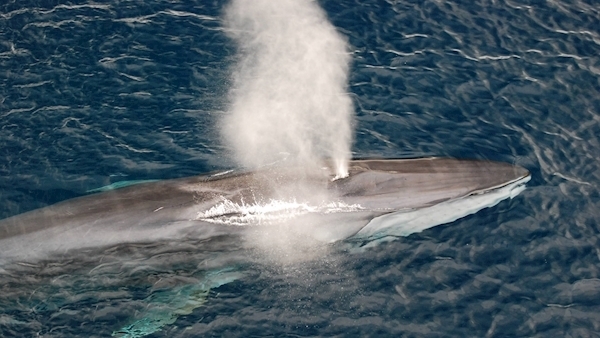
There are humpbacks and minkes off Cork but the celebrity, during our visit, was the fin whale. Finding one in the vastness of the ocean is a huge challenge but skipper Colin Barnes soon located several of them; passage-migrants feeding on their journey southwards from the cold food-rich sub-Arctic to warmer waters, which newborn calves can tolerate in winter.

The first sign of a great whale’s presence is the ‘blow’; a jet of steamy air shot vertically as the creature surfaces. There are about four ‘blows’ as the whale hyper-ventilates, saturating its blood with oxygen. Then the creature becomes visible as it rolls to plunge back into the depths.

Fin whales feature in television documentaries, but nothing prepares you for a real-life encounter with these giants in the wild. That something the size of a small airliner is actually a living breathing mammal is hard to credit. The long streamlined body, black on top, has a little dorsal fin positioned far to the rear; what function can it possibly serve?

The right side of a fin whale’s mouth is whitish, the left side is black. Approaching a shoal of fish or krill at up to 35km per hour, the hunter rolls to the right, opening its huge jaws with a loud bang. The black left jaw, looming above, adds to the terror. The victims flee downwards towards the pale light-resembling lower jaw into the yawning cavern. The jaws close and the water is expelled through the baleen filter. About a tonne of food is trapped inside each day. There can be up to 900 ‘plates’, made of the finger-nail material keratin, in a baleen. Corsets were fashioned from them.

According to Colin, the fin whale was so named by whalers because its dorsal fin was more prominent than a blue whale’s one. The blue, the largest animal ever to have lived, also migrates off Ireland, but much further out to sea. One killed by whalers in 1909 was 33 metres long and estimated to have weighed about 190 tonnes.

Fins and blues are so closely related they occasionally interbreed. The offspring of these unions are usually infertile but a hybrid cow, killed by Icelandic whalers in 1986, turned out to be pregnant.

Fins and blues were too fast for the old sail-driven whaling ships. That all changed with the arrival of steam-power and explosive harpoons. The great whales were driven to the brink of extinction.

The fins have recovered slowly from the slaughter but, oddly for so similar a species, the blues have not. The global fin population ranges from 100,000 to 120,000 individuals. There are only 10,000 to 25,000 blues. This might explain why interbreeding occurs. With so few blue whales left, some can’t find partners and mate with fins instead?

x

More in this section

Revoiced

Newsletter

Sign up to the best reads of the week from irishexaminer.com selected just for you.

Cookie Policy Privacy Policy Brand Safety FAQ Help Contact Us Terms and Conditions

© Examiner Echo Group Limited