Watch for dragonfly survey
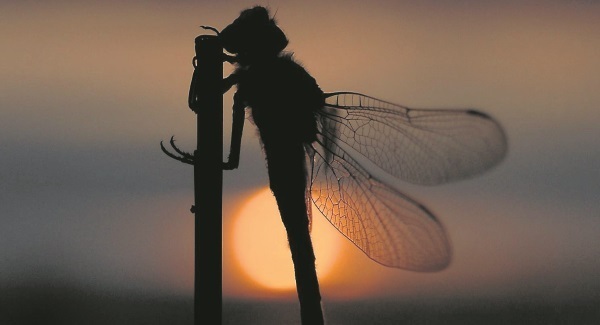
A bit like butterflies, dragonflies and damselflies are creatures of summer, reminders of warm, sunny days in the outdoors. We see them around ponds and streams and they can be a good indicator of clean water.
Like many other forms of wildlife they too are in decline due mainly to the loss of their natural habitat likes bogs and wetlands as well as water pollution.
We have 28 species in Ireland, all beautiful. For some strange reason, they are associated in folklore with Lucifer, with some in England having weird names like the Devil’s Darning Needle and the Devil’s Riding Horse. Let’s not damn them on that account, however, for they can be most useful in a garden. Think of cat versus mouse.
People interested in the outdoors are being asked by the National Biodiversity Data Centre to take part in an all-Ireland survey of dragonflies and damselflies as part of an Environmental Protection Agency-funded citizen science project, Dragonfly Ireland 2019 to 2024.
People can report their sightings via the biodiversityireland.ie website or using the National Biodiversity App.
The project is also seeking volunteer citizen scientists to survey their local river, stream, lake, or bog for dragonflies and damselflies and to conduct a short assessment of habitat quality at their chosen survey site.
The last countrywide atlas was published almost 20 years ago, so this is a timely project.
While their colours are sometimes similar to butterflies, these are quite different with long, slender bodies, big heads, four wings, protruding eyes. Dragonflies are larger, acrobatic, and like attention, while damselflies are small, dainty, and fly short distances.
Their eggs hatch into a brown nymph which can spend upwards of four years in water before emerging as a colourful adult, after which most live for only a few months.
They prefer sheltered ponds with few, if any, predator fish. Unlike butterflies, which feed mainly on nectar, they eat other insects.
The biggest dragonfly in Ireland is the emperor and the rarest here is the moorland emerald which, according to the Enfo wildlife website, is confined to Killarney National Park where it breeds in shallow pools and is seen but occasionally.
National Biodiversity Data Centre director Liam Lysaght says dragonflies need warm temperatures to survive and some species are expanding northwards in response to global warming.
“They are therefore a very good candidate for use as bio-indicators to monitor the impacts of climate change on our environment,” he says.
Dragonflies can consume copious numbers of other insects each day.
CONNECT WITH US TODAY



Be the first to know the latest news and updates