In the pink for April: Top tips for planting flowers in spring
has advice on planting flowers that come into their own at this time of year.
NEXT week is April and before we know it summer bedding plants will start to appear on the shelves of garden centres and stores throughout the country. The garden takes off from now and everything begins to happen at once until it all begins to slow down again during the fall of the year.
The spring season can be very definitely split into two parts. Early spring brings promise and just a bit of flower to the garden when we get to admire snowdrops, crocus, winter aconites, and the end of the winter perennials such as the Christmas rose during the biting cold days beneath naked trees.
Late spring, on the other hand, merges seamlessly into summer, and there is much more happening in the garden. As the temperatures begin on their upward trajectory and daylight becomes more plentiful, so too growth increases, the trees get dressed once more, and many plants which slept during the winter are only now rousing and embracing the new growing season.
Before I even think of the long balmy evenings and summer bedding plants, I want to enjoy late spring and the flowers which come with it. There is such beauty in the garden at this time of the year and everything is fresh and new once more. The cherry blossoms are doing their thing, in particular, the stunning white-flowered Prunus Tai Haku. Magnolias are all but finished. So too the yellow-flowering forsythia.
The blooms of all these plants pass so quickly that if you don’t stop, or if you forget to enjoy and appreciate them, they are gone. That’s one of the things about this gardening lark and the great outdoors in general — everything is transient, changing constantly, reminding us too of our own transience.
If patience is a virtue, then we gardeners must be a most virtuous lot, for it is the one thing that is needed in spades (pun intended) in the garden.
We wait all year for that magnolia or Prunus to flower and then, once it does, it’s all over in the blink of an eye and we look forward once more to next year.
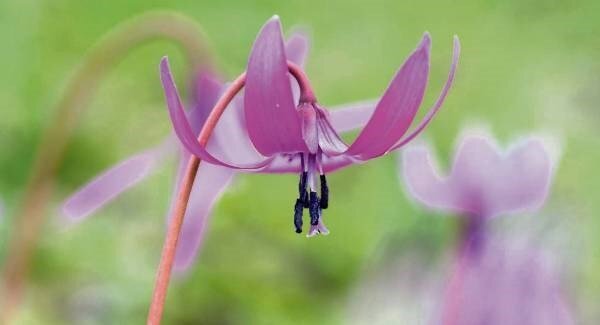
Several years ago, on a visit to what was at the time, Helen Dillon’s garden on Sandford Road in Ranelagh, she very kindly allowed me to pinch a bit of a particular Erythronium which I had admired. To put it more informally, “I was weak for it”.
I am enjoying that same Erythronium now several years later as it has clumped up to quite a decent-sized plant, seemingly very happy with the Cork soil with which I have provided it, and the location, underneath a Japanese maple where I planted it.
In my head, I thought its pale pink, nearly white flowers would complement the foliage of the Acer palmatum dissectum Crimson Princess which is growing above it, but the garden has its own plan and the flowers finish before the leaves emerge from the Acer.
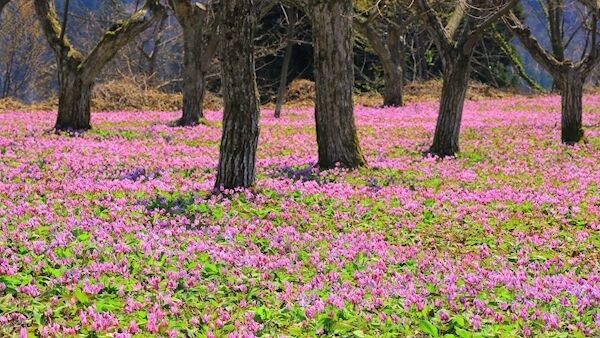
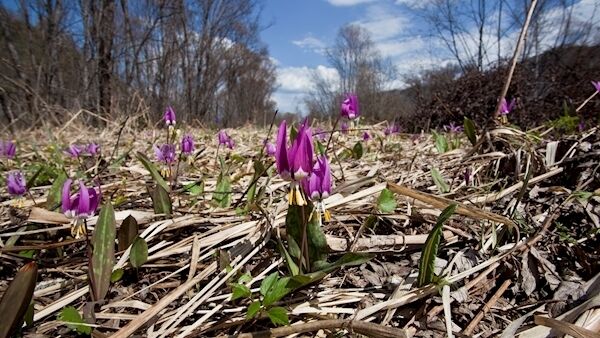
Erythroniums, also known as dog’s tooth violet and trout lily, are a very under-used and appreciated plant. They are easy to grow and, like most plants, provided you give them the correct growing conditions, they will thrive and develop into good-sized clumps relatively quickly.
Under the shade of a deciduous tree where not much else might grow will suit them, for they like the high levels of light and moisture which is available to them during the winter and spring, before the tree comes back into leaf once more, by which time the Erythronium is grateful for the shade given to it during the summer months.
They are related to the lily, being from the same family, Liliaceae, and with their reflexed petals, they are very evocative of the Martagon lilies, though substantially smaller in height.
I’m not certain which cultivar is growing in my garden, and the serious gardeners amongst us would give out to me for not having an accurate record. But, for me, in the garden, it’s not all about names. If I like it, I’ll grow it, even if I don’t know what it is. However, I think I have identified it as Erythronium revolutum Kinfauns Pink after a quick search online.
You may not find that particular variety too easy to source but in truth I wouldn’t worry, for many of them are widely available and they are all worth growing. E Pagoda is one of the most well-known, and is a very free-flowering yellow form. Producing flower stems a bit taller than most, it will get to about 40cm in height.
E White Beauty is another easy-to-source cultivar with white flowers. And if it’s pink you’re after then look no further than the species form E. dens-canis from where the common ‘dog’s tooth’ name comes.


CONNECT WITH US TODAY



Be the first to know the latest news and updates