Islands of Ireland: Death of a chieftain at Lough Hyne
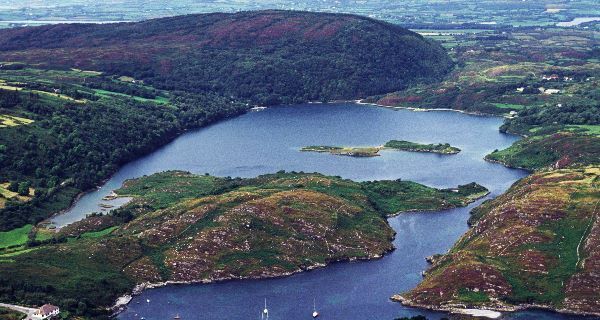
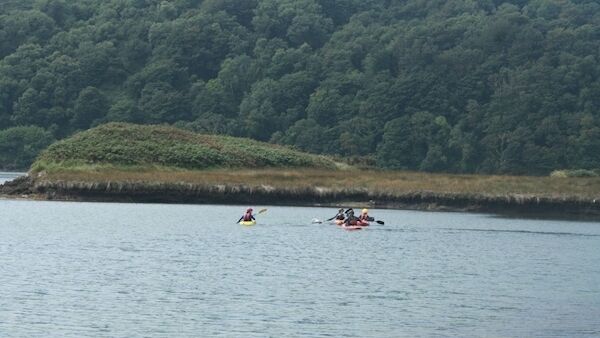
Perspective. From a kayak in front of Castle Island in the famous waters of Lough Hyne, West Cork, the ruins of a castle are evident, writes
Barely. The two-storey crumbling structure is swaddled in ivy and festooned with furze.
Nearby is a channel, the exit from one of only three saltwater lakes in the country.
From the lofty 197m of the adjacent Knockomagh hill, (which possesses an extremely beautiful forest walk popular with generations of locals), the majesty of the island castle location is much more apparent.
That channel is the famous rapids where the turning tide allows incoming boats just once a day and which provided a natural defensive feature for the castle.
The owner of the castle was Fineen O’Driscoll, whose clan owned many such tower houses dotted around the coast of West Cork.
Fineen was declared chieftain of the O’Driscolls in 1537 but prior to that the clan had controlled virtually all seafaring activity for several hundred years in the area
They were paid six shillings per barrel of fish in an area which was teeming with fishing vessels.
Fineen’s inauguration took place at a time of intense resistance to English rule and the Desmond rebellion saw a scorched earth policy from the lord deputy Sir Philip Sidney.
When the rebellion was quashed Fineen went to parley with Sidney and under a system known as ‘surrender and regrant’ was able to retrieve his lands and gain the English title ‘sir’.
However, Fineen’s participation in the rebellion severely over-stretched his means and the O’Driscoll realm dwindled till Fineen retreated to live at Lough Hyne in “great and decrepide age” and in a state of “disabilite and wante of means”.
The cover illustration on Terri Kearney’s authoritative study of Lough Hyne, Lough Hyne: From Prehistory to Present by Peter Murray, depicts a fine solid castle with a small ship moored alongside it.
Beautiful Lough Hyne, West #Cork pic.twitter.com/l3exdoRkk0
— Margaret O'Connell🌻 (@MargaretOC6) September 30, 2018
The two or so acres is cleared. The lake is calm and the surrounding hills of Knockomagh covered with oaks, beeches, ash and holly.
It is a scene pretty much identical with today’s view, apart from the overgrown castle walls. From the top of Knockomagh it looks like there are two islands in the lough but on closer inspection a very short isthmus of a pebble beach can be seen.
One of the most famous tales of Irish folklore has its origins at this island. In the mists of time an O’Driscoll chieftain was said to have donkey’s ears and rather than reveal his secret and risk the ridicule of his people he grew his hair long and kept the ears hidden.
When eventually he had his hair cut the barber was put to death and so the story ended. Or so it didn’t. The unfortunate barber’s body was cast into the lake and reeds grew at the site.
Time, having nothing else to do, passed. A celebration took place on the island and musicians were called to entertain the chieftain.
Requiring a new reed for his flute, one of the musicians ventured to the water’s edge and plucked a reed for his instrument.
He returned to play for the king’s pleasure only for the flute to burst into life and sing out “the king has donkey’s ears, the king has donkey’s ears”.
Like all folktales, there are different versions of the Lough Hyne myth.
This one may have originated in Leinster about a king called Labhraidh Loingseach but variations on the theme can be found in many cultures.
In Ancient Greece King Midas was so punished by the god Apollo, and the tale is even found in Somalia.
A significant Viking artefact was found on the island in 2002 by Colin Barnes. The minute stick-pin was used as a cloak fastener and is proof of Viking activity in the area if not of an actual landing on Castle Island.
Kearney speculates that “we could assume that the O’Driscolls as overlords of West Cork would have engaged with the Vikings”.
With his choice of Lough Hyne as a retreat, Fineen O’Driscoll, ‘decripide’ as he was, can be said to have had impeccable taste.
www.atlanticseakayaking.com
www.skibbheritage.com


CONNECT WITH US TODAY



Be the first to know the latest news and updates