Damien Enright: Happily 'Ron' knows nothing of danger we have put him in
Carbon in the atmosphere is creating climate change. We all know this, writes .
The effects are a kind of bleeding, a draining away of the planet’s life blood.
Every day, an unknown number of plant, animal, bird, fish, reptile, amphibian and insect species disappears from the flora and fauna that make this world an ideal habitat for mankind.
As they disappear, the habitat is diminished for those who come after us, and their struggle for survival will be the harder.
We must do something about this. Our fate is in our own hands.
As we dither, the raw material that supports our own survival is also diminished, the natural wealth of crops, water, air, weather we were born to.
A lot of what we still assume to be extant is, in reality, already past tense. Things that were common in my childhood are now rare or non-existent.
I see this by simply lifting stones in the shallow flow of a small stream that enters the sea below my home in west Cork.
Once, I found, under every second stone, a small eel, and penny-sized sand dabs shot from under my feet in a flurry of sand.
They aren’t there anymore. Simple as that. They’re gone.
One assumes they’d been there for hundreds of thousands of years, playing their role in the evolved and evolving master-plan of the role played by the Earth’s oceans.
‘Same old, same old...’; they first lived in the nursery of the stream, then went deeper, whether up river or to the sea, spawned and delivered a new crop to the stream.
But now, over the short space of the quarter century I’ve lived here, they’re gone.
The pretty, red-bellied, iridescent-blue-flanked sticklebacks in a marshy stream crossing a beach on the other side of the bay are gone too.
Why?, I ask.
Chemicals leeching off the land poisoning the water? A rise in the temperature in the water? Some fall-out from the sky? All or none of these.
But, for sure, behind the disappearances will be the hand of Man, the sharers of the planet, the apex species who, at a tipping point, some 250 years ago, first innocently, then deliberately, withdrew from fellowship with the land, air and waters of the heavenly body that supported them and all life.
An influential and powerful sector of humankind abdicated responsibility for the environment’s wellbeing and plundered it with no thought for the consequences, only to make themselves better fed and more comfortable. They are still doing this, every day, everywhere on earth.

It’s human nature, we say, as if it’s an unstoppable instinct, as if it’s a seed sown in our humanness, a cancer that began to grow once we found the means and methods to exploit the earth beneath our feet and the air around us, a malignant growth that cannot be eradicated, never mind that it destroys the very body that feeds it.
Need we accept that we are in thrall of this self-destructive sickness in our nature? But the destruction seems so enormous as to be immune to any action you and I, as individuals, might take.
Group action is the only hope.
I am heartened by Friends of the Irish Environment’s Climate Case Ireland (CCI) action against government’s failings scheduled to be heard at the High Court on January 22.
Over 9,000 people support the FIE demand that our government urgently pursues more vigorous climate and environment remedial action.
In the words of CCI spokeswoman Sadhbh O’Neill: government shortcomings are “knowingly contributing to dangerous levels of climate change”, thereby breaching the Irish Constitution and citizens’ human rights.
Costs are being crowdfunded. The government denies its failings and will robustly fight the case.
An Irish Wildlife Trust survey finds over one third of Ireland’s flora and fauna species at risk of extinction. Forty eight species living in the Irish marine environment, including fish, crustaceans, shellfish and invertebrates are at risk according to a new Irish Wildlife Trust (IWT) report.
While the eels and sand dabs are gone from the stream, for some creatures our local West Cork world is still “a place near heaven”, as I dubbed it on a book cover 15 years ago.
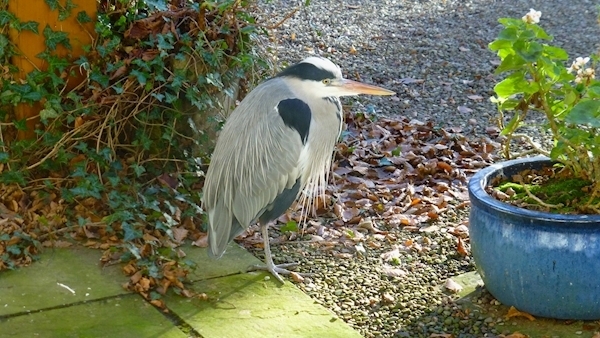
The heron that frequents our yard and the raven pair that annually refurbish their nest on the nearby cliffs are busy preparing for a new generation.
‘Ron’ collects sticks for the nest his new mate will build 80ft up a tree. He goes missing for days at a time, no doubt courting.
The long-bonded raven couple sit on field posts above their nest site as if guarding it.
It’s almost spring, and there’s hope, as always. Happily for them, they know nothing of the danger we have put them in.