Visit to a seafood stall recalls warning ‘here be krakens’
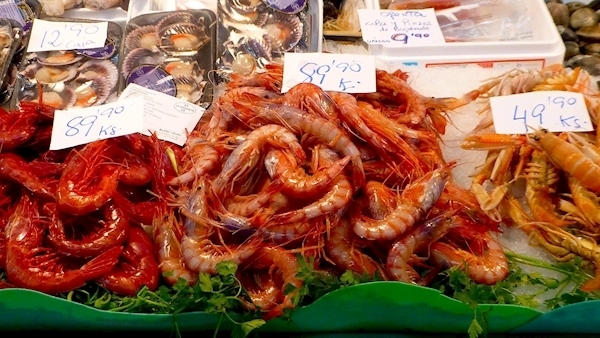
My wife says that fish costs twice as much here in Ibiza as it does in Ireland. Ibiza, readers will know, is also surrounded by the sea.
However, in the town fish market, a resplendent and fascinating venue, hake costs €25 to €28 per kilo. In West Cork, it costs half that.
How can this be? Transport costs?
“Does the hake come from Ireland?” I ask the burly fishmonger. “Do you come from Ireland?” he asks me.
I tell him yes. He holds up a hake. I thought for a minute he’d ask me if I recognised it.
“From Galicia,” he says.
“Well, that’s sort of Irish.” I reply. He agrees. Gallegos are sort of Irish; we’re all Gaels. For supper, our cuts of hake were half the size of usual.
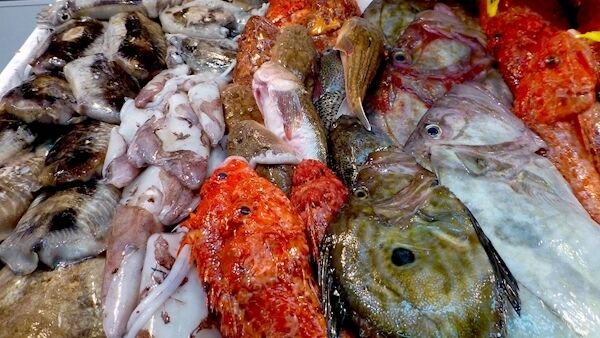
Squid is big here. Dozens lie in glistening ranks on the mongers’ slab. They’re insignificant relative to the giants I’ve been reading about in the New Yorker magazine. One giant squid alone could subsume a line of fish stalls. Chainsaws would be needed to cut through their tentacles.
Do they exists at all, though, we may ask? Apparently, yes. No scientist has ever seen, let alone examined, a live specimen, but studies of corpses washed ashore has provided hard evidence of their existence. Then there have been the reports of sailors through the ages. Also, saucer-sized scars seen on the bodies of sperm whales are thought to be sucker marks, made when the giants clash in the deep ocean.
A fully grown Architeuthis (they have been given a zoological name) is classified as the largest invertebrate on Earth, with tentacles longer than a bus and eyes the size of dinner plates. One corpse, beached in the South Pacific in 1887, was over 18m long.
Fearsome animals, they’ve been reported from every ocean in the world and have an age-old reputation of attacking boats. In Homer’s Odyssey (800BC) a sea-creature called Scylla is mentioned: “No mariners yet can boast/ They raced their ship past Scylla’s lair/ Without some mortal blow.”
Norway gave the 12-armed ogre of the deep the name Kraken, the same word as that used describe a fallen tree with the roots still attached, a verbal picture. Sailors reported seeing them: they were included in the 1755 Natural History of Norway, — the stuff of hair-raising fiction, Jules Verne’s novel 20,000 Leagues Under the Sea relates a battle between a giant squid and a submarine. A Tennyson poem from 1830 called ‘The Kraken Wakes’ begins: “Far far beneath, in the abysmal sea, His ancient, dreamless, uninvaded sleep The Kraken sleepeth.”
An apocalyptic science fiction novel by John Wyndham borrowed Tennyson’s title. Herman Melville’s Moby Dick (1851) mentions a “wondrous phenomenon” with arms twisting “like a nest of anacondas”.
In 2003, the captain and crew of a 35m racing trimaran yacht reported that the boat suddenly halted in mid-Atlantic “as if it had run aground”, then shook and shuddered as if attacked from beneath. Two tentacles, each thicker than a human leg, were seen to be “lashing at the rudder” as the creature apparently tried to wrap itself around the hull. Just as the rudder was about to snap, it let go and disappeared into the depths. The crew described the event as traumatic.
This report, plus many others from sailors, has triggered a race among oceanographers to capture a specimen. Huge sums have been invested in bathyspheres, submarines, deep-sea periscopes, and cameras but all, so far, in vain. A New Zealander, Steve O’Shea, had the original idea of capturing not the monsters but their grass-hopper-sized babies, called paralarvas, and rearing them in tanks.
Apparently, when sprat are put in their tank, the paralavas wrapped their arms over their heads, thus hiding their tentacles. Only when beside the sprat do they lash out, and engulf them. The sprat, bigger than themselves, struggle desperately but are killed and eaten by the beak. As they are ingested, their squids’ stomachs turn red, filling with blood. To watch an Architeuthis consume a dolphin or bluefin tuna must be morbidly spectacular. I’d prefer not to, myself.
We’ve recently read of a Japanese fish monger paying €2.8m for a 278kg. bluefin, an endangered species. With such rewards, fishermen will avidly hunt bluefin. Bluefin should be internationally protected.
I have always been fascinated by the sea. Will there be anything left in it for my great grandchildren? Possibly, yes, in the profound depths — but all demersal and pelagic stocks being exhausted, humanity will, I’m afraid, mine those depths. Giant squid (possibly 1,000kg.) will likely make big bucks at the Tokyo fishmarket! Today discovered, tomorrow annihilated.
CONNECT WITH US TODAY



Be the first to know the latest news and updates