Damien Enright: No sour grapes as ancient abbey witnesses another year
What’s the news, what’s the news? Summer’s near over, and how did it go?
Well, blackberries ripened late this year and some have turned to mush under heavy rain.
Our first ever outdoor grapes have all been eaten by the blackbirds, and there were at least 30 — grapes, I mean.
The blackbirds are discriminating. They didn’t take a single white grape. They are bitter and meant for wine.
Only the black ‘desert’ grapes which, albeit, were no bigger than globular Smarties, were ‘sweetening’.
Every few days, I ate the largest on the vine to check their progress.
I never took more than one, thinking we would, after a while, have a small bunch worth picking.
Clearly, the blackbirds were sampling them too and on the very cusp of their sweetness came at dawn and stole them all, leaving only stems showing collars of juicy redness.
Thus ended the second summer of our desert grape venture.
It was, of course, the best summer Irish outdoor grapes could have hoped for.
When La Gomera, our favourite Canary island, dressed in shirts, we wore T-shirts, and the camogie-age girls holidaying here in west Cork wore skimpy shorts.
That was the way down our way. Hereabouts, the summer girls are pretty and daring — you should see them outside the marquee dancing-dome in Timoleague on festival nights.
Our expert grape-grower wine-maker family member tells us that we cannot expect a viable crop for at least another year — if we get another sweltering summer.

We have absolute trust in his know-how.
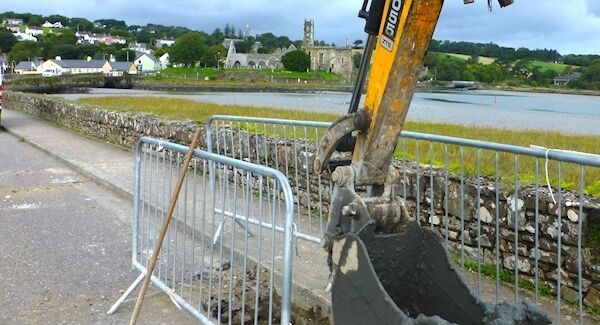
Meanwhile, talking of Timoleague, the essential waste-water works presently in progress, with labyrinthine trenches wide and deep, earth-moving equipment in clutters, red plastic bollards and striped plastic cordons, traffic lights yellow-to-red-to-green, and men in yellow hats, has made the ancient abbey look gaunt and incongruous.
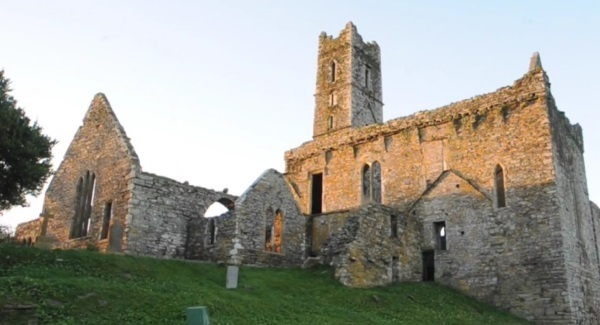
What the ghosts of the medieval monks or St Molaga, who built a small church there in C650 BC, think about it I can’t imagine.
If ghosts think at all, of course, which is questionable...
Placards opposite the abbey, on the bridge beside it and on hedges of the roads leading to the village, all assure the motoring public that the village is still open for business.
With a bit more barricades tape, strangers might think they’re approaching a music festival.
The works, awaited more than a decade, do indeed deserve a festival, as excavators and pipe-layers move toward the new treatment plant, between there and Courtmacsherry, at a clip.
I’m sure all the placards advertising coffee and so on will be taken away as soon as the works are finished, the trenches refilled and the ancillary roads re-opened.
Timoleague people know that their hamlet is not just any village: it is not only another village on the lauded Wild Atlantic Way but belongs in the heavenly pantheon of great abbeys of Ireland and all around it must be kept untrammelled by advertising and by promotions for lesser places which, historically and scenically, do not hold a candle to its enduring stern magnificence.
Established by a saint, burned by Cromwell’s lieutenants, standing 800 years and surviving the Lisbon earthquake that lifted the bay at its very feet, it must be respected, and that entails maintaining its setting in as near as possible to its pristine origins.
It has been a strange year indeed, and I wonder if the abbey in all its age has ever experienced the like.
You could have fried eggs on the walls in high summer, and the mortar didn’t crumble. Neither did it when, those centuries ago, winters turned the upper bay to ice.
We catch only glimpses of the cycles of time and weather. This year has little montbretia, the orange flower that most years spreads like wildfire along the ditches.
It has been a bountiful year for tortoiseshell butterflies, and a very poor one for most other species, especially the migrants, the red admirals and painted ladys.
It should have been a great year for Irish lizards, but I have seen none: where I used to see them basking on summer days is now a housing estate.
If lizards have to go to make space for my fellow humans, I have no complaint.
A homeless family cannot live in cracks between rocks and, anyway, it isn’t shortage of rocks but excess of cats that threaten lizards.
I saw the Black 47 film the other night.
The villages of botháns in the mist may have been Photoshopped, but I know a few real ones – Dursey Island, the Blaskets and so on.
My grandfather may well have seen such godforsaken places.
He was born in 1859, less than nine years after the Great Hunger ended.

CONNECT WITH US TODAY



Be the first to know the latest news and updates