NEWSVIEW: Heritage Bill, Japanese knotweed and rural town regeneration

Rose Martin looks at the environmental side-effects of the new Heritage Bill, Japanese knotweed’s unfair portrayal, and the regeneration of rural towns.

NEWSVIEW: Heritage Bill, Japanese knotweed and rural town regeneration

Rose Martin looks at the environmental side-effects of the new Heritage Bill, Japanese knotweed’s unfair portrayal, and the regeneration of rural towns.

THE changes to the Heritage Bill, which allow for the burning of vegetation in March and the cutting of hedgerows in August, and which passed all stages in the Dail last week, has been described as a “dark day for Ireland’s biodiversity by the Environmental Pillar. The Bill, which was introduced by the former Minister for Heritage, Heather Humphreys and supported by current Minister, Josepha Madigan, will operate initially as a pilot project throughout the country, a move which has no scientific basis, says the Environmental Pillar in a statement.


“The burning of vegetation in March — which is currently prohibited — would critically endanger birds that are just starting to breed and will also impact bees that depend on gorse as a food source.

Environmental groups remonstrate over Heritage Bill roll back of Irish nature laws. Photo: Sasko Lazarov/Photocall Ireland

“While the provisions of the Bill for roadside hedge cutting in August still require clarification, as it stands, landowners will be allowed to self-define road safety issues as they deem fit. This will result in severe consequences for late-nesting birds, such as the endangered yellowhammer, and pollinators who depend on hedgerows for food.”

The Pillar says it has received over 31,000 signatures in its petition and are asking people to go online and signal their opposition to the destructive amendments: “Our hopes now rest with the Seanad and the Irish public to come out and rally against this Bill to stop it entering into law, which would only enhance our reputation as the laggard of Europe in protecting the natural world.”

In her defence, the Minister did say that only hedges which face the road would be allowed to be cut and likewise, regulations would be enacted to control burning in certain areas of the country, and then only if adverse weather conditions interrupt flexibility in land management for farmers and other rural dwellers.

The genie, however, is well out of the bottle with these changes, says the environmental coalition and they cite the statement made by Green Party leader, Eamon Ryan, TD, who said the passing of the Bill will mean that “ landowners and agricultural contractors will only hear that hedgerows can be cut in August and the mountain tops can be burned in March”.

“The government should have abandoned their push for this regressive legislation a long time ago and taken note of warnings from conservation organisations and the concerns of more than 31,000 Irish citizens who signed a petition calling on the Minister to pull back on this legislation,” says Padraic Fogarty, Environmental Pillar

spokesperson.

“The whole process has highlighted the influence of the farming lobby in the face of public opinion, and indeed, many farmers themselves. Ironically this law will do nothing to improve farmers’ livelihoods or halt the decline in bird populations in upland areas.

“We hope that our Senators will stand up alongside conservation experts and the public in support of our already fragile biodiversity and block the Bill from passing into law.” For more details see:

https://my.uplift.ie/petitions/no-to-more-slash-and-burn

https://environmentalpillar.ie

Japanese knotweed

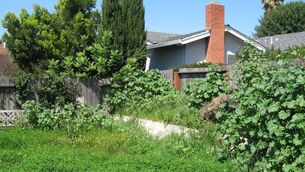
And once more on environmental matters, it appears that the knotweed is not the threat to buildings that we thought it was — although its threat to diversity remains. The University of Leeds says it has found new evidence to suggest that Japanese knotweed does not cause significant structural damage to property.

Ecologists from AECOM and the University of Leeds carried out research on the potential to cause building damage of the notorious Fallopia japonica, compared to other plants, using the ‘seven metre rule’,

This rule says that buildings within seven metres of the above-ground portions of the plant, are structurally in danger, due to its habit of spreading underground through the foundations and through concrete.

Recognised as one of the most problematic weeds in the UK and Ireland, the problem of knotweed is compounded by the fact that lenders in the UK can refuse to underwrite mortgages on properties where Japanese knotweed is present and often require that a treatment programme is in place before allowing a buildings loan.

Dr Mark Fennell, Principal Ecologist at AECOM, who led the research, said: “Our research sought to broaden existing knowledge about the risk to buildings of Japanese knotweed compared to other plants.

“We found nothing to suggest that Japanese knotweed causes significant damage to buildings — even when it is growing in close proximity — and certainly no more damage than other species that are not subject to such strict lending policies.”

He suggested the seven metre rule was not a statistically robust tool for estimating how far the plant’s rhizomes are likely to reach underground. Co-author Dr Karen Bacon, from the University of Leeds’ geography school, said that while knotweed is a concern in terms of biodiversity and flooding, the plant poses less of a risk to buildings and other structures.

“Japanese knotweed is capable of damaging built structures, but where this occurs, it is usually because an existing weakness or defect has been exacerbated,” she said. Automatically refusing mortgages on properties where Japanese knotweed is found is out of proportion to the risk posed, the study concluded.

The Leeds team looked at 68, pre-1900 residential properties in northern England, which represented a ‘worst case’ scenario in terms of susceptibility to damage. Where knotweed was found within seven metres of 18 of the properties, it showed less damage potential than trees and shrubs like buddleia, (which is also non-native and invasive) in the study.

Furthermore, a survey of 26 contractors showed knotweed rhizomes rarely extended more than 4m from above-ground plants. Rhizome spread was generally less than 2.5m – well below 7m.

Noji

Congestion in cities will reap rewards for rural areas, and not just commuter towns, according to architecture firm Noji, who recently received the Future Award in the 2018 RIAI annual awards.

John Monahan and Elizabeth Clyne of NOJI Architects with their RIAI Future Award from the 2018 RIAI Architecure Awards.

Noji’s John Monahan says that rural towns will reap the benefit of a lifestyle change as Dublin’s housing shortage pushes more people into rural areas, which in turn will become enviable places to live as a new form of urban regeneration takes hold.

“We are on the cusp of something very exciting and positive,” says John Monahan who partners with Elizabeth Clyne in the firm’s practice in Sligo, to which the architecture and design studio moved in 2015.

“Towns and villages across Ireland have the opportunity to live up to their own potential through urban regeneration, says Clyne.

The RIAI Future Award recognised John and Elizabeth for their entry Design for a Changing Country – which discussed their active engagement with social, cultural and economic issues in Irish towns

More in this section

Revoiced

Newsletter

Sign up to the best reads of the week from irishexaminer.com selected just for you.

Cookie Policy Privacy Policy Brand Safety FAQ Help Contact Us Terms and Conditions

© Examiner Echo Group Limited