Don’t forget to stop and reflect on your garden
You can learn a lot from garden shows, but Peter Dowdall reckons you need time to sit back and reflect too.
Don’t forget to stop and reflect on your garden

You can learn a lot from garden shows, but Peter Dowdall reckons you need time to sit back and reflect too.

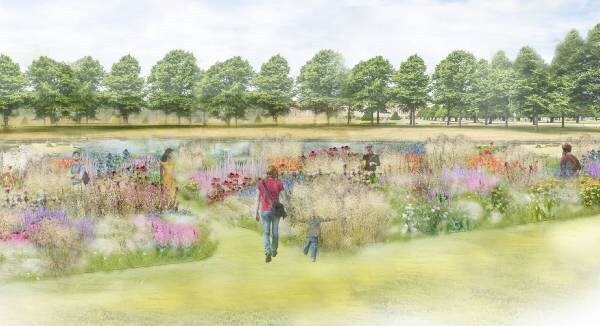
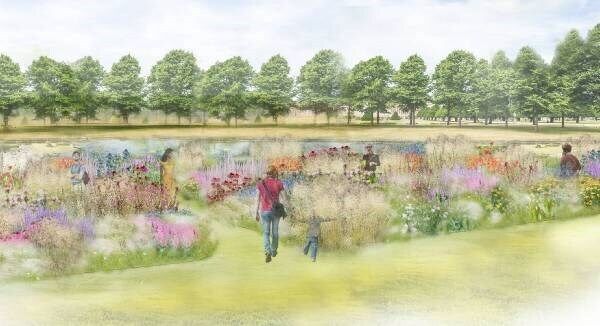
One of the potential highlights at Hampton Court is the meadow-inspired garden by Dutch designer, Piet Oudolf. Picture: Anca Panait/RHS

I’m designed out of it at this stage. Similar to a trip around the Irish countryside or through the tourist attractions of Rome or some other great city, my head stops taking it in. There’s only so much one can absorb at any one time.

And so it is after the big flower and garden shows recently — my head is suffering from design overload. Next week I’m off to Hampton Court, and I’ll have to clear some space in the grey matter beforehand to make sure I’ll be able to appreciate what that special place offers in terms of inspiration and design ideas.

What you will see at these shows is different styles, obviously, each as different as the designers themselves. But there are also different ideas and, while you may not be able to, nor even want to, replicate an entire designed garden in your own space, these shows offer the opportunity to see features that could translate into your own garden.

The styles vary from formal to informal, but within each, there will be huge variations. Some designers will make much more use of hard landscaping and the heavier elements of a garden such as paving, walls, steps, and structures — whereas others will be much more about the soft landscaping, in other words, the plants.

Neither is correct. Like with any art form (and garden design is just that), it’s artistry using living materials, it’s a matter of personal taste — yours and the designers.

However, in saying that, I do think that particular styles are necessary to suit particular locations. Creating a contemporary, urban style garden in a location in the wilds of Connemara won’t work in my opinion. You have to be sympathetic to the surrounding countryside and work with what’s around you. I’m not so sure that the reverse is true — perhaps a wild-looking natural garden which would work well in rural Ireland can work in a city centre location.

It is important to know what style you like and what you want to achieve in your own space — a basic starting point for any design project. Otherwise, you can quite easily go down the road of creating a garden that is a series of different elements with a collection of plants. The end result can be quite disjointed with no common thread running through the area.

That’s not to say that you should buy the book on designing to your preferred style and stick to it rigidly. No, read the book certainly, and take what you want from it but at the end of the day it’s your garden and your individual stamp should be on it. The books will teach you a few principles and certain things which you certainly shouldn’t do, but after that, just go with the ethos of the style.

A contemporary garden will often focus on straight lines and accentuate sharp angles whereas a more traditional garden will use curves and gently flowing beds and borders. An urban space is often all about the hard materials, such as a nice polished granite or limestone paving or what’s on trend at the moment is composite decking and ceramic outdoor tiles. A more informal, rural space may be designed in such a way as to nearly lose these elements beneath layers of planting.

Everything in this world is connected, so emerging and re-emerging trends will manifest themselves in all art and design. Thankfully, there is a growing awareness of the need to protect and promote biodiversity in the great outdoors and this is being reflected more and more in garden designs at the bigger shows. The RHS Show Gardens’ Peoples Choice award at RHS Chatsworth, which took place earlier this month, went to a garden called Hay Time In the Dales.

Designed by Chris Myers and sponsored by Yorkshire Dales Millennium Trust and Johnsons of Whixley, this wasn’t a garden as you and I would think of one, more it was a recreation of a small converted barn looking a bit ramshackle complete with broadleaved woodland and grassy meadow crammed full of wildflowers. The aim of this garden clearly being to encourage people to plant more wildflower meadows and enhance biodiversity.

It goes without saying that I am looking forward to seeing all the show gardens at Hampton Court Show which runs from July 3 to 8, but two that I will really be keeping an eye out for are the garden celebrating 30 years of the BBC’s Countryfile which aims to explore the critically important world residing on our doorsteps, and the garden called A Very Modern Problem which aims to provide a portrayal of how social media can misrepresent the truth.

I will report back.

CARRIGNAVAR GARDEN TREAT

The trail of Gardens Open for Marymount Hospice continues through the next month and tomorrow, June 24, brings the opportunity to visit the gardens of Maurice and Gertie O’Donoghue, Carrignavar from 2-6pm. The garden contain inspiring and thought-provoking sculptures, created by Maurice.

Then on July 1, from 2-6pm, Paddy and Hester Forde open their garden at Coosheen, Johnstown, Glounthaune, Co Cork. These gardens have featured on these pages before and are always hugely popular and are certainly two not to be missed. Both will be signposted on the day.

More in this section

Revoiced

Newsletter

Sign up to the best reads of the week from irishexaminer.com selected just for you.

Cookie Policy Privacy Policy Brand Safety FAQ Help Contact Us Terms and Conditions

© Examiner Echo Group Limited