Celebrating National Biodiversity Week: Findings in our Irish woodlands
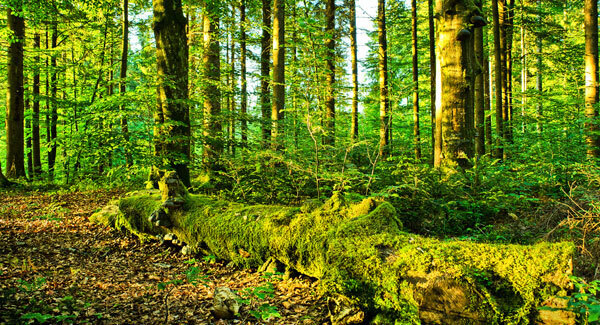
For a country that is the least wooded in the EU, it is hard to believe that Ireland was once cloaked in woodland.

Celebrating National Biodiversity Week: Findings in our Irish woodlands

For a country that is the least wooded in the EU, it is hard to believe that Ireland was once cloaked in woodland.

Tree cover was at its height in Ireland before the Bronze Age, about 4,500 years ago, but since then the history of woodlands has been one of continuous decline as trees were felled and land was cleared for agriculture.


The dramatic decline in woodland is somewhat ameliorated visually by the dense network of hedgerows, but not ecologically, for native woodlands have a special ecology of their own.

Native woodlands can be grouped into four broad categories, based on their dominant tree and herb species.

Woodlands dominated by sessile oak, birch and rowan and a rather drab looking herb layer of woodrush, are commonest in upland areas with relatively poor but well-drained acidic soils.

Where these woodlands occur in the very humid western regions, the trees are bedecked with fabulously luxuriant growth of ferns, mosses and other plants, giving rise to some describing them as Ireland’s rainforests.

On the more fertile lowland soils of the Midlands, woodlands are dominated by ash and hazel. These woodlands generally have a more diverse ground flora and in spring the woodland floor can be awash with colour; with white wood anemones, blue bluebells and yellow primroses and lesser celandines flowering before the leaves of the trees shade out the sunlight.

On the wetter soils, particularly around lake shores and in waterlogged hollows, woodlands are dominated by alder and contain a variety of other tree species and are generally the most diverse of all.

Alder lets quite an amount of sunlight to penetrate to the woodland floor, hence these woodlands have lush woodland floors of meadowsweet, yellow flag, water mint and purple loosestrife.

The fourth type of woodland is a relatively species-poor colonising woodland of cut-away peatlands and mineral soils, where birch is the dominant tree species.

However, one type of bog woodland found in Ireland, where birch colonises raised bogs and the woodland floor consists of sphagnum moss, heather, moor-grass and ferns, is considered a very specific and rare woodland type found in Ireland.

Some of Ireland’s most iconic species are dependent on woodlands.

The history of the beautiful red squirrel is intrinsically linked with the fate of native woodlands, as it is thought to have all but died out in Ireland in the 18th Century when woodland cover was at its lowest, only for the population to recover again from introduced animals.

Today red squirrels are found in well-wooded parts of Ireland, particularly in mature mixed broadleaved woodlands. They are absent from the treeless parts of western Mayo, Galway and Clare, and from the north Midlands, where it is outcompeted by the invasive Grey Squirrel.

The Pine Marten, with an estimated population of just over 3,000 is one of Ireland’s rarest mammals and is very much associated with woodland. Woodlands of all types not just native woodlands, provide them with cover, foragin areas and breeding sites, and their range has expanded greatly in Ireland over the last couple of decades.

One of our most recent colonisers of Ireland broadleaf woodlands is the Great Spotted Woodpecker.

A population expansion of this species in Britain led to vagrants finding their way to Ireland and it was inevitable that they would eventually breed.

Then in 2009, to great excitement, breeding was confirmed for the first time in Ireland when young chicks were found peeping out of an excavated nest cavity in a tree in Co. Wicklow.

Follow up surveys found eight other nests in the region. Today the evocative drumming of Great Spotted Woodpeckers can be heard in many mature broadleaf woodlands in the eastern half of the country and it looks like this species is here to stay.

Broadleaved woodlands are complex ecosystems, supporting many woodland specialist plant and animal, that can only survive where there are large areas of healthy woodland.

But there is a need to establish new native woodlands to join up the existing habitat areas and expand the area of natural woodland cover.

The benefits of this are many, not least helping to mitigate some of the impacts of climate change.

SILVER-WASHED FRITILLARY:

The Silver-Washed Fritillary is one of Ireland’s largest and most powerful butterflies.

The caterpillars feed on the common dog-violet which grows in shaded parts of deciduous woodland, and the adults emerge in July and August.

Being powerful fliers, adults can be seen well away from woodlands in late summer, sometimes feeding on buddleia and other flowering shrubs in gardens.

WOODCOCK:

The woodcock is a species of wader that is very much associated with deciduous woodlands.

They breed on the woodland floor, where adults are very difficult to see, for their plumage is perfectly camouflaged against the leaf litter.

Woodcock have a very distinctive display flight which they perform at dusk in spring, flying low overhead with rapid wingbeats.

The resident breeding population is joined by many individuals that come from northern Europe and Russia in autumn to spend the winter in Ireland.

BLUEBELLS:

Bluebells are one of the species people most commonly associate with woodlands. In spring, before the canopy is well-developed bluebells burst into a carpet of magnificent colour.

They are not confined to woodland, but it is in deciduous woodland that they are most abundant and spectacular.

Bluebells grow each year at the same location, as they grow from underground bulbs, and their arrival in spring at some woodlands is one of the most anticipated signs of spring.

WOOD-SORREL:

Wood-sorrel is a common flower of woodland floor on wetter, poorer ground.

It flowers from April to June before the leaves of the trees are fully formed when some sunlight still penetrates to the woodland floor.

Where it grows it can form extensive carpets of green across the forest floor.

Each leaflet is heart-shaped and folds together when it rains or in the late afternoon.

GREAT SPOTTED WOODPECKER:

The Great-spotted Woodpecker is one the newest arrivals to Irish woodlands.

It was first confirmed as breeding in 2009 in Wicklow, but since that time it has spread to suitable woodlands all along the eastern half of the country.

It is associated with old deciduous trees in woodlands and parklands, and makes it nest in cavities in trees.

One of the best ways to detect woodpeckers is to listen for their ‘drumming’ sound as they are excavating cavities.

SESSILE OAK:

The sessile oak is one of tree species people often associate with woodland in Ireland.

It grows mostly on poor acid soils and in hilly parts of the country, and has been harvested for centuries for making casks and put to other uses.

Once synonymous with Ireland, now only remnant stands of sessile oak remain, making the woodlands in Killarney, Glengarriff, Glenveagh and Glen of the Downs of great conservation importance.

IVY:

Ivy is a species that very much divides people. To many people, ivy is considered a very unwelcomed plant for it grows on trees and can damage them.

However, others see ivy as an extremely valuable addition to woodlands, for it provides cover and nesting habitat for birds, and the berries are a valuable source of food at a time of year when other berries are scarc.

PINE MARTEN:

The Pine Marten can be seen in woodlands of all kinds.

In older deciduous woodland it can find more large cavities to use as den sites.

At one time it was confined to a small numberof woodlands on the west of Ireland, but its range hasexpanded in recent years.

A recent national survey found that the entire Irish population of pine martens is just over 3,000, making it one of Ireland’s rarest mammals.

GIVING BIODIVERSITY A HELPING HAND: WAYS YOU CAN HELP

  • Allow wildflowers to grow around the farm.
  • Retain any wet, waterlogged land.
  • Create a pond with shallow margins.
  • Reduce the use of pesticides.
  • Plant native trees and shrubs.
  • Plant pollinator friendly perennial plants.
  • Leave patches of nettles to grow.

Dr Liam Lysaght, Director of the National Biodiversity Data Centre.

x

More in this section

Revoiced

Newsletter

Sign up to the best reads of the week from irishexaminer.com selected just for you.

Cookie Policy Privacy Policy Brand Safety FAQ Help Contact Us Terms and Conditions

© Examiner Echo Group Limited