Hugh Wallace and how The Great House Revival is living up to its title
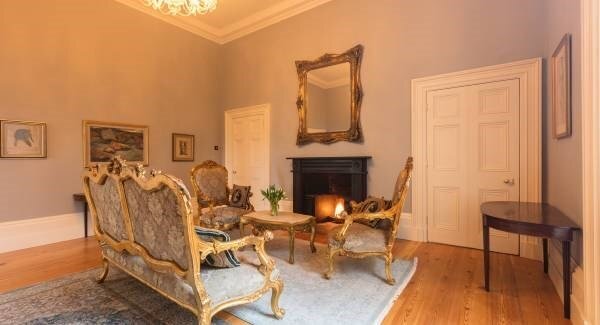
Landed with the grandiose moniker of The Great House Revival, RTÉ One’s latest home design programme is living up to its title just two episodes in, while attracting 32% of the television viewing audience with its first screening.
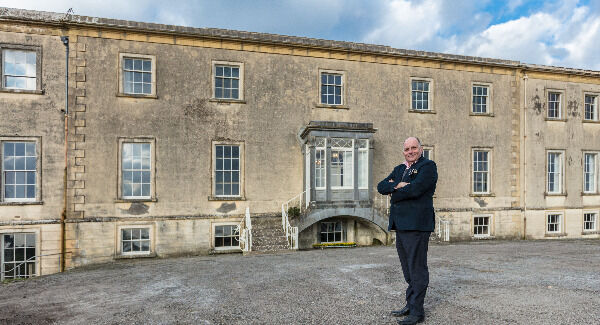
So far, we’ve seen a Georgian country pile and Georgian townhouse revived, with the promise of a thatched cottage, a farmhouse, a schoolhouse and a medieval tower to follow over the next four episodes.
Fronting the programme as presenter and narrator, and hot off another RTÉ success — Home of the Year — is Hugh Wallace.
As the tribal elder of architecture and interior design on the telly, his gently authoritative presence provides the gel between the programme and its viewers, as we watch restoration mavericks undertake what are, at times, monumentally ambitious and potentially bankrupting projects.
This was certainly the case with Australian Bede Tannock from Perth, who took the brave, (some would say, utterly crazy), decision to buy the 110-roomed, former seminary, Ballinafad House in Co Mayo. With distant Irish connections in Tipperary only, Tannock had just a dream of creating a home to share with his partner, while creating a wedding and events venue out of his monumental project.
Bede’s ambition saw him take on the most formidable restoration of the series — and in the conclusion, he succeeded in saving the house, not only for himself, but for the nation.
The idea for the series all started about three years ago, according to Hugh Wallace, following a conversation over lunch with Debbie Thornton of Amino TV.
I remarked that it was terrible to see old buildings and outhouses and school houses going to rack and ruin. It became an idea for a programme which she then pitched to RTÉ.
With such ambitious projects featured, it meant the series had to be filmed over a two-year period. “There was a huge time commitment with six or seven visits to each building,” Hugh explains. “But I loved it and had a fabulous journey and met fabulous people.
“Seeing their passion for their project, regardless of size, and their commitment to restoring it, I was bowled over by what each and every one did.” But not all of the six projects are about resuscitating dereliction on a grand scale.
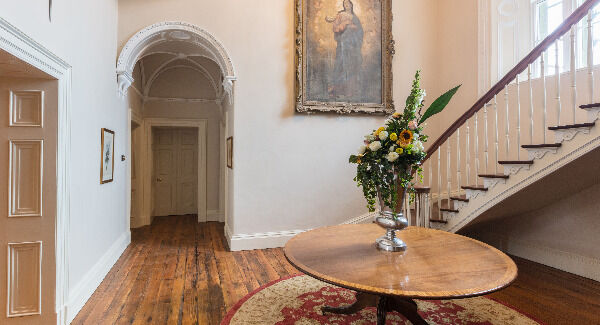
“Some are protected structures and some are of national importance,” Hugh says. “Others, frankly, could be bulldozed.”
A house in Donegal which appears later in the series had all the potential to fall into the latter category.
“The owner’s family had the cottage since it was built in 1780,” says Hugh. “So there’s continuous ownership. Her relatives in the area thought she should knock it down and build a bungalow, but she has a passion and relationship with the cottage and she wants her children to have that too.”
As she is UK-based, the cottage had full-scale professional intervention, including architect, builder and other specialists like thatchers. Some of the other house owners in the series had particular skills and were hands-on which helped eke out precious budgets.
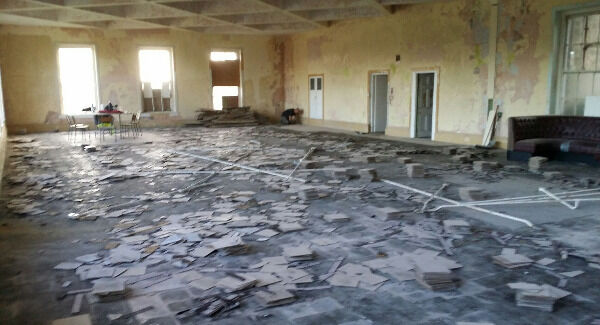
Bede Tannock, for example, is a trained architect and a cabinet maker, and he restored the house’s sash windows and a parquet floor. For Hugh, the lengthy production time has established friendships over the two years — in one case he even went shopping for furniture with one of the homeowners. But he advises making one vitally important connection — the local authority’s conservation officer.
“Don’t be afraid of them,” Hugh says.
They’re there to help you. Send them your submittal and ask “is this alright?” — or ask them to come out to you. Their concern is you won’t do your job properly, so establish a relationship.
“Don’t be put off, but you need to do your homework. Go to the Dublin City Archives in Pearse Street. They have access to old maps of buildings nationwide.
“Find out who built the house; check the census records for 1901 and 1911 to see who was living there. This gives you context for the building. Get an architect who understands the perils and parameters of what you’re doing.”

CONNECT WITH US TODAY



Be the first to know the latest news and updates