The Islands of Ireland: Sing out for Inishmaan
Inishmaan, Co Galway, is a glorious place but it can be challenging too.

The Islands of Ireland: Sing out for Inishmaan

Inishmaan, Co Galway, is a glorious place but it can be challenging too, writes Dan McCarthy.

Long gone are the days when supplies had to be passed hand over hand from boat to shore. The island now has a magnificent new pier which provides ample shelter for seafarers and visitors alike.

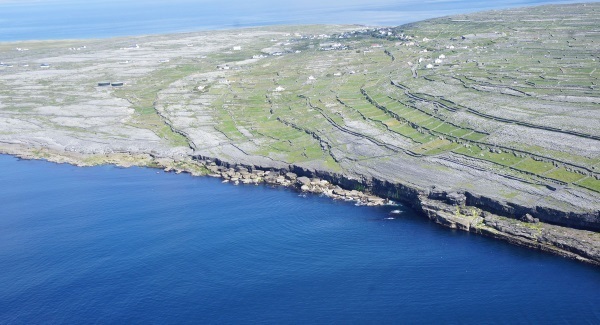
On this limestone outcrop we must adjust our topographical vocabulary: clints and grykes, nunataks and swallow holes. A huge cavern underneath the island was reputed to be the entrance to an undersea tunnel to the neighbouring Inisheer.

The flora is a botanists’s dream. Spring gentian blinks in the furrows, Cranesbill waves in the ditch. Orchids idle in the pavements. Inishmaan is the middle of the three famous Aran Islands and its karstic rocks from an extension of the huge limestone platform thrusting out from the Burren.

Take a short walk from the pier past acres of shining limestone and the road rises and lifts above the heaving Atlantic. Here, overlooking the eastern side of the island sat John Millington Synge as he contemplated life on the island prior to finding the inspiration to write some of the famous plays in Irish literature: The Playboy of the Western World, Riders to the Sea.

Nowadays, visitors can place themselves in this perch called Synge’s Seat and gaze on the same views. The eye seeks something, anything in the sea of grey. Sweeping back and forth over the sheets of limestone in search of difference it finds nothing. Then on a final sweep, a darker shade — a road! And beside the road a house, and another and another. A wisp of smoke curls skywards: Home, warmth, life.

The tourists come and go and create employment on Inishmore and Inisheer but not so many come to Inishmaan. It evokes a bittersweet emotion as their money is of course needed but the sense of peace as a result of their absence is also to be cherished. Nevertheless, it has its own vibrant industry in the form of a knitwear factory which exports its clothing worldwide. A modern restaurant expertly blended in to the landscape escarpment

attracts a discerning clientele. In the summer, the island’s population of around 220 expands with hordes of youngsters learning Irish. More than 500 people once lived there.

Synge lived for several summers on Inishmaan at the turn of the previous century. He went there on the advice of WB Yeats to experience life at the periphery and to familiarise himself with the rich folk traditions. His book, The Aran Islands, comprised of journal entries, was published in 1907 with illustrations by Jack Butler Yeats.

He was smitten when shown his cottage, now a museum, Teach Synge, and visiting his neighbours: “The kitchen itself is full of beauty and distinction. The red dresses of the women who cluster around the fire on their stools give a glow of almost Eastern richness and the walls have been toned by the turf smoke to a soft brown that blends with the grey earth of the floor,” he wrote.

The standout archaeological treasure is the pre-Christian fort at Dún Chonchúir of which Synge wrote: “If no one comes I prop my book open with stones touched by the Firbolgs and sleep for hours in the delicious warmth of the sun.”

All of the island’s life, its trials and and tribulations, are expressed in his explosive description of a storm: “In Inishmaan one is forced to believe in a sympathy between man and nature, and at this moment when the thunder sounded a death-peal of extraordinary grandeur above the voices of the women, I could see the faces near me stiff and drawn with emotion.”

March to the western end of the island through those tall pale grey stone walls to the point where the road ends, effectively where civilisation ends. There is an old cottage there with a thatched roof where ravens like to idle. Suddenly, nature

flings open a door to a shimmering vista and you feel like you are standing at the edge of the world.

  • How to get there: www.aranislandferries.com; www.doolin2aranferries.com; www.obrienline.com
  • Other: The Aran Islands, John Millington Synge; The Cripple of Inishmaan by Martin McDonagh; Stones of Aran: Pilgrimage Tim Robinson; www.aran-isles.com. https://inismeain.ie; https://inismeain.com; http://gaeilgeinismeain.wixsite.com/mysite.
  • Thanks to Peadar de Blúit in Gael Taca Corcaigh for translation
x

More in this section

Revoiced

Newsletter

Sign up to the best reads of the week from irishexaminer.com selected just for you.

Cookie Policy Privacy Policy Brand Safety FAQ Help Contact Us Terms and Conditions

© Examiner Echo Group Limited