Young hedgehogs fend for themselves as winter looms
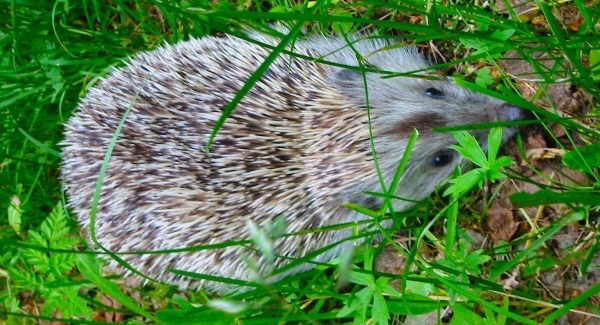
Born in early September, they are safe in the nest for six weeks, then the family splits up and they wander off alone. For ten days or so, they may return to take their mother’s milk, but then the split is final. They will lead solitary lives. Hedgehogs meet and pass each other like ships in the night. They wouldn’t know their fathers if they met them.
Winter will soon be upon them. Just when they need to put on weight to survive the winter in hibernation, food is growing scarce. When the adults have long since gone into hibernation, these unhappy youngsters are still abroad, forced to remain active: hedgehogs weighing less than half a pound are sometimes seen foraging in daylight.
The hedgehog we heard the other night, snuffling amongst the fallen beech leaves, may have been one of these. By the time I went to look, it had gone. It’s still only October and, here in west Cork, the weather’s mild. An underweight juvenile may be more in danger of drowning than starving.
Were it later in the year, say around Christmas, I’d have faced the dilemma of whether to ‘rescue’ the starveling or not. With wild creatures, the best option is, usually, to leave them to their own devices, but if a creature is clearly not going to survive without help — as was the case with the heron we rescued six years ago (and which is still with us) — then, one might consider taking on the responsibility.
We did this once in Corfu, with a fist-sized hedgehog we found staggering around on a road, clearly on its last legs. It was a freezing night: it can, and does, snow in Corfu; in the Ionian Sea it may be, but it sure gets cold. We took the creature home, and put a big wooden crate in the garage. Hedgehogs can dig and climb, so making a wired-in corral on the lawn wouldn’t have done the biz.
In the box, we put a smaller box, with straw. We fed it on saucers of milk, scrambled egg, compost heap worms, chicken scraps (raw and cooked), and chopped sausages in water (always plenty of water). It was a fat hedgehog, snuffling off to face a brighter world, when we released it in April. These evenings, when I go walking in the twilight, I see bats whizzing up and down a tree-lined bohreen. They’re pipistrelles, the smallest and most common bat in Ireland. If you have bats in your attic, they’ll be working on producing more bats for you about now. Love is on the bat-wing in October, but there will be no stir in the womb until the spring. The egg lies dormant all winter. This is a unique trick of bats. In June, a tiny, naked bat will be born, and begin to suckle its mother’s milk minutes later.
Bat babies are born in nursery colonies, maternity wards of caterwauling batlets and chattering mothers. During the night, mother deposits baby bat in a warm group and goes hunting. Sometimes, she moves roosts and carries baby with her, on the undercarriage. She never leaves it for long. But the more she hunts, the more she eats and the more milk she can supply. Bats are like mice with wings: ‘Die Fledermaus’ in German, the flying mouse, the name of Johann Strauss’s operetta.
It is not commonly known, but many bats have winter, summer, and multiple seasonal roosts: they don’t spend the year in the same quarters. Temperatures and humidities change, weather hardens or softens. At this time of the year, after mating, they go in quest of optimum winter conditions. Their lives may depend on getting it right. They may, for example, spend October under a bridge, wake up one evening to find it’s gone too cold to hatch insects, decide they’d be better off asleep, and fly off to seek the bat-friendly eaves of an old house or a cool-temperate wine cellar in an ancient ruin.
Soon, and for months, our bats will be in hibernation. Some snuggle together, some sleep apart. Of energy saving, they are past masters. By taking it easy, the tiny pipistrelle lives to be 11. Our water bat, Daubenton’s, might live to be 32! Occasionally, they’ll wake, shake, and return to their blissful state of torpidity.
In the tropics, they do not hibernate. It’s to do with the available grub. When the flies and midges become far between, the birds migrate, the bats sleep.
CONNECT WITH US TODAY



Be the first to know the latest news and updates