Weeds? Go Berkeley on ‘em
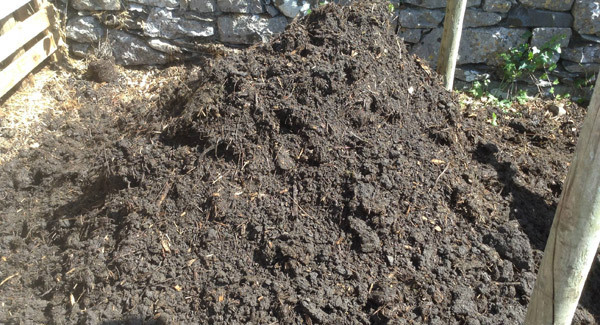
Fiann Ó Nualláin suggests following the composting method developed by Robert Raabe, a professor of plant pathology at Berkeley, California which produces temperatures high enough to kill tough weeds. 

Weeds? Go Berkeley on ‘em

ONE of the biggest gardening errors is to accidently spread weeds or disease by poor cultivation practices — including by adding material to a compost heap that will not decompose and will later proliferate.

So naturally enough many gardeners may be reticent to compost a weed, but with some technique, it is more than attainable and wholly valuable — as weeds often accumulate many minerals and trace elements that would enrich your compost.

The thing is — do you have the right composting approach? Is your heap fast or slow, hot or cold?

How do you render those plucked and hoed weeds before you add them to your heap?

There are a few tricks to making weeds not survive the heap — mostly involving heat or crushing to deactivate the seeds or roots.

Certainly dropping the roots or seed heads into boiling water, partially roasting in an oven or wilting over a flame is often enough to kill its regeneration potential.

But the heat of your heap is also a way to destroy the viability of seed or root — so instead of a standard, lump it all on cool heap, you might like to try hot heaping.

Hot heaping is a slightly more labour-intensive approach, but so worth the effort. There are two differences between it and standard composting.

Berkeley heap at the beginning of an 18 day process.

The first is while you can continue with the lasagne-type layering of green and brown, it is recommended that you mix green and brown together at each new layer.

Traditionally those brown materials — grass, hay, straw, woody prunings, sawdust and wood chips, shredded paper — are the dry, porous materials that will facilitate aeration and thus enable “heat movement” through the compost pile, as the green materials decompose.

The heat and its encouragement of bacterial action also helping break down the browns in the process.

Composting is essentially the management of aerobic decomposition — aerobic meaning in the presence of oxygen.

If there are too many greens in one layer then the heat can slow down or just quick fire and halt – then there is no even decomposition.

Greens are often wet and so too thick a layer can become soggy and just as detrimentally dampen or extinguish the heat by suffocating the oxygen.

The green materials — grass clippings, herbaceous trimmings, fruit and vegetable scraps — will provide nitrogen and high-energy carbon compounds that fuel fast microbial growth and thus rapid decomposition, more heat by a chain reaction.

But only if aeration is present — by mixing the green and brown together at each addition to the heap, you make sure the components of success are delivered in one move,

The second difference is that you need to turn it more frequently to keep the decomposing metabolism up to maintain its engine of heat — a consistently hot heap is one in furious breakdown.

These cooking heaps will reach temperatures that kill weed seeds, as well as many pathogens, but do not harm the beneficial fungi or mycorrhizae that we want in our end product, along with all that nutritious humus and mineral traces.

The commitment is to turn the pile once a week to keep it aerated and cooking.

You can turn it every second week and that will do the job or you can go Berkeley on it. The Berkeley method can deliver friable compost within 18 days.

The procedure is simple but intensive. You compile all your material over four days — with no turning — then turn every second day for 14 days.

However fast you want to go, the method is up to you. In all instances, heat is the engine.

As to the heat required — you won’t need a thermometer, you will feel it with your hand, you will see steam or feel a hot waft of air as you turn it, and you will clearly witness the rate of decomposition.

When the heat eventually stops emitting — generally within several weeks to one month — your compost is cooked through.

No heat equals nothing left to decompose. Standard compost heaps and half-hearted hot heaps (those infrequently turned), will not achieve deactivating temperatures.

So it is best to avoid adding any seed heads or weeds that spread by runners or regenerate from root slivers, if not deactivated prior to heaping.

Among the weed seeds that need high temperatures to decompose are docks (rumex spp), groundsel (senecio spp), sowthistle (sonchus spp), bindweed (convolvulus spp), mallow (malva spp) and lambsquarters (chenopodium spp).

Some weeds, bindweed for example, require seven days at 82 Celsius (180 °F) for their seeds to be destroyed and are best not composted, or oven cooked first.

Most weed seeds will deteriorate beyond viability at a few hours to a day of above 60C. Within the first week of any heap, the temperature will normally reach 54C.

The extra turning of the hot heaping method ramps those temps up dramatically.

A hot heap can reach temperatures of 49-77C in a couple of days and sustain it — killing more seeds, regenerative roots and pathogens in the process.

So apart from mixing, (rather than layering and turning frequently), you can also chop your raw materials into small pieces to speed their breakdown.

Moisture is essential for decomposition so you can spritz the pile with a dash of water— enough just to keep it moist, but not wet.

I often use the cup of coffee I forgot to drink earlier, the contents of the beer trap or a misting of nettle brew. You won’t need activators, but a little something extra mineral-wise is always nice.

The physics of it is that a large heap holds heat better than a smaller one — so hot heaps are often wider than standard. But if you are turning frequently stick with what space you have.

If you are stuck for space or stuck for time or just want to stick with your standard composting, but still want to try composting weeds, then you can adopt the black bag method.

The black bag method also uses heat but heat build-up inside the plastic as it sits in sun. It is a way to kill weeds in a sort of quarantine from your other heap. Simply get two sturdy bin bags.

Fill one with your mix of pre-chopped greens and browns or that whole wheelbarrow full of weeds.

Add a handful of soil or compost as a starter and a cup of water.

Tie off the bag — double bag it.

Place in the sunniest part of your garden for 8-10 weeks — you can shake it up every week to keep it moving and well mixed.

After the initial period it may be ready to use or add to your existing heap — if the contents look unfinished, then tie it back up and let it sit another 8-10weeks.

Depending on your mix it can take two months to a whole year.

The process is anaerobic composting — no air required — so don’t puncture holes in the side as you might with leaf litter composting.

To be 100% sure of weed seed free compost with any of these methods– don’t compost ripening flower heads or seed heads.

More in this section

Revoiced

Newsletter

Had a busy week? Sign up for some of the best reads from the week gone by. Selected just for you.

Cookie Policy Privacy Policy Brand Safety FAQ Help Contact Us Terms and Conditions

© Examiner Echo Group Limited