Tapping, or juicing birch trees has many health benefits
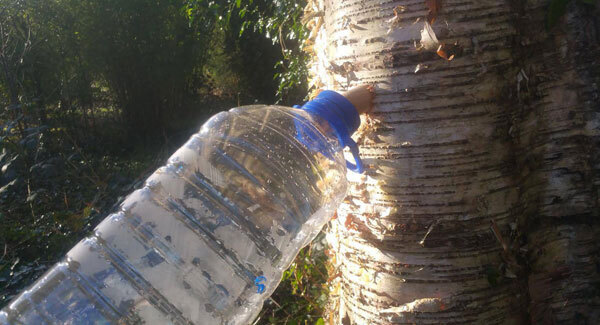
In Eastern Europe, the sight of bottles tied to trees on chilly spring days is not uncommon.
Tapping trees, or juicing trees for their sap is a seasonal occurrence in countries like Poland and Latvia, where they value the health and beautification properties of water or sap from the birch tree.
A bright and sunny morning after a chilly night is the best time to tap birch trees for their sap.
It’s a simple thing to do and one that anybody with a few trees on their property can do.
You could try it in your nearby forest but you might get dodgy looks from passers by as they see you drilling holes into trees.
Tapping does a tree no harm although it’s said you should only do it three years in a row and then give them a rest for a year.
Birch sap tastes just like really fresh, untreated water, but slightly sweeter as it contains xylitol, a natural sweetener commonly used to replace sugar and it boasts many health benefits.
Bottled birch water or sap is available for sale in many countries, but this drink has sugar added and few of the beneficial properties of getting it fresh from the tree.
The sap goes off quickly, but you can freeze it in bags or use it for an easy ferment.
Birch trees contains powerful diuretic properties that help in flushing out harmful toxins, uric acid, and excess water from the body.
This helps in eliminating cellulite (you can buy birch cellulite oil from health food shops), so it also directly helps with water retention and bloating.
It also helps in maintaining good kidney and liver health Nowadays, birch sap/water is used across the globe and is considered to be a highly-effective detoxifying agent that targets the liver by capturing and neutralising toxic waste products.
Drinking birch water can also help the kidneys detoxify which can help if you have a tendency to go to the toilet more times than you would like.
It helps to eliminate things in the body like excess fat and sugar from processed foods, alcohol, uric acid and ammonia.
This aids in weight loss too and can help you get back to better shape after a holiday or weekend of excesses.
It is also claimed to help with arthritis, bronchitis, coughs, as it is full of healthy fruit acids, potassium, calcium, magnesium, zinc, sodium, vitamin C and B vitamins.
Birch water also contains compounds called saponins which have powerful cholesterol-reducing properties. In many ways it is similar to coconut water.
So how do you go about juicing this wonderful tree? It’s very easy to extract the sap.
All you need is a drill with a bit for wood, about 1.5cm diameter, a length of copper pipe bent so that it can go from the tree into a bottle.
Some five-litre empty water bottles, rope and a few birch trees. We had some cute little wooden taps that were specially made, but the pipe works just fine.
Firstly have your bottles at hand. Drill a hole into the lid of each one that will fit your bit of pipe.
Now drill into the tree, quite close to the ground so you can rest the bottle there. Drill upwards at an angle of about 30 degrees and drill in about 5-6cm.
The sap will start to flow very easily now. Insert the pipe into the tree and then insert the end into the lid of the bottle so that the bottle is snugly being fed by the tree.
A five litre bottle can take several hours to fill so have some more bottles handy and keep an eye for when they are full as you don’t want to waste this precious nectar.
You can have two bottles at different places on the same tree.
Birch sap will stay fresh for only three days in a cold place, you can tell if it’s going off as it will turn cloudy. You can, however freeze it in small bags or bottles or ferment it, which is my latest project.
This looks like the easiest ferment ever as the birch sap contains so many natural sugars you don’t have to do much to it to take it to the next level.
Fresh birch sap, let’s say 5 litres in a bottle Add a few raisins, say 5 or 6 for their natural yeasts. Leave the sap for 3-4 days at room temperature, ideally around 19-20 degrees.
Add a branch from a blackcurrant bush for flavour, or some mint leaves, this is optional. Add a clove to prevent mould from forming, this will also add some mintyness.
Fresh birch sap can be enjoyed just like water but fermented it’s best enjoyed just a couple of glasses at a time every day, as long as you have it.
March is the time to tap the trees so get out there and start tapping.
CONNECT WITH US TODAY



Be the first to know the latest news and updates