Getting caught in a web of fear
In 2002 George Burgess, director of the Florida Museum of Natural History, claimed that falling coconuts kill 150 people each year, whereas fewer than 10 people die from shark attacks.
In a classic instance of fake news, the coconut statistic came from a paper in the Journal of Trauma.
Its author, Peter Barss, was awarded an Ig-Nobel Award in the Annals of Improbable Research for work which “cannot, or should not, be replicated”.
However, Burgess’s assertion had its grain of truth; getting in the way of a 1.5kg drupe, hurtling to the ground from a 25m high palm, could spoil your day.
We don’t know the mortality figure but you’re bound to be safer in the water, despite the sharks, than strolling beneath shady palms.
How odd that we have nightmares about sharks but none about killer coconuts?
Spiders are terror demons closer to home.
A nightmare featuring them, dream interpreters claim, may mean you are trapped in a claustrophobic relationship; someone is sucking the life out of you.
A friend won’t set foot in Australia because, he says, there are poisonous beasties there; the world’s 10 most venomous creatures, it’s claimed, are Australian.
The news of 10-year-old Matthew Mitchell’s encounter with “the world’s deadliest spider” confirms his worst fears.
Matthew was clearing out a shed at his home north of Sydney when a spider, hiding in a shoe, bit his finger. His father, using a shirt-sleeve as a tourniquet, rushed the boy to hospital.
Spider venom can produce convulsions, foaming at the mouth, and an agonising death but, thanks to receiving three times the recommended dose of anti-venom, Matthew recovered.
The spider was taken alive to the Australian Reptile Park to be “milked” of venom for antidote preparation.
Worldwide publicity following the incident won’t help Australian tourism; arachnophobic holidaymakers, with no grasp of elementary statistics, won’t visit the country. However, it is 37 years since anybody died from a spider bite in Australia.
More than 43,000 people were killed on the roads there during that period, yet nobody panics on seeing a car.
Five people, on average, die from bee stings in the UK each year but 1,000 are killed falling down stairs. Worldwide, fewer than 100 spider-bite fatalities were recorded during the entire 20th century.
All of the 40,000 known spider species have fangs, through which they inject a cocktail of lethal chemicals into their victims.
Venom attacks the nervous system, liquefying the internal organs so that the spider can suck out and consume them. However, spider expert Chris Buddle of McGill University says people are seldom bitten.
“Most so-called spider bites are caused by something else,” he says.
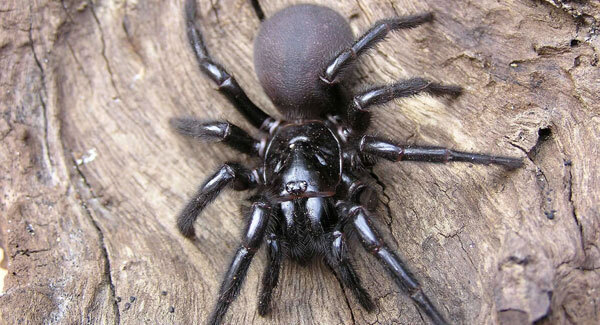
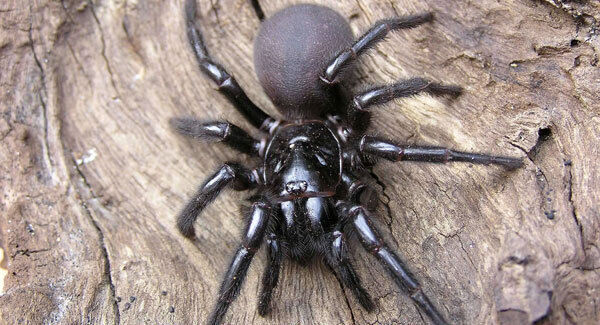
The culprit in Matthew’s case was the Sydney funnel-web spider, found within a 100km radius of Australia’s most dynamic city.
The species was first described in 1877 by the Reverend Octavius Pickard-Cambridge, a pioneer of spider studies. In 1927, a child died following the bite of a funnel-web while playing on the steps of his home in a Sydney suburb.
Effective anti-venom was developed in 1980. An antidote to bites of the redback spider, the only other species known to have caused a fatality in Australia, was introduced in 1956.
We have nine funnel-web species in Ireland, all of them entirely harmless. We should welcome spiders to our homes; they hunt unwanted creepy-crawlies. Of the other 360-odd species found here, only a few recent arrivals are controversial.
The “false widow” attracts most attention. A female can deliver a bite similar to a bee sting, but won’t do so unless provoked. The species, it is believed, arrived accidentally in fruit shipments from the tropics. It survives here as our winters are milder due to climate change. Sweet dreams.

CONNECT WITH US TODAY



Be the first to know the latest news and updates