Damien Enright: People of the Rift valley have a long history of walking
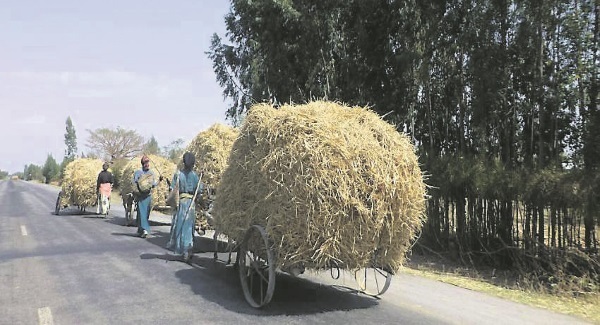
The women are always in bright clothes; sometimes one even sees, far ahead a parasol, a circle of pink or yellow against the burnt land. Some walkers are old and walk with difficulty, but stoically trudge on.
The young women remind me of the âguairĂĄâ of Cuba, the farmersâ daughters whose easy gait is immortalised in the cadences of âGuantanameraâ, an exileâs lament, and one of the worldâs best travelled songs. The ancestors of these girls may well have seeded Cuba with it guairĂĄs. Ethiopians, like other Africans, were enslaved and transported to the cane fields of the West Indies.
The people of the Rift valley â the long, broad depression where the earth split and sank and rose again and made the environment where hominoids evolved â have a long history of walking.
The Rift was where we first stood on two legs, rather than moved on all fours, the hub from which Homo erectus set out 1.7 million years ago and, countless generations later, reached the islands of Indonesia to the east and Europe to the west.
Some 100,000 years ago, they were followed by our ancestors, Homo sapiens, who may have interbred with them, or murdered and eaten them: theories abound, but no history.
On these roads, we see schoolchildren too, in groups, the eldest a six- or seven-year-old herding the rest. Driving slowly, we wave a white arm from a car window. They wave back, delighted â âfaranji!â the call, (Europeans!) â a tale to tell when they reach the circular wattle-and-mud hut which, somewhere on this vast plain is their home.
From the looks we get in remoter villages, itâs clear that some children have never seen white skin before. Perhaps, like the Africans in the novel, The Poisonwood Bible, who wept when they first saw the white missionaries, thinking they had been skinned alive, they feel sorry for us. But I think not. Smiles of brilliant white teeth in finely-sculpted black faces greet us, and are, for me, abiding images of that land.
When, after leaving Lake Ziway â more of which I will relate farther down â we took a back road and crossed the âborderâ between the lands of the Oromo and Gurage people, we began to pass donkey train after donkey train of carts loaded with haystacks of straw, with a woman walking beside each, a switch in hand, bantering back and forth with her companions as they walked. The market town was at least 30km away but the distance seemed not to bother these happy women. No wonder Ethiopia breeds marathon walkers: they are made in the womb.
The Gurages are famed for their industry. Children drove donkey carts loaded with staves or straw. Five year olds herded donkeys, goats, sheep and cattle. Itâs extraordinary how small boys and girls can control animals when to the tradition born.
Meanwhile, I must recommend Lake Ziway, about six hours south of Addis Ababa, as an idyll for bird-watchers, and the Bethlehem Hotel by the lake shore, as the perfect perch, all good taste, and functioning mod cons for âŹ30 a night, in a garden full of birds. Golden weavers weave their nests and bicker 2m above oneâs head on the patio.
On the lake, we saw pelicans in hundreds, hideous Maribou storks, snake birds and pygmy terns. Hippos surfaced and showed their chestnut-red snouts and wiggled their shiny button ears, and grunted and eyed us with shiny, black eyes.
We saw, fishing from papyrus boats, members of a tribe that migrated centuries ago from the north bringing with them the Ark of The Covenant, of which they were the custodians, to save it from destruction. They settled on a lake island for safety and still live there, about 1,000 in number, speaking an entirely different language from the people of the lake shore.
On green swards beneath huge trees upon which fish eagles roosted majestically, locals relaxed as cattle grazed peacefully around them, classical scenes.
On the shores of other lakes, we saw farmers with wooden ploughs drawn by oxen turning the sod on vast acres, a punishing task I am sure. But so it has been in this ancient land for millenia.
I write this in Windhoek, in Namibia, a very sanitised, 21st century city, a shock after chaotic Addis Ababa. We set off tomorrow in a rented camper van to the Namib Desert and the Skeleton Coast.