Pass the pastinum - it’s perfect for picking at parsnip time
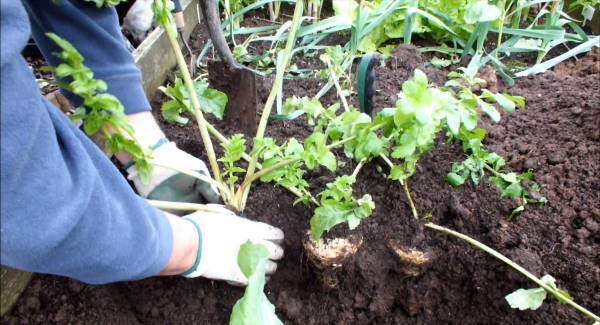
A CURIOSITY of agricultural history now; once upon a time there was device known as a pastinum — a two-pronged fork utilised to prise up carrots, parsnips and other tap root vegetables.
Today, any standard three or four pronged fork is multipurpose and will up the spuds and roots as good as turn the compost and facilitate lawn aeration, but the old pastinum speaks to a time when every job had a dedicated tool and a dedicated ritual.
I like the idea of respecting a task enough to fashion a tool specifically for it.
No, I won’t be on Dragons Den anytime soon with a range of Fiann’s Heritage Tools, not even to relinquish 95% of the business for a fiver and five minutes of exposure.
But I will be indulging in a bit of ritualistic behaviour today. I will be lifting my first parsnips of the year.
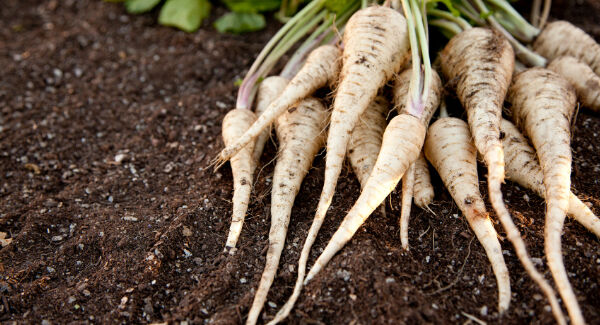
They come from the same batch I’ve been dipping into since autumn last year, but these overwintered ones I haven’t touch since Christmas week — purposely to allow a bit of distance between the pre-cold earthy flavour and the sweetening up of the recent morning frosts. It’s almost a different vegetable.
There are subtle and dramatic nuances in flavours in vegetables and fruits as they progress through the seasons that you don’t have to grow 50 varieties to experience 50 flavours.
Think of a firm tart from just ripening early pear, and how a few weeks later it’s a fully ripe soft, melting sugar explosion. Think of it at either end of that spectrum poached in some red wine or oven-baked.
Parsnips have that potential too; boiled/steamed and buttered... drool; roasted and seasoned... yum.
Then there is the option of puree, crisps, gratin, fritters, in a celeriac mash, braised with other roots, in a soup with apple, curried with lentils.
My ritual is to preheat the oven, venture out with a basin of warm water and a soft nail brush that I use to clean fresh harvested veg — yes the goodness is just under the skin — so a scrub for the most part beats a peel.
I will lift two, wash them there and then, water something with the cloudy water, twist or slice any tops onto the compost heap and return to the kitchen.
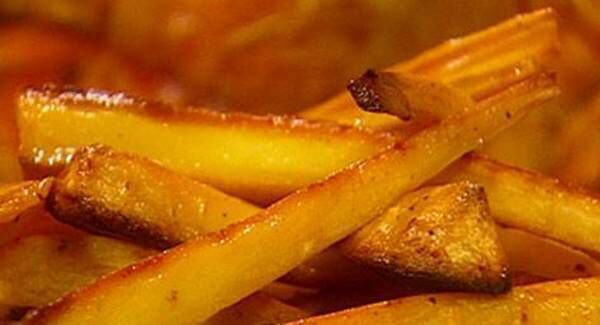
Depending on size, a horizontal slicking may be in order, I’ll put them straight into a ceramic dish, a drizzle of oil, some pepper, a pinch of sea salt and a pinch of madras — then in the hot oven for about 35-45 minutes — until soft through and the delicious aroma hits you upon opening the door.
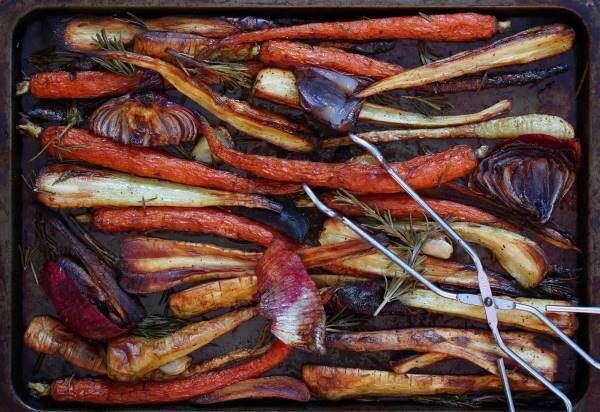
I don’t bother to plate up. I’ll carry the hot dish outside and enjoy (devour) in the bracing air. There will be grunts and pleasure sounds.
I will do my best not to beat my chest and dance around the patch like a successful hunt was had, but I will be buoyed up by the experience. I know it sounds over the top or a bit knobbish — but it is the reaping of the reward that makes all the hard work of growing your own so worthwhile.
If the patch is just a larder and you just pluck what you need for the day — yeah that’s great to be able to do — but it’s as boring as a trip to the supermarket. A little ritual, a little wup-wup or celebration dance when no one’s looking is totally cool and even essential.
Hold back from erecting totem poles and doing human sacrifices in the brassicas, but hell yeah, celebrate your endeavours.
I am mostly no dig, but some veg just need some soil amending to get the best so while parsnips can follow brassicas or potatoes I grow them in raised beds (boxes really), that I can mix some fine sand and soil fresh every spring and guarantee long tap roots.
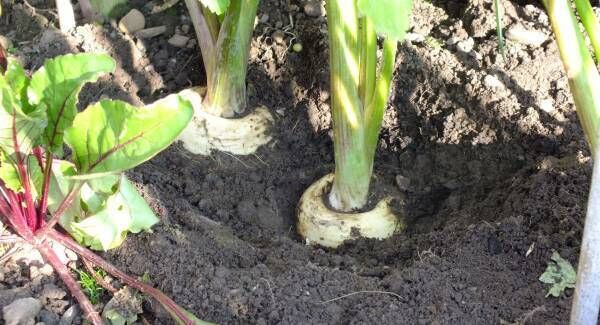
I don’t mind forking, but gnarly small parsnips are just too fiddly to be dealing with. I want to harvest, to quick prep, cook and eat. If it burns daylight to prep, forget it. No matter where/how you grow your parsnips, if you can keep the soil moist, the roots won’t split. They like loose, deep soil to swell good roots — so boxes are ideal
I have found that parsnip seeds do not store well, so a fresh batch is required annually. They have a bad rep with germination but that’s either old seed or sowing at the wrong time of year.
Some experts will have you pre-germinate in the coming weeks but no matter what tricks you pull, they need a minimum of eight degrees celsius to germinate and the same to grow — so hatching on your window at cosy temps does not translate if the garden is brassic.
You can cover soil in autumn and employ polythene tunnels or wait until closer to March to start. You will harvest from August to the following March so you’re not missing out by being patient.
The seed is largish and can be handled individually and so, if you take the time, you won’t have to be thinning later. Drop singly at 10cm to 20cm apart — the foliage is quite expansive so the spacing is for this rather than root development — but the photosynthesising foliage makes the roots, so providing the space is worthwhile in the end.
The tradition is to sow in drills — because often sown in winter rather than spring, the height is less frost prone. But raised beds/boxes negate that.
There are canker and rust resistant varieties, often shorter rooted than heritage or older varieties, but worth seeking out to spare disappointing losses in a bad year. ‘White Gem’ is quite good.
There are three types of canker affecting parsnip crops: Black canker (primarily fungal), Black-brown canker (primarily fungal) and Orange-brown canker (often physiological — bad soil, poor cultivation practices).
These cankers manifest as discolouration spots and blotches, most frequently at the crown or shoulder of the root, that soon develop into granular lesions prone to bacterial rot, penetrating further in and along the parsnip root.
Black canker is actually purple-tinged. Black-brown is mostly dark brown while orange canker is often dark brown flecked with orange.
Early signs on foliage are the appearance of small pale green blotches similar to water flecks. The damage they cause is to trigger roots to split and crack, become inedible or lose storage life. Often they will rot away completely. The pathogen can spread to beet, celery and carrots.
The best treatment/control is
crop rotation with a minimum of a four-year cycle. Supplying good drainage and ridging up are good practices. Companion plant to control carrot fly (as a secondary infection vector). The pathogen is held in diseased material and soil, so thoroughly clean out diseased beds and clean tools after use.
Applications of fungicides and soil drenches can inhibit spore outbreak/viability.
Seek out and grow resistant varieties. Don’t be shy with the odd spray of blitzed garlic and chamomile tea.
And sure in no time, you’ll be dancing around the garden with an alfresco lunch and the neighbours on the phone to the men with the nets.
Fiann’s weekly tips
* Seasonal harvests include brussels sprouts, cauliflowers, spinach and beet, cabbages especially Savoys, celery, celeriac, parsnips, swedes and leeks. If there is not some in your patch order seed so there will be next year.
* Rhubarb and chicory can be forced in January. Rhubarb outdoors with some straw and an upturned pot, chicory inside in a dark shed.
* When gardening on wet soils at this time it is best to work from a plank of wood to distribute weight and avoid compacting the soil.
* If the home compost is ready (broken down without green bits left ), or farmyard manure is available now, then this is a great time to improve fertility and drainage of all but especially heavy soils by working in or top dressing plenty of organic matter.
* Clear all remaining spent crops and garden debris — believe it or not it is warming up to pests and diseases — so head them off at the pass.

CONNECT WITH US TODAY



Be the first to know the latest news and updates