Vintage View: 50s and 60s kitsch
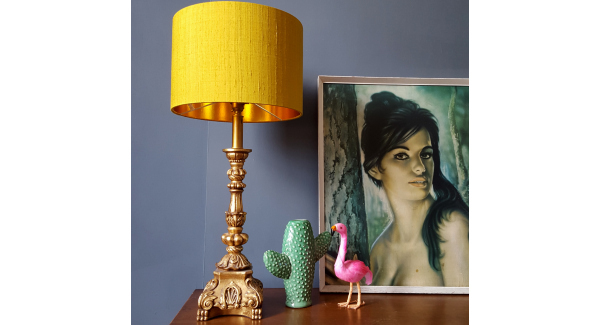
Appropriated by The Urban Dictionary as ‘pleasingly distasteful’, kitsch is a tipsy state of aesthetic awkwardness. We recognise it immediately.
Incongruous, dated, deliberately cheap and cheerful, many pieces that raise an embarrassed titter today, were the height of mass manufactured hip in their day and there remains a collective nostalgia for many cringing, vulgar prints — and dire but well-made ornaments.
Art delivered some particularly ropey but accessible expressions of striking, rebellious social change.
In the 1950s and 1960s highly coloured, melodramatic portraits were reproduced by the millions. These delightfully garish girls form a gallery of startling escapist imagery.
Gorgeous, unattainable lusty Mediterranean madonnas to peachy English maidens with clothes often absent or straining at muslin seams, they look directly to the viewer, but were generally naive and pretty enough for even an upright, uptight front room.
Some have weirdly tinted blue or even green complexions reflecting some modernist, grotesque humour or possible hints of moonlight. There are outright saucy seductresses among them, right up there with the Carry On films in terms of lewd suggestion.
Styles vary by artist from fashion sketches to near photo-realism in oils and acrylic, but the common denominator is searing colour and that direct, challenging, flirty look of freshly minted, post-war confidence.
JH Lynch (1911-1989) was a prolific British painter, at one time rumoured to be a Sister of Mercy nun living in New Zealand, as no one, to this day, and has been able to find out much about the real Joseph Henry.
His luxuriant muses, painted head, shoulders and décolletage, some with bare breasts fastened tantalisingly at the edge of a cream frame were enormously popular in print form, with a ghastly canvas texture. Pooling, come-hither eyes are heavily scored with signature 60’s lining and hair is thick enough to run barefoot through.
Lynch’s harem is staged wandering around markets, smouldering in vaguely jungle-style glades, draped over tree trunks, snuffling roses and generally, exuding a knowing but fragrant charm.
The works were printed as lithographs in England for wall mounting and were included in calendars. Boots the chemist stocked his work alongside Old Spice and apple drops from the mid 60s, but Lynch never achieved critical success and destroyed many of his original works before he died.
Given the nuisance of choking coal fires in many homes, the surface of the prints was finished in a film of vinyl. Many still carry their original instruction to wipe down occasionally with a wet cloth.
The well-endowed ‘Tina’, ‘Autumn Leaves’ and ‘Nymph’ are his best-known works and having been given away for under a fiver for decades, originals change hands now from around €120 on Ebay (21in x28in).
The Russian painter Vladimir Tretchikoff (1913-2006) was another artist whose work carries an amateur freedom in technique and cinematic pulp fiction. Self taught he is regarded by most critics as being a great deal more accomplished than say Lynch, and on par with American Margaret Keane who gained fame with her ‘big eyes’ series of women and children, also kitsch treasures today and beloved of Andy Warhol.
His subjects, during a long career of advertising and illustration, came to include exotic women from the Far East, and his portrait of the beautiful Monika Pon-su-san came to epitomise the open joy of kitsch.
A sapphire-skinned Monika, painted in 1950 in Cape Town in the guise of ‘Chinese Girl’ sold at Bonham’s in London for €1,165,000 in 2013. He remains a cult figure in South Africa where he lived and worked.
I would rate the muscular, cartoonish dance pictures inspired by the roles of prima ballerinas Alicia Markova and Anna Pavlova as being even better than the moonlit- skinned lovelies.
Shop for jewel-rich, fabulous Tretchikoff prints (from €55), lampshades (from €69), cushions (from €22.70) and even dining ware (€8.21 a side plate) reproduced under license at vladimirtretchikoff.com.
An original print will cost you about €150, but you may turn one up at a boot sale or charity shop.
Google his work and educate your eye. Pictures of realistic human faces scare most homeowners, and these graces really do stalk you all over the room with a naughty nightclub look.
Try taming them, hung low with other oddities from your period collectables for company. As for those doe eyed girls and boy urchins smudged in tears and often hung in bawling vertical pairs?
A skip too far down Kitsch Street for this collector I’m afraid.

CONNECT WITH US TODAY



Be the first to know the latest news and updates