Vintage view: Piero Fornasetti, engraver, artist and designer
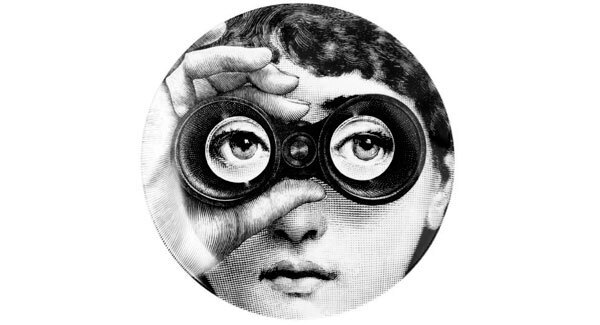
Lina Cavalieri (1875-1944) or the ‘Kissing Prima Donna’ began her career as a street chanteuse in her early teens.
Her face was a lush damask rose — huge dark eyes, full lips and a perfectly patrician chin. Her tiny waistline was the talk of a generation of women splintering ribs in bone corseting to replicate her look.
Lina was not just luxuriantly beautiful, but quick witted, and charismatic on stage and off.
Astute about her manifold physical appeals on the musical market, she profited from an additional instinctive talent for choosing popular songs for her rather thin, reedy voice.
From charming lamp-lit groups in the cafes and bars of her native city, she would go on to be described as ‘the world’s most beautiful woman’, a trilling ‘It girl’ of the late 19th century.
Her spirited performances at the Folies Bergères in Paris were a sensation, and she toured the world in various operatic roles, whipping audiences to a roaring frenzy, kissing Enrico Caruso passionately on the lips on stage at the New York Met in 1906.
She was married four times, once to a Russian prince, and was killed at home alongside her fourth, in 1944 while hysterically gathering up her jewels during a WWII air raid.
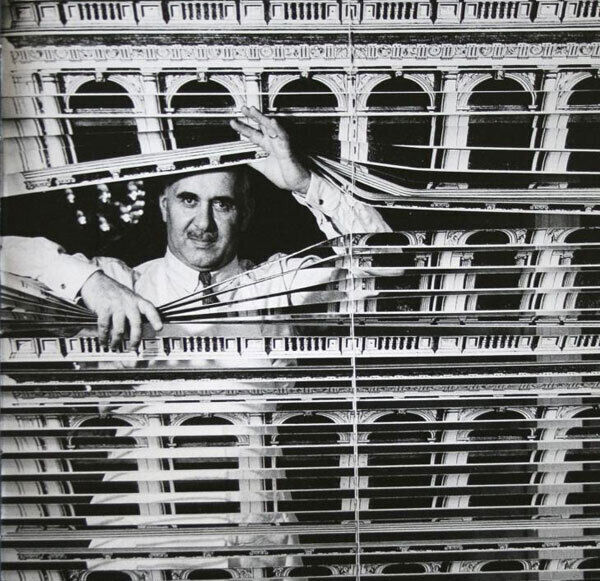
Artist and designer Piero Fornasetti (1913-1988) certainly had some things in common with Lina, and despite being faithful to her as his muse, he never met the enigmatic soprano.
Determined and talented from an early age, Piero’s self belief would also ensure his gifts would be remembered.
A fellow Italian, born in Milan, he attended the respected Accademia di Belle Arti from 1930-1932, but was expelled for rebellious tangles with his art masters. Precocious and unbowed he went straight on working in his studio.
He showed some painted scarves at the Milan Triennale and came to the notice of the great architect and designer Geo Ponti (1891-1979).
Forasetti could engrave, paint canvases and furniture and was a voracious designer, delivering the interiors for the fabulous SS Andrea Doria (launched in Genoa in 1951) with Ponti.
The ship, with all its post war flair and national oomph, is now sadly at the bottom of the sea off the coast of Nantucket, having collided with the MS Stockholm four years after its maiden trip.
Ponti and Fornasetti remained lifelong friends, Ponti saying of him “he had a sly sweetness”.
In 1952, Ponti was struck by something that would change his course too.
Already making a mark with his classical imagery in oddly formal intriguing lithography and painting on ceramic, he would regularly trawl books and ephemera for creative ideas from 17th century wigs to the workings of ancient sundials.
While flipping through a faded French glamour magazine from the late 1800s, he found a full-face image of the late Lina Cavalieri.
Something in that glowing complexion, flawless symmetry and enigmatic stare, grabbed him by the soul. He would spend the next 20 years exploring, exploding and editing the subtle nuances of that single primary image.
Examining Foransetti’s faces (and despite smoking, winking and other hilarious Daliesque devices, they are largely all the same in essentials), there’s a touch of the same unknowable, nebulous quality of the Mona Lisa.
This link to the eternal Giaconda, is something referenced by many commentators on Piero’s work, and Piero certainly never tired of interpreting her, not an uncommon tradition with artists, but not usually held so firmly to one unaltered graphic.
Foransetti’s iconic girl was featured in over 400 ways and printed onto everything from tiles to dishes.
There’s a certain touch of Monty Python irreverence to much of the work, for example crossing her eyes, poking her tongue, even giving her Hitler’s moustache.
It’s said Piero kept 300 plates of this Themes & Variation series in the bathroom at his gallery in the Via Montenapoleone in Milan. The company is still in business, and with a huge repertoire surrounding Lina by Piero and his son Barnaba, there’s a lot of ‘vintage’ Fornasetti dating from anywhere between the early 1950s to the 1990s.
An early piece will carry a printed retailer’s label reading Fornasetti, Milano, Made in Italy. A 1950s set of eight ceramic coasters featuring the Lina catalogue, or a good strong Fornasetti image taken from an antique print, would make about €400.
Keep your eye open for soap dishes, ashtrays and platters, some of which have a rich gold ground with a monochrome print.
Furnishings are rare and expensive, starting at €3,000-€5,000 for a lacquered small Impero desk from the 1970s and rising to tens of thousands for bespoke hand-decorated umbrella stands, clocks and candelabras.
The ‘dreamlike iconography’ of Piero will be featured in a production of Mozart’s Don Giovanni at Teatro della Pergola in Florence this December, using the instruments intended by Amadeus 229 years ago.
For a suitably surreal flavoir of the event go to fornasetti.com/en/Giovanni where you can also find past masterworks and the latest offering from the artists at the Fornasetti studio.


CONNECT WITH US TODAY



Be the first to know the latest news and updates