The fruit garden in autumn is a many splendoured thing
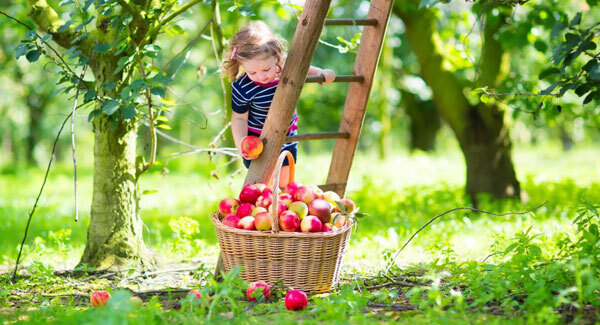
The fruit garden can be a busy place in October, there is still harvesting happening and there is plenty of timely maintenance to undertake to ensure safe passage through winter and a bumper harvest next year. I have pears and apples to get in yet.
And there is always the chance to add some new varieties.
October is perfect to start a fruit garden if you haven’t one yet — there are container and bare-root varieties in garden centres today (along with some expert planting and selection advice), and it is just the right side of the planting season to get them established before it gets too cold or too wet — for you or the plant.
If you are planning to start or want to add more varieties, then get yourself some well-rotted farmyard manure or well-turned home compost.
All fruit appreciate a fertile site and will reward you for it. What you plant into, is their nutritional base for life. A good head start is a long productive life.
If you have fruiting bushes and trees already in — then the same manure or compost can top dress the soil around what you have and supply helpful bacteria to the root zone as it breaks down in the coming months.
Don’t go overboard on feeding your established specimens, the plants are going into dormancy now and nobody wants or needs a heavy meal at bedtime — we don’t want to encourage new growth or extend leaf life. Just a thank-you snack.
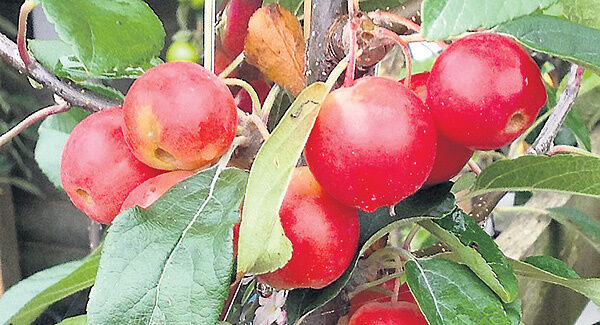
I usually do a seaweed or chicken pellet scatter at the end of September and leave it at that until mid-spring.
We are perilously close to the date when the Púca turns up to spit (or worse), on your blackberries (if you have any left) and that’s just a culturally-coded way to remind us that fruit spoils if not harvested in season or in time.
It is getting into gusty weather time too, so I will have the ladder out this weekend to finish my harvest before the winds make windfalls of the lot.
All fruits which have fallen should be gathered up quickly to keep foxes and other foragers at bay and to store if undamaged.
So while some windfall is perfectly edible, very often apples, pears and also plums will shed fruit with codling moth maggots or other pests.
So if you are vegetarian I’d slice before you bite. A quick survey of the surface of the apple for entry marks or bruising is enough to indicate the issue.
So while we harvest, we also tidy.
If you have had any fungal complications with fruit earlier in the season than its good to remove any fallen leaves as they occur — depending on how hot your heap gets, composting may not kill fungal spores so dispose of, or keep a bag of these leaves to dry and use as kindling for home fires. A little ash from burnt leaves will add nutrients to the compost heap.
I should note that bonfire ash from garden debris (stem prunings, dead wood, dry leaves etc) contains around 1.5% phosphorus and roughly 6% to 7% potassium which makes great plant nutrition, but ash is also highly alkaline, and so on one hand, it’s great to sprinkle a little on soil that needs a pH raise, but on the other hand, too much can harm macro and micro-organisms in the soil and so, lower soil function and fertility.
Moderation is the mode of application.
Now is the perfect time to cut out any crossing or diseased stems (the latter can also be burned or disposed of to prevent reinfection through composting).
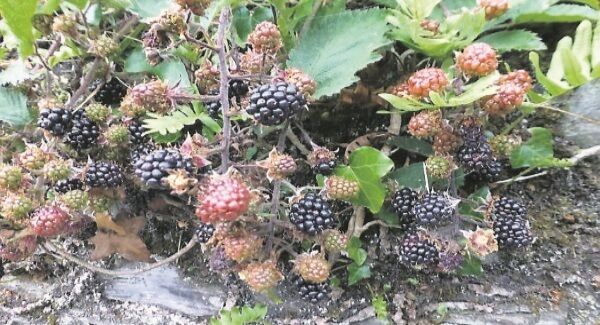
This is a good weekend to start or finish pruning your blackberries and any hybrid cane fruits you may grow such as tayberry or loganberry — the hybrids are not as hardy and some expert growers tie the canes together in bundles for protection and then train them out come February or March before new growth.
Blackberries can just be tied in as normal. With the pruning of bush fruits, you have between now and November to complete.
Meantime, do prune plums and damsons once harvesting has finished, and it is timely to complete any shape pruning and tying-in of wall-trained fruits such as peaches, apricots, nectarines, and cherries.
I will take a closer look at how to prune apples and pears in November as it is best to wait until all the leaves have dropped and dormancy is truly in place.
However, while there is still a little root expansion possible, now is ideal to plant container-grown apple and pear varieties and get them settled in before they drop their leaves and hibernate for winter.
Bare rooted can be planted any time between now and the snows or there will be a need for pickaxe and dynamite to achieve a planting hole.
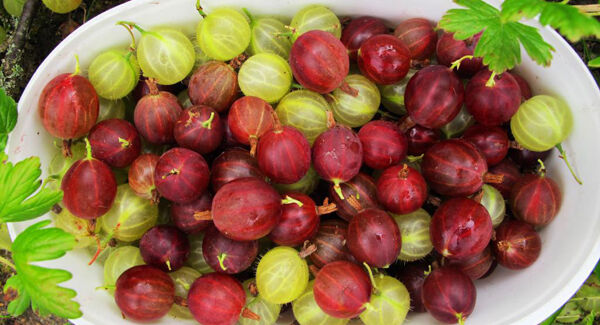
Bare-root fruit bushes such as any of the currants (red, white, black) and any of the gooseberries (American, European and even those purple ones) are typically planted in October.
Container-grown fruit bushes can be planted any time of year, but as with trees, now is a good time to get their roots established before the slowly changing temperature next month lulls them to sleep— and that’s a finger’s crossed hope — as some years it is a sharp drop and a sudden stop.
So the longer in situ before that, the better for the plant and our own peace of mind.
The big thing with winter damage is not so much the cold, it’s the other facets of winter that can undo fruiting plants.
There are no leaves to scorch or kill or dieback in dormant branches and frost penetration of luscious roots is not an issue.
The problem primarily is wind rock which disturbs the roots and allows soggy pockets to form, or else saturated soil that suffocates or rots the roots.
So when planting new varieties, or prepping those already planted for winter, do firm the ground and stake where possible.
Manure and some grit in a planting hole mixed with your excavated soil will make it more free draining.
In terms of cold, you can look to protect autumn raspberries with some fleece.
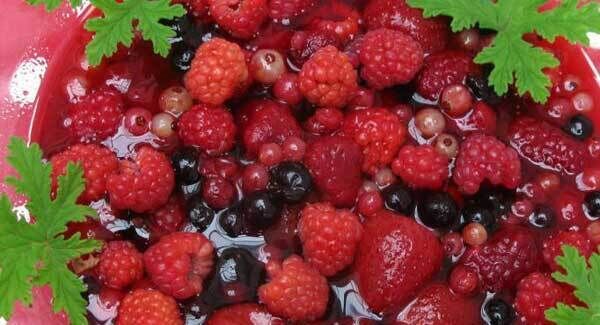
I am a fan of fleece or old net curtains for the winter protection of any fruiting plant, as I find polythene can trap condensation and on the odd sunny day we have left, it can be a bit of a heat surge and I don’t find either helpful to the natural rhythms of plant growth and plant recession into dormancy.
This is a good time to create new strawberry beds as those rooted strawberry runners can be severed from the parent, transplanted to pots or replanted straight into beds.
I’ve had a mixed success with soft fruits this year, but that’s where a busy schedule and a required water regime clash.
It has however renewed my appreciation of alpine strawberries and I have a golden foliage variety that I’m looking forward to sowing.
In general you should think of strawberries as having a three-year cycle; the first year is establishment with a small crop, and years two and three are for active expansion and proper harvests.
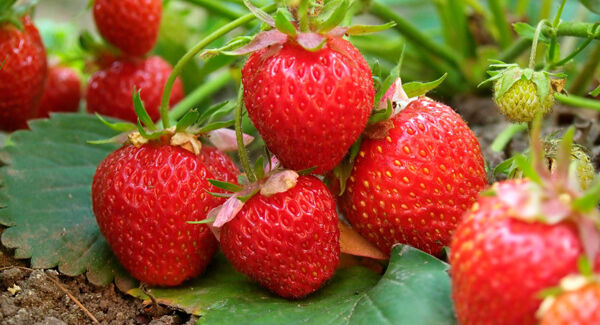
Then you have a choice to make — accept diminishing crops over the next few years, or lift and divide and grow in a new spot with a new improved fertile soil — or start all over again with new seedlings.
CONNECT WITH US TODAY



Be the first to know the latest news and updates