Getting the mower out is good for your health as well as the lawn
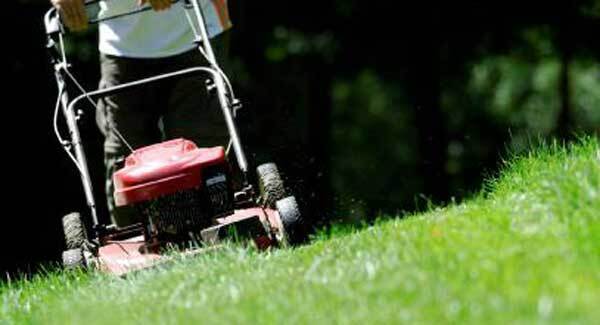
Estate agents will tell you how a lovely and well-maintained lawn will add kerb appeal to your property — so you can sell it for more — or rent it out quicker.
Eco-psychologists will explain how a well-kept lawn engenders a sense of control and order and thus has a calming and reassuring effect.
Environmentalists may remind you that every acre of grass produces enough oxygen to sustain more than 60 people a day, and in urban areas your patch is vital to adding green acreage and oxygen to highly populated cities.
Town planners will talk about how a lawn or grassed areas reduces the heat island effect (amplifying of temperature extremes by reflective urban surfaces including glass and concrete), the grass simply absorbs the sun’s heat during the day and releases it slowly in the evening, not to mention slowing water run-off and flooding.
All great reasons to take up the cobble lock and look at reinstating a lawn again.

On the other hand, most productive gardeners might argue that lawns are a waste of growing space and an array of vegetable and fruiting plants will do all of the above and provide dinner too.
So if you have a lawn is it time to trade in the lawnmower for some scaffolding planks and get raised beds in instead?
I am all for extending your sustainable practices and growing space but before you get rid of the lawn completely I’d like to argue keeping a corner.
For starters, even a meter circumference of lawn is a location for some barefoot yoga, meditation, or just standing on — standing barefoot on grass lowers stress markers and inflammatory agents in the body by grounding us and changing our ionic charge.
Sure just looking at it lowers blood pressure (green has a psychosomatic effect).
Then there is the physicality of keeping a lawn — and we gardeners are now back into regular grass-cutting mode.
Oh what a chore — but have you heard of chore-fitness? Doing extra housework to burn calories?
To begin with, hand mowing with a cylinder mower or an electric push can burn as many as 182 calories per half hour of activity.
A further 20-30 minutes of lawn attention in the form of raking clippings or leaves will burn 162 calories.
And if it is a day that you decide or require to finish with a watering session, then add another 61 calories.
Just compare that to a spin class, aerobic dance session, or workout class, where, during high-intensity aerobic exercises, an average 95 calories are burnt every ten minutes for 57kg (eight stone) individual, 115 calories every ten minutes for a 68kg (10 stone) individual, while 134 calories are burnt off every ten minutes for an 80kg (12 stone) individual, and 153 calories burnt every ten minutes for a 91kg (14 stone) individual. Maintaining a lawn could be a powerful aid in keeping or getting fit.
Now my colleague Peter looks at classical or ornamental gardening themes and I’m sure lawn care has or will be covered.
I am given space to cover edible, environmental, and sustainable gardening themes.
So this is not about lawn maintenance, it is about how having a lawn can help maintain a healthy growing environment — how a lawn is a resource to the productive gardener.
Yes there are the gardener’s health benefits listed above (and I’ll save a special one for the end), yes there are the health-of-the-planet benefits, also listed above, but there are direct benefits to the fertility and fecundity of the plot.

A few weeks back I wrote about what earthworms do for us and why they should be on the radar as much as bees.
We are planting more nectar-rich plants to feed the bees but how are we on helping the ultimate gardener’s friend?
Top dressing soil with compost is part of the answer to saving and maintaining earthworm populations and grass is a key component in that.
The best compost is made in layers (like a lasagne) and the addition of thin layers of grass clippings between brown layers (dry leaves, prunings and twigs, straw, paper, kitchen scraps) adds a water content vital to maintain the bacteria in the heap and steady decomposition.
Too thick a grass layer and it slows the heap, but you can add some fresh and keep some to dry in the sun before adding later as a brown layer.
Setting the mower on mulching setting or just taking a short trim and leaving the trimmings on the lawn will add back nutrients and keep your lawn green and healthy without recourse to fertilizer and other products. A second skim with the catchment box or bag will do for the compost heap and other uses.
Mulching with grass is a fine art, too thick and it can really heat up and damage soil or just go to sludge.
There was a Swedish study a few years back that looked at grass mulching in cauliflower production and they found it improved yields (boosting vigour and performance), but also that the grass clipping mulch reduced damage levels normally cause by brassica root maggots (in particular Delia floralis and D. radicum).
In part because it encouraged pest predators who also digested grass clipping as part of their diet. And in part because the adult couldn’t get soil access to lay eggs.
You can experiment with thickness yourself — the Swedes went deep but a quarter of an inch is typical. It’s that balance between a nice decomposing mulch and silage sludge.
What I will say is that even just a sprinkling of clippings will feed earthworms and other beneficial microorganisms that help maintain healthy soil and decrease pests.
Grass is composed of 70% water and then good quantities of carbon, oxygen, nitrogen, and phosphorus so you are adding a lot back when you mulch or make compost with it.
But it also contains lignin, a wonderful macromolecule integral to the formation of secondary cell walls in plants with a role in conducting water through plant stems.
Of course you can also make a nutritious soil drench or liquid feed from your clippings based on the minerals it releases, but the lignin can actually help with plants in times of drought — a super boost to the watering can rescue.
To make a clipping tea, simply immerse your clippings in a bucket of water and leave aside for a week (nutrients and lignin will leach out) or three weeks to ferment (the extra broken down chlorophyll and amino acids will make a great healthy cocktail).
Strain off any sludge (into the compost heap) and use the liquid as required. Add a bit of comfrey and nettle at the start and you get a powerful balanced feed.
OK so the best reason to keep a patch of lawn: The smell of freshly cut grass. It’s the smell of summer.
Beyond the evocation of sunnier days ahead, the volatile chemicals released from cut grass trigger a sense of wellbeing and relaxation.
A waft of stress reduction.
The aromatherapy of mowing the lawn pushes buttons in the amygdala and the hippocampus — the regions of the brain responsible for emotional recognition/response and memory.
When those parts light up we are brought into the now. Who knew mowing the lawn was a mindful exercise, further busting stress?
Ah, the joys of gardening.
Just in case you are getting too relaxed, cut this page out and stick it up in the shed because the hexane in decomposing grass is similar to that released from cadavers and it’s used to train rescue and search dogs globally.
So if CSI Ballincollig comes bounding over your fence with the scent tracker dogs, armed response and serious intent, simply kneel down, hands behind head, nod to the shed, and say oh the joys of gardening.

CONNECT WITH US TODAY



Be the first to know the latest news and updates