Stock up on bone broth to nourish the body and soul
Bone broth, aka stock, once something consigned to granny’s stove-top, maybe containing a sheep’s head and a bit of barley, Brendan Behan-style — is back in food fashion.
Generally the making of stock is confined to restaurant kitchens who simmer roasted bones for hours, add veg and then red wine to make a reduction. The deep flavors that this process creates can take the results from ‘meh’ to marvellous and is the game-changer when it comes to getting amazing flavours into sauces at home.
Making stock at home is easy and costs little, you can drink it as a warming and healing tea — it’s not just for sauces. Once you get into it, it’s s habit you won’t break. Stock or broth is now being consumed by health conscious types seeking to stay active and feel good via a more traditional approach to their diet. Drinking stock instead of coffee will not only warm your own bones but will nourish you too, why else has it been called Jewish penicillin?
As I make stock all the time, I spent some money on a slow-cooker so I can throw everything in to the pot, turn it on and leave it for as long as I like. I normally let stock bubble for 12 to 24 hours to get great flavours, and there’s no steam running down the walls. Happy days.
It has miraculous abilities to shift phlegm as chicken contains a natural amino acid called cysteine, which can thin the mucus in your lungs and make it less sticky so you can expel it more easily. According to Sally Fallon, founder of the Weston Price Foundation: “Stock contains minerals in a form the body can absorb easily—not just calcium but also magnesium, phosphorus, silicon, sulphur and trace minerals. It contains the broken down material from cartilage and tendons - stuff like chondroitin sulphates and glucosamine, now sold as expensive supplements for arthritis and joint pain.”
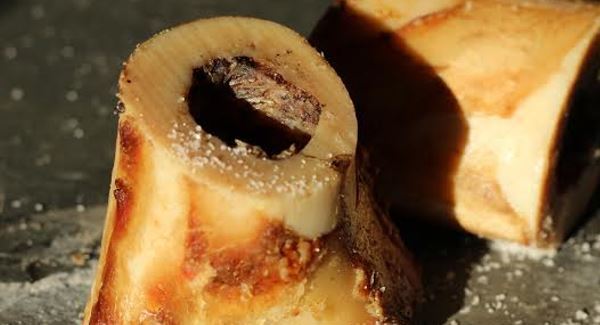
Older people often eat jelly for the gelatine, which is great to lubricate your bones, if you want to avoid added sugars, stock will do that too. My favourite stock uses up beef bones that I get from my local shop. I roast these first with some sea salt for about an hour to make the marrow puff up in the oven.
We all hover round these bones like gannets then, hoovering up the delicious marrow, before chucking the remains into the magical slow-cooker. Of course, you can also use a whole, raw chicken, bearing in mind that the better quality chicken will give you better stock. You can’t, at the end of the day, make the proverbial silk purse from a sow’s ear.
Other than the meat bones, the only things your really need in the kitchen are a leek, some sea salt and black pepper - carrots are optional. If I cook a whole chicken like this, we make a dinner from it by flavouring the stock with Asian herbs and having the meat stock over noodles with the meat and soy sauce for flavour. Good Japanese ramen uses 12-hour stock — it’s unbeatable.
The feet of the chicken also add valuable flavour and gelatin to the stock, gelatin makes collagen which is good for your skins elasticity, so if only for vanity!
1/2 to 1kg in weight of bones/carcass from one chicken/duck either raw or cooked OR use whole chicken OR roasted beef bones, stripped of marrow. If you have roasted bits in the tray, remove these and add them to the pot, or any chicken jelly which is full of gelatin.
Chicken giblets —neck, feet— optional 2 onions, peeled and cut into quarters OR 2 leeks, washed and trimmed 2 carrots peeled and cut into chunks (optional as they can make the stock too sweet) 6 whole peppercorns 2 bay leaves 1 tsp sea salt 1 tblsp apple cider vinegar — this helps to draw the nutrients out from the bones
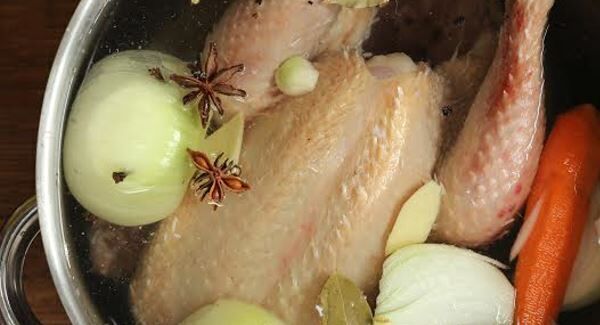
Put all the ingredients into a large pot, and fill up with enough cold water to cover everything. Put the pot on to boil and keep an eye on it, as scum will appear on the surface, skim this off and discard it.
Once the pot is boiling, turn the heat down and allow it to simmer gently for 4-10 hours, this does seem like a very long time but the slow cooking results in a flavoursome stock that has all the goodness drawn out from the bones.
Once the stock is cooked, ladle some into a mug and top with freshly chopped parsley and a sprinkle of sea salt if needed, enjoy the warming goodness.
Slow cooker version: put everything into the ceramic pot, cover with as much water as you can, and turn the heat on to high. Once it is bubbling, turn it down to low and leave it cook for 12 - 24 hours. Leave the stock to go cold and strain it, discarding the cooked bones and veg. You can now freeze in clean, glass jars or plastic tubs for later use. The strained stock will keep for about 4 days covered in the fridge. Use this as a base for any soups you make.
For more about following a traditional diet check out an informative conference in Limerick on Feb 6 and 7. www.wapfmunster.com
CONNECT WITH US TODAY



Be the first to know the latest news and updates