Vintage View: The perfect vintage desk
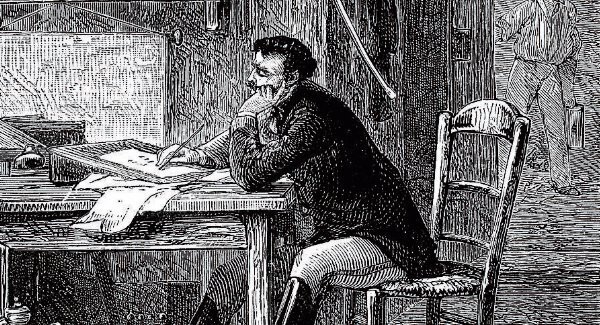
IF THERE’S one piece of furniture that brings out the complete lunatic in me — it’s my desk.
Working from home I’m parked under its protection, rattling out my tangled thoughts for hours of the day.
This year I spent about ten months urgently hunting through the classifieds and online auction sites for a supportive successor to my high Victorian side table that had cramped my back and style for the last 12 years.
Finally, having driven the entire family demented on the subject, I found a Norwegian rosewood beauty from the 1970s, well priced and in beautiful condition.
It was delivered by van from Dublin on a rainy night, and was as glorious in person as I could possibly have dreamed of, waves of scarlet figuring breaking over its modest, angular chassis.
I screeched and roared, instructing its journey to the nook of creativity, dressed it up with my most pretentious bits and bobs, and revved up my chair wheels — navel pointed to that lovely timber top.
Well — that’s when it happened.
When my aged, spidery legs cranked the equally hard won Eames EA chair smartly to the desk, there was a sickening wallop that shook the rusting Fase lamp and jangled my knock-off GPO 300 Series telephone into a minor-key trill.
The key-hole in the desk would not accept the chair. In my passion for plenty of depth, no dressing table conversions, and hanging drawers with file holes to the rear, I had forgotten that a well fed, mid-century executive’s backside was more commodious than my own.
It was only 2cm in the difference, but this hasty marriage would never make it.
I tried everything. I put a whole protective sheepskin over the seat and back of the EA, sweating like an old horse. Working from about 800mm from the keyboard, penitential with regret, I clung nails-on to the cliff edge.
Currently, I’m on a wobbling kitchen chair with a mean seat, which I creep into the key-hole in short shuffles until docked between the drawers.
This arrangement does at least keep me at work as the only way to get out is to turn the chair over backwards and bounce my head off the floor.
There are some pieces you can compromise on, but any piece of furniture that supports your body in any way and that you intend to use more than occasionally must be right to the centimetre. (Note to self — if you won’t sit in any other chair, then that means a desk suited to your frame and the width and the height of the chair, if it is not adjustable).
Chairs with fixed arms are a particular nuisance with keyhole desks, and if the desk has been converted from a dressing table (check for telltale holes from the mirror to the rear surface), its dimensions are likely to be pretty dainty.
If you want to avoid a battering ram to tender veneers, examine the available space before you buy. A plain school desk with a laminate top, set on a metal frame or tubular legs comes in at about €40.
Watch out for lower ground rails, which will interrupt the easy flight of a wheeled chair.
For something similar with a vintage feel in scaffolding boards, try Barrel & Gun, who can make up just about any size of desk or table to order. Barrellandgunn.com
If you can rest your forearms lightly on the desk or table rather than your elbows, and your feet are flat on the floor, legs bent at 90 degrees, that’s the ideal height for writing and reading, but you may find a lower height easier for key work.
Dining tables tend to be a little lower, but beware of being seduced by the better price of a period side table or dining table intended to serve as a desk, as your shoulders and lumbar area may suffer over time.
Check any diner for an intrusive apron — the part running under the surface, and around its edge which can seize the thighs uncomfortably. Reaching more than 38cm into the surface to reach your pieces is awkward (don’t choose a desk less than 80cm deep or 1.5m long for serious work).
Good back health is all about postural variation, moving after periods of time to another position. Desk heights vary between 63.5cm to 77cm.
If you can manage to arrange your work between a sitting and standing desk, your back will thank you. Consider erecting even a deep shelf to about 120cm-130cm and wander over to read paperwork there a few times a day.
A good eye-to-monitor distance is 60cm (+/- 10cm), which precludes many roll-tops and Dickens-style desks as real working stations — be realistic. Look not only in the antiques area but in the second hand office trade, which can turn up some unrecognised beauties saved from upper management and designed to do the job.