Planting Halloween bulbs that will be blooming by spring
Halloween is today celebrated across the globe thanks to the sphere of Irish influence. Unfortunately the worldwide appreciation of Halloween may have depreciated the feast a little — it’s moved from being an Irish phenomenon to a trick or treat event, with ‘spookiness’ replacing the context of what was once our New Year celebrations.
All Hallow’s Eve was once a time when the barriers were dropped and we could commune with the energies of our ancestors, taking their skulls out and letting them share our celebrations.
Over time ancient ancestral head worship became transposed to carved turnips to fool the Christian priests — to make them believe that we had stopped the practice. Cromwell’s displacement and slave trade, the Famine, and making more room for sheep, took the Halloween tradition to America where it evolved into the jack-o-lanterns of carved pumpkins. And with that, the tradition of trick or treat and ghost stories.
So from a sacred time, an ancient connection to the otherworld — it is perhaps now just an entertainment for children and a night for short-skirted Bo-Peeps to scare men of a certain age. But some of the older traditions can inform the modern gardener.
Prior to the globalisation of Halloween, the 31st was Oíche Shamhna — the eve of the Irish new year.
Celebrated by ritual fires at Tlachtga (the Hill of Ward) near Athboy in Meath, 20km away at the Hill of Tara and across the land in communities and villages, an echo of which continues in local Halloween bonfires today.
It was traditional that all potatoes should be dug and stored by now, all oats be stacked and any livestock prepared or housed for winter.
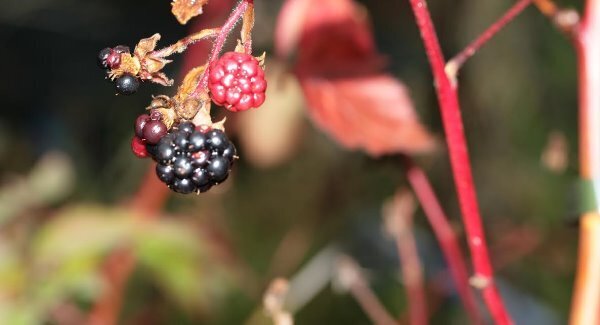
Traditionally today is the date of the last pick of wild fruits — after Halloween the mythical Púca is said to spit and urinate on them. Any blight or withering on fruits at this time of the year is known as Púca na Sméar.
Halloween was far from an ending, it was a beginning too — and even more importantly a fresh start. We Irish saw the winter as a gestation period, not a dead season. It was when our dreams and aspirations matured to fruition come spring and the rebirthing of foliage and the growing year.That intent is so important, and today, we can make plans now that will bear fruit come spring.
I am usually about the place this week planting bulbs with schoolchildren as part of Samhain celebrations. We write on a piece of tissue paper our wishes or hopes and we wrap a bulb in it and then plant the bulb and wish together. Patience, delayed gratification, real time, and resilience is required. Come spring the bulb emerges and flowers.
In the gestation period, steps have been taken to bring that written aspiration about; the wannabe footballers have continued to practice on all-weather pitches over winter and hone their skills; the get-a-good-job kids have learned more in the intervening months and the X Factor hopefuls have the dance moves down to perfection — or have reflected upon the y factor. Intent has blossomed and the school has more flowers to feed the bees. It’s all good.
Try this with your own children or grandchildren, it is a great intro to the magical world of the garden, to the transformations in nature — from bulb to flower, from intention to tangible reality.
Plus the bonus: You get to fill your garden with colour next spring. Frosts or not, daffodils, tulips, crocus, fritillary, and grape hyacinths can all go in now. When selecting bulbs do avoid any that are shrivelled or soft. Opt for firm, plump, and sustainably farmed, (I think that’s how I like my coffee and possibly my women too — I hope you smiled because that’s me in the dog house.)
Anyway when it come to planting, bulbs are easy — a hole double their depth, if not well-drained soil, make it so. Spacing can be implemented at two bulb widths apart. Some bulbs have pointy tips and a flat bottom (saying nothing), while with others you might not instantly perceive their root end from their shoot end — simple solution, plant the bulb on its side and it will self-correct through its inbuilt geotropism, (it knows where the sun is ).
We gardeners can again appropriate Halloween as a new beginning — we can make a new start on fertile soil by feeding it compost and manure or we can sow a green manure. It’s not too late to sow some grazing rye (secale cereal). If you have never tried it before, grazing rye is an annual crop with an extensive root system, sown August to November to improve soil structure.
It grows to be dug in as green manure the following spring. In the interim, it acts as a living mulch, a weed suppressant and a habitat-cover for beetles, frogs, and other pest predators. When flowering, it will attract pollinators and aphid eating insects. While over-wintering it supplies the added benefit of holding the soil in existing fertility, by not letting the rain leach nutrients away.
Secale cereal is sometimes sold as Hungarian grazing rye and is the best variety of green manure for winter use. It germinates in 7-14 days if sown now and will be up before any serious temperature drop.
Once established, it continues to actively grow even when snow cover is present. It is best practice to surface-sow the seed at a rate of 16g-18g per square metre. You may rake, but do lightly tamp down.
I recommend covering the sown area with a fleece; the extra heat helps speed germination but it also offers vital protection against foraging birds at this time of year. Come March/April you can mow it before digging it in. Digging-in can be hard work but worth it.
It will need a further month to break down in the soil if it is to be followed by potatoes, crowns or legumes or closer to two months if following with carrots, parsnips and small seed. As it breaks down it produces temporary seed toxins that generally dissipate within six weeks, but will inhibit germination of smaller seed while still active.
CONNECT WITH US TODAY



Be the first to know the latest news and updates