Time to harvest some fallen leaves to make a compost
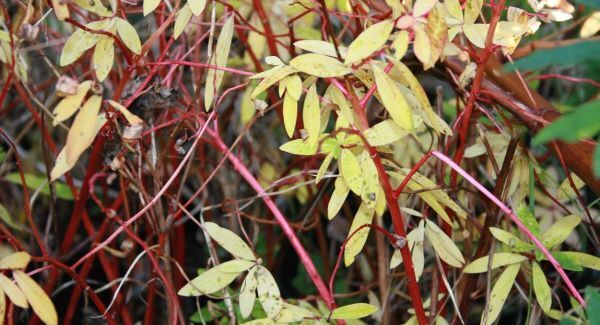
THIS is not a bad weekend to visit your local park —ost leaves six months to a full year to do their thing. A full year yields the best stuff. I chop into the pile with a sharp shears, sporadically, to speed the process — smaller parts rot down quicker. Oak leaves take two years, so select your stroll and tree choice accordingly. Any leaf fall at home, on the lawn or paths can be mowed up with mower on mulch setting and from the catchment box, be put straight into the leaf mould stack.
The recent flush of russet leaves is down to a retreat of sugars and chemicals from the foliage that exposes the interplay of pigments within the processes of the leaf. Here comes the science bit — but it is (if i can make the pun) quite absorbing. We learn in school that chlorophyll — the life blood of plants is a ‘green pigment’ that absorbs light and helps process sugars in leaves to feed the plant — tip to root.
What is actually happening (outside of functional photosynthesis) is that chlorophyll absorbs both red and blue light from any sunlight that falls on the leaf and so the leaf reflects back a green colouration. If you have a yellow leaved variety in your garden then it has a dominance of the carotene pigment and it absorbs the blue-green and blue from the sunlight that hits the leaf and reflects back the golden hue that mesmerised you in the garden centre.
The presence of carotene in ornamental plants does not mean that they will taste like carrots or even be edible — many are even toxic — so forego the taste test. The carotene is simply absorbing sunlight’s energy and transferring it to chlorophyll and more photosynthesis. At this time of the year, sunlight is lessening in intensity and duration so deciduous plants are going to winter-saving mode and shutting down photosynthesis by reabsorbing the chlorophyll and eventually discarding leaves.
Even the greenest of leaves can have a carotene content — masked until now by lots of active chlorophyll, but because carotene is such a stable compound it persists in leaves even after the chlorophyll has vanished — and so the leaves begin to reflect more and more yellow.
If you have a fiery Japanese maple or notice red tones in the local trees — this is down to anthocyanin. Another pigment we might hear of in relation to the health properties of certain foods, but in relation to foliage pigmentation, the process involves the absorption of blue, blue-green, and green light — leaving a reflection of red.
You may be more familiar with that pigment as being the super antioxidant in blueberries and acai berries and yes, both those fruits reflect purple not red. And we can note the word for blue — cyan — in the name of the pigment. Anthocyanins are in fact sensitive to the pH of sap and the concentration of sugars and proteins within the plant. When it comes to fruit I find it fascinating that this pigment is responsible for the redness of my favourite apple and the increasing purpleness of my slow ripening grapes and the pleasing tones in penstemons. Anthocyanins may have a broader role in protecting the plants from UV damage and in maintaining optimal functioning and the colour is just a secondary serendipity.
Not every colour change is a magical, welcomed experience and the garden is not immune to some seasonal infections. Right now, the prime culprit can be rust and other fungal infections. If I have been cracking on a lot about tidying lately, it’s to try and head this one off at the pass. A lot of common weeds can host rust spores and fallen leaves and garden debris will, if unchecked become conducive to spread.
Rusts are unsightly and they can adversely damage your plants too. But I find them fascinating. They are specialised fungal pathogens — several different species affecting a range of different garden, vegetable and greenhouse grown plants. Most have specific hosts (usually a single plant family), but some may require two hosts in their life-cycle and others can leap about at will.
The condition presents on the foliage and stems of plants as patches of irregular discolouration — which are in fact a system of yellow, dark orange, brown and red dots and spots (actually circular pustules).
The life cycles of rust involves a ‘latent’ period, so infection may be present without visible symptoms.The rusty dots release airborne spores that lead to rapid crop contamination. Affected plants quickly become inedible or no longer viable to harvest/storage. Ornamental plants can be compromised and not perform as well in following years.
Commercial and homemade fungicides can buffer against infection. The ‘books’ often recommend copper-based solutions but I worry about copper and its diminishing effect on the populations of earthworms. Adding potash to soil helps. Manipulation of microclimate and control of leaf wetness is essential in prevention of rust outbreak — so water the root zone not the foliage.
Also, better spacing will help — lift and divide now if you need too. Ventilation of green houses and air flow in the garden are vital. A spot of hedge trimming or some timely pruning of overhanging branches can check some of the problem.
Remove infected plants and burn rather than compost the removed material. The good news is that resistant varieties are available in most vegetable families and likewise with ornamentals.
If you want to try some organic methods you can avail of a dusting of cinnamon — a potent antifungal agent. A spray with some cooled chamomile tea is also potently antifungal. The lactic acid in milk works by inhibiting the ability of spores to replicate effectively.
My favourite is garlic spray, the sulphur compounds in it not only kill infections but boost the plants immune system — fights infection on two fronts. A whole clove, deskined, blitzed up in a blender with a pint of water. Decant to a spray bottle, sediment an all — it will ferment over time and increase potency. Spray at will.

CONNECT WITH US TODAY



Be the first to know the latest news and updates