Under-planting techniques to bring colour to your garden in late winter
As the sunny colours of the summer vegetable garden fade, the time has come to plan for darker months ahead and consider ways of introducing more colour to the garden in its hour of greatest need.

Under-planting techniques to bring colour to your garden in late winter

The earliest months of the year are generally the dullest when it comes to vegetable gardens.

Apart from a few winter brassicas and leeks, most productive plots are devoid of vibrant colours and lie gently asleep waiting for the new burst of spring.

In vegetable gardening terms, this spring burst may not occur until May so to brighten up this long wait for signs of life, spring flowering bulbs tick a lot of boxes.

They certainly are an easy way to bring cheer at a colour-challenged time of year in the garden.

From pots, to planters, underplanting trees and studding existing lawns, bulbs can be incorporated into a productive patch in several different guises.

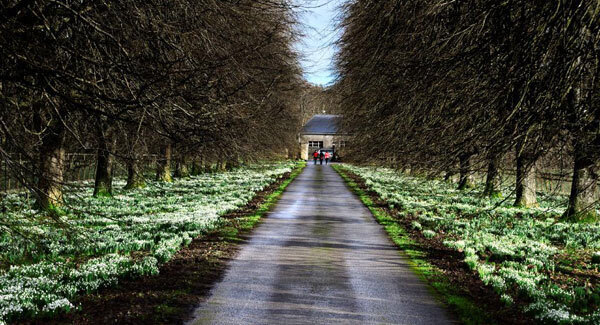
For example the entrance to the Airfield Food Garden is graced by a large lozenge lawn which simply looks like well-maintained grass for approximately eight months of the year.

However it is between February and May that this lawn comes into its own as it transforms into a carpet of fresh spring colours, creating a perfect point of interest in contrast to an expansive dull backdrop.

First comes a flush of pale-purple Crocus tommasinianus, followed by drifts of white Narcissus ‘Thalia’ and ‘Ice Wings’ and then dotted with some vivid blue Camassia quamash to bring the bulb lawn show to an end.

All bulbs planted were selected for their ability to naturalise and planted in random kidney shaped swards to give a natural effect.

Planting a bulb lawn was a new endeavour for me, and as always some basic learning was gleaned — such as only selecting bulbs that naturalise readily and that will live, multiply and spread for years to come.

From now until the end of October is the best time to plan and plant a bulb lawn as bulbs need time to settle and leaving things any later than October means that ground conditions will have deteriorated, making the job messier with negative impacts on soil structure.

It is important to observe bulb flowering periods as this is the key to ensure mowing schedules can be put in place as soon as bulb foliage has died back.

For the continued success of bulbs in years to come, contain the urge to mow until all bulb foliage has died back, as this feeds next year’s flowering.

There are plenty of other spring flowering bulbs that naturalise well in grass, so make sure to have some fun and experiment with different colour combinations and plants.

For those out there lacking lawns to enliven your space, planters, tubs and pots of all shapes and sizes are perfect for spring flowering bulb displays.

From outdoor pots filled with colourful combinations to smaller indoor pots filled with scented narcissi or hyacinths, there is no end to the possibilities. Bulb catalogues and suppliers give great ideas for combinations and outline detailed planting instructions.

I fell in love with Helen Dillon’s classic tulip in bins display and followed her lead last year to great success.

Metal bins were easily acquired in our local hardware shop, and once holes were drilled and drainage layer in place, 3 layers of bulbs with 20 bulbs per layer were planted ranging from mid-season to late encompassing a wide palette of colour combinations ranging from the white tulip ‘Wildhof’, crimson ‘Passionale’ to the purple-black flowering tulip ‘Queen of the Night’.

Planting tulips in bins is more forgiving than bulb lawns so time is on your side but ensure to purchase bulbs promptly before all the best bulbs sell out.

Smaller pots filled with narcissi, muscari, crocus and iris also allow for lots of fun and creativity and are sure to brighten up many a dark corner on an overcast cold spring day, if planted now.

Under-planting trees and shrubs with drifts of spring flowering bulbs is an old fashioned, familiar and heart-warming horticultural hobby.

However, underplanting food producing plants such as cardoons and globe artichokes was a novel idea for me.

Inspired by Joy Larkcom’s incredible resource Creative Vegetable Gardening, I extended my newly found bulb bandwagon by underplanting our globe arthicokes in the Food Garden with muscari bulbs.

This combination worked wonderfully with the bright blue pearl like clusters of muscari flowers peeping prettily up and off-setting the silver grey leaves of the artichokes perfectly before beds filled with accompanying colourful kales.

Last year was my first serious foray into the wonderful world of spring flowering bulbs.

This year I’ve been having lots of fun browsing through catalogues and in my new flush of bulb enthusiasm, I was slightly alarmed to read about the negative impact of conventionally produced flower bulbs on the environment and in particular on our greatest garden allies, bees.

Conventional bulbs appear to be sprayed in a cocktail of pesticides with neonicotinoids being the worst offenders as they are known to be a major player in the decline of bees and other pollinators.

This harmful pesticide is absorbed by the plants and residues lie in the flowers, nectar and pollen with subsequent ill effects on foraging bees. Make sure to ask your local nursery about the possibility of buying organic bulbs.

Clearly it is rather late to influence bulb stockists this year but at least enquiring helps to highlight this serious issue.

For guaranteed bee-friendly and beautiful spring flowering bulbs, check out Fruit Hill Farm’s organic range and order online from www.fruithillfarm.com 

More in this section

Revoiced

Newsletter

Had a busy week? Sign up for some of the best reads from the week gone by. Selected just for you.

Cookie Policy Privacy Policy Brand Safety FAQ Help Contact Us Terms and Conditions

© Examiner Echo Group Limited