Bee column: Blooming Blackberry and Reverie
“My bees filled a super between Monday and Thursday with clear honey; where is all the nectar coming from?”
That’s about 14 kg of honey. A look at our hedgerows this week would clearly answer this as honey bees could be seen to be working hard flying between the blackberry flowers and back to the hives.
Honeybees are currently very active collecting nectar and pollen from flowers. The nectar is converted, back in the beehive, into honey, the bee’s energy producing food.
The pollen supplies proteins, vitamins, fatty acids and minerals that are essential for growth, especially in the larval stage, and for body development and maintenance in the adult bee.
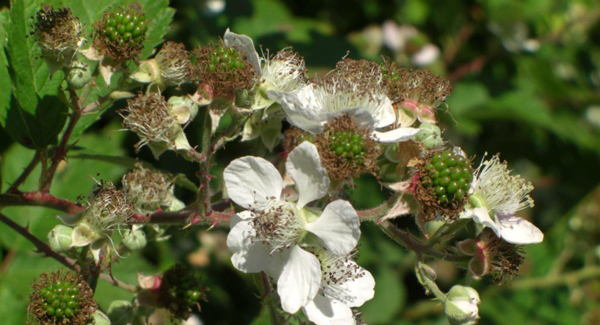
The blackberry (Rubus fruticosus) is one of the most important families of bee plants in Ireland. It is the rough wild thorny bush that can be seen at this time of year flowering abundantly along our hedgerows.
Blackberry grows freely almost everywhere irrespective of soil type, and it has a long flowering season. In southern counties it flowers from mid-June to early August.
The blackberry is a native vine in the rose family. Roses, which also include flowering roses, almonds, cherries, apples, plums, pears, crab-apples, and hawthorns, are all heavy producers of nectar and pollen. Blackberries occur along hedgerows, forest clearings and are invasive on fallow and waste lands.
The blackberry secretes an abundance of nectar at the base of the flowers. From this nectar the bees produce a valued honey that is clear to amber in colour.
However, the availability of blackberry honey from plants is not always consistent. In wet days rain may wash or dilute the nectar. Stands of the plant often decline as farmers severely cut back or spray hedges along country roads. Please Mr Farmer cut back only in late summer or autumn.
It’s not only the honeybee or beekeeper who benefits from the bees’ visits to the blackberry but as the bee moves about the flower, she inadvertently brushes the exposed flower parts with her hairy body.
Pollen granules from the flower’s anthers adhere to the hairs on the bee, and she carries them to the sticky stigma of another blackberry flower. Only with this insect pollination will there be fruit produced.
The fruit and seed of the blackberry provide enjoyable tarts and jams as well as important food for wildlife and birds.
The other very important source of honey that could be filling up our novice beekeeper’s supers these weeks is white clover (Trifolium repens) as its flowering overlaps with the blackberry. Bees work both plants at the same time, resulting in a clover honey blended with some blackberry honey providing the main surplus crop.
Clover is another large source of clover forage for honeybees and under good conditions, clover honey production can be exceptional.
After grass it is the most dominant plant found in our pastures, both as a result of natural reseeding and of its inclusion in grass seed mixtures; it has a long season of flowering, from late May until early August and each flower head consists of many individual flowers.
Under suitable weather conditions — warm, sunny, abundant moisture in the soil — clover may yield heavily for three to four weeks.
The heaviest nectar flows, depending on location, are from mid-June to late July.
White clover honey varies from white to light amber in colour depending on the soil type. It has a mild, pleasant flavour and the mix of clover and bramble is the most popular honey found on the market.
Clover is a major component of pasture in progressive dairy farms because it is a nitrogen-fixing plant and therefore minimises the need for synthetic fertilisers with their high carbon footprint.