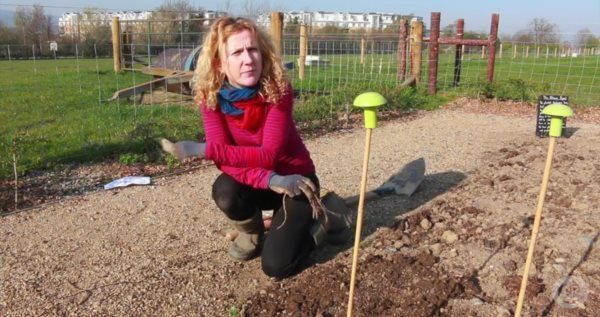
VIDEO: Asparagus - the regal vegetable
Every year I love to broaden my horticultural horizons and grow something different —like a new crop, fruit, herb or simply a new variety of vegetable.
I have finally felt ready to take the plunge and pledge commitment to planting a bed of asparagus — Asparagus officinalis.
I have forever been a fan of the feathery texture of asparagus ferns in a garden, not to mention the lush succulent taste of freshly steamed asparagus spears smothered in hollandaise sauce.
Perhaps it has been the pervading reputation of asparagus as a demanding crop that ties up a large piece of ground for a number of years — up to 20 years to be precise — with relatively low returns, that has primary put me off the idea.
However, as asparagus ferns are highly decorative with delicious-tasting spears that are ready to harvest when there is little else in the garden and are expensive to buy, it makes total sense to experiment with this luxury crop.
Clearly if ground is scarce and essential to supplementing a household food supply, this may not be the crop of choice. The fern-like top growth of asparagus also grows tall (about 1.5m) and risks either casting shade or collapsing on neighbouring crops so this becomes another key criteria in site selection.
Finding an open sunny, sheltered spot in the Airfield Food Gardens is certainly a challenge but we finally settled on a triangular bed for planting our asparagus and live in hope that plants will be self-supporting.
However, forewarned is forearmed and in the event of strong gales, crop supports will be near to hand. Good soil preparation to get free-draining deep soil is the key to a successful crop.
The ground needs to be well dug over with plenty of well-rotted compost incorporated and it is vital that all perennial weeds and large stones are removed prior to planting. Asparagus can be grown from seed but the most common modus for establishing this perennial crop is with one-year old plants known as crowns, which will help shorten time to harvest.
Asparagus plants are either male or female with traditional cultivars producing a mixture of both. However, for reliable production, an all-male F1 cultivar is advised as these are guaranteed to give slimmer spears in larger quantities over a longer season.
That said, it is female spears that are noted for being most succulent but it is male plants that claim victory in other key matters such as life span, earlier emergence in spring and failure to produce seed so thus avoiding unwanted Different sources will advise different planting methods and we settled on planting in trenches about 30cm wide and 20cm deep leaving 45cm between trenches.
In each trench, the claw like crowns were planted on a 10cm ridge about 35m apart and staggered with their adjacent neighbours. Once planted, crowns were completely covered with light soil.
Thankfully, the rain came to water the crowns in — and apart from regular weeding, the plan for now is to sit back and wait a couple of years for plants to produce.
Once these are established after three years, it is expected that they should crop each year from late April for about two months.
Asparagus is sometimes dubbed the champagne of vegetables but I like to call it the Rolls Royce of vegetables in the Airfield New Food Garden.
The complete experience from ground preparation to variety selection to finally planting took some time and deliberation, which is only fitting for a crop that entails a 20-year commitment.
All in all, the small asparagus project proved exciting and with patience in mind, here ‘s hoping that in another three years, the returns will be worth the wait and the rewards will taste great.

CONNECT WITH US TODAY



Be the first to know the latest news and updates