Tastiest Easter egg of them all — yum!
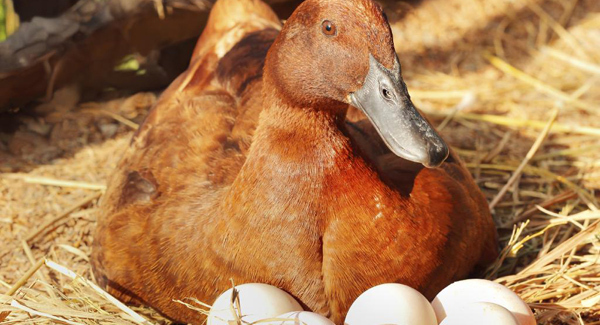
Easter is all about tasty eggs and it’s hard to pinpoint an egg that quite compares in size, taste and colour to that of a duck egg.
Now as taste is rather subjective, for some folk, duck eggs are a no-go area if served straight but once whipped up in cakes and sponges or transformed into ice cream or curd, the general consensus is all good.
From a gardeners perspective a duck can be a loyal if not sometimes noisy companion with some ducks making better garden friends than others.
The breed of duck will determine their meat and egg laying capabilities so if it is eggs you are looking for it is important to choose correctly. Incidentally, it is those breeds best suited to egg laying that also make the best garden companions due to their medium sized stature with Indian Runner and Khaki Campbell being two of the safest options as they tend not to cause significant damage to plants.
There is not a huge choice of dual-purpose breeds that will provide both meat and eggs, so if it is meat that is on your mind, a breed such as Aylesbury is best advised, but due to their voluminous physique, a breed such as this can wreck havoc in a garden setting.
Ducks really are remarkably independent, fun and easy to keep creatures and you don’t need a huge garden or to live in the depths of the countryside to rear them. They don’t crow so your neighbours might never know you have them!
In fact, they may even be less trouble than a dog and if given the right conditions they will live long and happy lives, supplying you and your family with fresh eggs while providing a fertility and pest management plan for your vegetable garden.
In addition, ducks make great composters and will merrily munch through some of your kitchen waste, converting it into protein rich eggs and if their manure is mixed with straw and well-composted, it makes an ideal nitrogen-rich soil amendment.
Ducks have a partly carnivorous nature thus presenting a fabulous feathered solution to soil dwelling pests. Medium-sized, hardy, egg-laying ducks such as Khaki Campbells are master slug and snail catchers and they’ll even go after slug eggs, wireworms, cut worms, leather jackets and other plant problematic grubs in the soil aswell. Khaki’s are busy, hardy little ducks with a great temperament and can withstand cold and hot climates.
Though slugs may be a bane to your garden, they are actually a delicacy to ducks and while they are out hunting molluscs, their droppings provide a good supply of fertiliser to the soil aswell.
The only potential problem is that every now and again they might have a nibble of some tender plants such salad greens or brassicas so it is best to let them loose in the garden after nearly everything has been harvested in the autumn or before anything is planted in early spring.
Once beds are empty in autumn, if mulched with straw as opposed to black plastic, ducks will enjoy burrowing their heads in the mulch to root out slugs and other meaty delights.
Ducks are not demanding but it is vital that they are content in their environment. They don’t need elaborate housing but the one thing they cannot live without is access to clean water to swim in.
Ideally, this should be running water but if this not possible they at least need a large bath to immerse their heads and dabble in.
Water must be changed on a regular basis to ensure it is kept clean. When it comes to housing, make sure it is dry, clean, well ventilated, straw bedded and predator safe. Foxes have a taste for ducks as they do for hens so they have to be locked up every night.
It pays to line up friends to duck-sit while you are on holiday. Mobile houses make good garden sense as they ensure that the immediate surroundings will not get reduced to mess.
When it comes to feed, ducks need fresh water, grass, grain and grit to feed on. They naturally love to forage in addition to insects, slugs and snails.
Ducks will be totally content as long as they have a safe home, a continuous supply of food, water for drinking and swimming, access to forage and fresh air and somewhere to take shade in sunny weather.
Be warned that keeping ducks may become time consuming, solely because watching your feathered friends unearthing grubs or waddling around the garden can become highly addictive.

CONNECT WITH US TODAY



Be the first to know the latest news and updates