Vintage view: Ercol furniture range
Yes, I know, it’s quite a moment to find the lines of our elder’s garaged rubbish exciting. Still, not all mid-century furniture is — for lack of a better word —worthy.
Take the spangled Formica plank out of your eye, and spend that money well. As we strain towards a new-found joy in even late 1970s styling, some leery horrible objects and furniture are coming along for the retro-ride.
Surely, we’re not so fascinated, that every collapsing teak waiting-room chair and plastic-pelted drinks cabinet is due celebration?
Here in Ireland, probably for socio-economic reasons dating from the austerity of the 1950s, we don’t have the heaving quantities of domestic this-and-that enjoyed on the UK second-hand market.
Still, let’s try to be discerning. There are some excellent makers in the mid-range collectibles and amongst the most affordable and underrated is Ercol of England (est 1920).
Yes, it did make some lumpy Hyacinth Bucket revivalist designs, and for some its lesser moments place it in a Morris Minor division, (Woburn, Hampton, and Yorkshire). Still, the company was always about craft, and where Ercol shines, it’s all sunshine.
In January, the company exhibited a new range of sofas at Maison & Objet, entitled Nest, designed by the revered, Paola Navone.
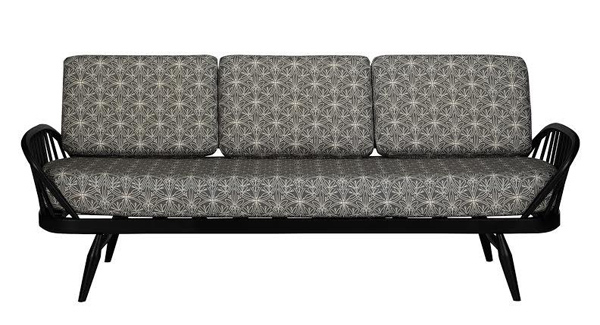
The juicy upholstery might be all Italian contemporary, but the signiature steam-bent chassis, on which it all glides, including that lovely rail back, is immediately recognisable.
There are few companies able to offer original pieces 60 years after a first outing to such an affectionate audience, and many are so improved it’s worth considering investing in them brand, spanking new.
Regarded a quintessentially English, Ercol was founded by Lucian Ercolani (1888-1976), who was born in Tuscany and trained at the celebrated Shoreditch Technical Institute in London.
From a humble start, Lucian displayed determination and talent for hands-on craft and design, and in his teaching career rubbed shoulders with Henry Parker (of Parker-Knoll fame) and by the outbreak of the First World War was working for Edward Gnome (later known for G-plan).
Perfecting a tricky technique to bend wood with steam to a single rail for a chair back, by the Great War, Lucian had established a company with a consortium of makers supplying the War Office.
Ercol went on to deliver a catalogue of furniture during the 40s and 50s so pure in line, affordable and comfortable for bright young post-war things to live with, it was put back into production in 2003.
Included in the Ercol Originals range, the Butterfly dining chair c 1958 designed by Lucian himself, is better than ever with its delightfully springy embrace to the bottom of bent ply, strongly-wedged Windsor joints and solid wood throughout — it costs €683 per chair.
The Ercol Quaker range with that magnificent single length of bent ash making up the back, was fashioned after a Windsor chair, including a six spindle back and it litters many Irish auction rooms.
€300 would be fair for six Quaker or for six of the more pragmatic and less comfortable Stacking chairs in unrestored condition.
Quaker carvers with their delightfully open-armed welcome are a real find, making lovely occasionals, just by themselves.
If you prefer the real Windsor armchair look, search for a Chairmaker chair on the UK market, but expect to reach the €400-€500 level for a restored, re-waxed example without any rocking and rolling to the joints.
Blonde-wood pebble tables, widely copied are unlikely to escape discovery, and start in the €200 area for a reasonable set.
In diners, my money is on the Goldsmith range, not in production today but with its fabulous leaning back, shorn of their tough, gouged Ercol varnish and waxed to show the glorious grain, original pieces are constructed of English elm and ash, now impossible to get.
Ercol loveseats and daybeds in the Windsor line often survive under hideous upholstery and will only be found if you pull those loose cushions forward to show the upright spindle back.
Once freed, it seems a pity to clog that airy walk-around frame with upholstery, but I won’t lie, they are somewhat penitential to sit against.
Pad the base, herd some cushions up to your person and put up with it.
Savvy sellers, recognising their popularity, have inflated the price of originals couches and daybeds by Ercol from around €100 ten years ago, to €500 plus, so if you find these pieces for less — snap them up.
CONNECT WITH US TODAY



Be the first to know the latest news and updates