The humble spud has a long list of healthy, nutritious properties
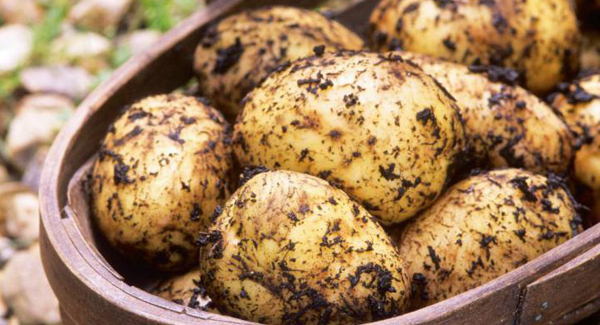
HERE is a debate ongoing in growing and cookery circles at the moment as to whether or not potatoes are worth the effort. Theyâre almost out of fashion.
Long gone are the days when the tuber featured daily on the Irish table. The humble spud has a twang of twee off it of late, and certainly the Italian style (pasta, pizza, etc) is the convenience carbohydrate of choice for most families.
And the majority of students and under 30 wouldnât be caught dead with a potato for lunch â unless its chips or crisps (or maybe vodka) â but then maybe itâs just because we have forgotten how great prĂĄtaĂ really are.
Once upon a time it was all the rage and it was fashion that brought it to prominence in France, where Marie Antoinette wore the blossoms in her hair, and her husband, Louis XVI, wore them in his buttonhole. This was a deliberate attempt to encourage French farmers to grow potatoes and get their subjects to eat them â it being a relatively insignificant crop at the time.
The royals saw the potential of the spud as an easy solution to food shortages and the âflour warâ that existed in France at the time â remember âlet them eat cakeâ â but the fashion statement went down better. When the French aristocracy and artistes embraced the stalks and flowers of potato plants as fashion accessories, French farmers grew the species on an increasing scale.
Here in Ireland we needed little encouragement to embrace the tuber â it yielded the most of any crop and under an oppressive land rental system, there wasnât much land a-begging for other crops or indeed economic opportunities to buy beyond it.
It was easy to grow and nutritious, so it became the survival food of the poorest and then the staple of a subdued nation. Just on the cusp of the Great Hunger, the average consumption for an adult male was 10-12 lbs of potatoes per day â all three meals.
Eaten with milk or butter, which supplied vitamin A and the fats to balance the protein, carbohydrate and fibre of the cooked potato, the meal contained vitamin C, vitamins B and B6, folic acid, niacin, potassium, phosphorous, calcium, iron, magnesium, copper and zinc â which made it a complete meal.It is still ranked in the top five staple crops globally today for the same reason.
Itâs journey from the Andes to Ireland is contentious, but Cork may just have been its first landfall. The potato had been introduced from South America to mainland Europe by the Spanish then into North America by European settlers â finally entering Britain and Ireland via merchant ships returning from America.
Credit is often given to Walter Raleigh who got his âSirâ and his estates at Youghal off the back of his enterprise or the introduction of the potato may have happened on the back of a Spanish Armada shipwreck that washed up potatoes onto Corkâs shoreline. Whatever the story, since then Cork has yielded a few varieties of its own, (now sadly heritage only), notably âFarmersâ, âSack Fillerâ and the âCork Redâ.
There are many varieties of potato, some with names like grand national horses youâd be afraid to back, some more resistant to blight than others, some waxy, some floury, some early season, some late â but why would you bother with any of them? My argument for the re-establishment of the potato is for its health benefits.
I love the taste of potatoes, I love their convenience in an oven or boiling water and the fact that there is more Vitamin C in a potato than there is in an orange, more fibre than an apple and more potassium than a banana. Thatâs seriously impressive â but even better than that they have over 60 phytochemicals that can help you fight illness, slow aging and even feel happier.
Super foods are fashionable now, none more so than Goji berries from the plant Lycium chinense of the Solanaceae family â which just happens to be the same family as potatoes (Solanum tuberosum). And guess what? Both share a compound called kukoamine which lowers blood-pressure.
While âamlaâ or Indian gooseberry is the latest super hero on the block, praised for its high Vitamin C content, â before the âlimeysâ where sucking on limes, Spanish sailors where scoffing boiled potatoes on their way home from the New World to ward off scurvy.
Baked potatoes retain more Vitamin C than boiled. Raw potatoes applied to the skin impart vitamin C and phytochemicals that soothe burns, tighten skin and exfoliate dead cells â a raw potato face mask might just be the perfect home spa before your next big social outing.
Soy products celebrated for their ability to regulate levels of a heart damaging, inflammatory molecule called homocysteine share that ability with potatoes â and itâs all down to the Vitamin B6 content of each.
We have all heard green tea heralded as the potent antioxidant that also helps you slim â well potatoes rank higher than green tea on the ORAC scale (thatâs their Oxygen Radical Absorbance Capacity â how effectively they kill off dangerous free radicals).
So, in terms of weight-loss, potatoes are fat-free but they can also help keep arteries fat-free as they are packed with flavonoids that naturally lower levels of LDL cholesterol, (the bad one) and have enough fibre to make you feel full and lessen cravings.
A single baked potato provides almost 12 per cent of a personâs daily recommended amount of fibre, mirroring the efficacy of whole grain breads and cereals.
Happiness is a plate of potatoes.
How good we feel, psychologically, is down to a cocktail of neurotransmitters such as serotonin and dopamine. The amount of these âhappy hormonesâ released depends on levels of daylight, nutrition, physical health and more and increased stress and other anxiety provoking circumstances can block their release or trigger different transmitters to create a personal imbalance which can give rise to depression, anxiety and other illnesses.
Antidepressants are sometimes prescribed to correct the imbalance and this is where pototoes can help â they are packed full of vitamin B6 which not only helps create those happy hormones but also adrenaline and other hormones that help us respond to stress.
Potatoes also promote the production and function of GABA â a substance thatâs involved in our relaxation response and how we experience the feeling of wellbeing. In this way, potatoes are a sort of natural Prozac â when we eat them their tryptophan content is converted into 5-HTP (the precursor of serotonin).
Depression is described neuroscientifically as being caused by a delayed relay signal between brain cells and drugs like Prozac were created to speed up a slowed signalling response.
The 5-HTP in potatoes does exactly that and also exerts a positive effect on sleep, anxiety, and pain sensation. Eating more means more serotonin â so happy days.
I am not saying go off your meds â but whatâs the harm in enjoying potatoes for their health benefits?
It gives new meaning to comfort food and goes some way to explain how some foods can nurture us, as well as nourish us. Eating for health is one trend that will never go out of style.
Fiann Ă NuallĂĄin is an author, horticultural therapist and award winning garden designer. He has constructed gardens for Failte Ireland, Bord Bia, GiY Ireland, Notice Nature, The British WildlifeTtrust, The Craft Council of Ireland and more.
He forms one half of the horticultural design team,â Inspiring Gardensâ with Lisa Kelly ( www.inspiringgardens.ie  and blogs under www.theholisticgardener.com