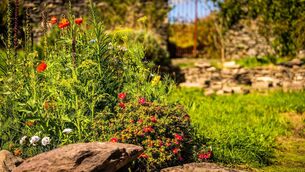
Give your garden some Sax appeal
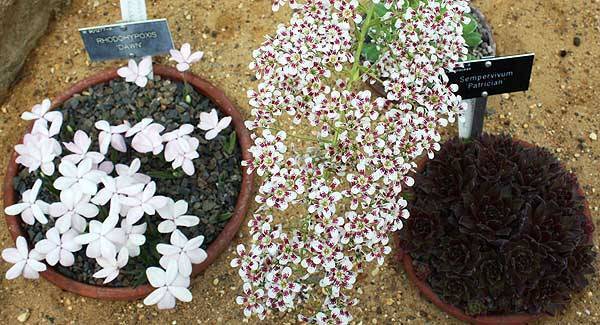
There’s something special about Alpine plants. A good rockery or scree bed is something that appeals to some sense within me. The term ‘alpine’ refers to specific plants from the Alps but is now used as a catch-all term for all plants that exhibit similar characteristics and are suitable for growing in a rockery, scree bed, stone wall etc.
True alpines such as Gentiana can cope with any amount of cold and wind but the cold on these mountains is of the dry and extreme kind, not the damp, wet cold that we experience in this part of the world. To avoid losing some of the more precious plants in your rockery make sure to use grit or gravel around the base to avoid water collecting at the collar and causing the plant to rot. All alpine and rockery plants require a very well drained soil and to achieve this incorporate plenty of grit in the soil. They don’t like sitting in wet soil. However they don’t necessarily want to dry out so it can be a fine line.
Saxifraga which translates from Latin roughly as stone breaker could be better described as stone hugger. I cannot get enough of it. Native to arctic alpine regions, some species such as Saxifraga hypnoides, or the Mossy Saxifraga, are native to Ireland. They hug the ground like living carpets, growing slowly over walls or alpine troughs.
I challenge anyone to walk past a well grown mossy saxifrage without wanting to touch it. Gardening appeals to all the senses and we may not always know why or how.
The mossy Saxifraga grows to about 15cm in height with a possible spread of 100cm or more, but I would suggest you keep the clump more in control as it can be prone to get ragged looking if left to grow unchecked. There are many varieties readily available to grow. ‘Peter Pan’ is a nice red flowering variety and ‘White Pixie’ a particularly nice compact white flowering form. They grow quite freely from seed and as a result, you will find many named quite simply ‘Mossy White’ or ‘Mossy Red’ and the flower colours will all vary slightly, as is normal with seed grown plants.
I wrote last year about Saxifraga ‘Tumbling Waters’ as it was one of the plants in contention for the Chelsea Plant of the Centenary, representing the period 1913-22. It is what is referred to as an ‘encrusted’ type and a truly breathtaking variety in flower. However, it is monocarpic, meaning the plant will die when it flowers and so seed collecting is essential. It is also next to impossible to acquire. I haven’t seen one since the Alpine House in college more than a few years ago at this stage.
Try for the varieties ‘Lisadelle’ or ‘Southside Seedling’ which are somewhat more available and really spectacular in flower. Also keep an eye out for Saxifraga fortuneii varieties, which are very different to the mossy or encrusted types with relatively large glossy leaves and producing panicles of beautiful white flowers later in the summer.
Spring is very much the time for bulbs in our gardens, with Crocus , daffodils, tulips and many more coming into their own during this season but for me spring is also very much the season for alpines.
Many of them shine from this month on and no spring garden worth its salt would forget about Saxifragas, Aubrietas and other such alpine delights.
Another variety to keep an eye out for is the intriguing Raoulia australis, growing no higher than a few millimetres in height and spreading slowly across very well drained, gritty soil with a silvery blue hue this is another plant that invites you to touch it. I have had little or no success with this beauty in the ground and I have had a certain degree of success in a simple terracotta pot where it can look equally dramatic and attractive.
Last week I sowed some seeds of lettuce, peas and beans in seed trays in the glasshouse. And not forgetting the ornamentals, I also started off some marigolds which will look beautiful but also help me in the battle against greenfly and other aphids later in the season.
Cosmos are another annual that I always start from seed as I will get plenty from one or two packets of seed, whereas if I wait until later in the year, and buy the plants ready-grown, I would be broke trying to create the same display. Already the seeds have broken the surface as germination is happening apace. Isn’t the spring wonderful?
CONNECT WITH US TODAY



Be the first to know the latest news and updates