A spectacle of colour and texture
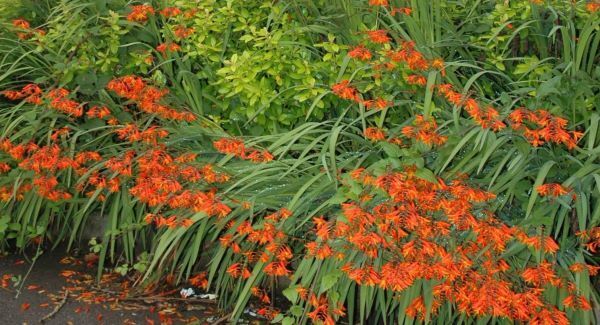
Montbretia may be the most common and widespread of the Crocosmias, growing wild as it does, but keep an eye out for some of the more cultivated forms. ‘Lucifer’ sends up fiery red flower spikes to a commanding height of nearly 2 metres — a truly spectacular plant for colour and texture in late summer and autumn. And while ‘Lucifer’ has become quite a popular variety in Irish gardens, let me introduce some of its lesser known but beautiful cousins.
‘Sulfortare’ produces beautiful chocolate brown foliage and in late summer, yellow flowers about 30cm high which contrast exquisitely with the brown leaves. ‘Zanzibar’, ‘Malabar’ and ‘Calobar’ are three beautiful but rare orange flowering varieties. ‘Emily McKenzie’ has lovely large orange flowers with a strong red centre and ‘George Davison’ is a yellow flowering variety named after the Crocosmia addict who developed 13 or more varieties in the late 19th and early 20th century.
Saving the best for last, however, my favourites have to be the beautiful dark brown leaved ‘Dusky Maiden’ which produces striking burnt orange flowers against her dusky foliage and is quite simply breathtaking. ‘Star of the East’ will also stop you in your tracks when this green-leaved variety comes into flower, as the sheer size of the bloom is what makes it so special.
Blooms are produced again at about 30cm which open nearly fully and are about 3 times the size of most other varieties. Neither of these varieties are vigorous and will not clump up quickly nor are they widely available, but do snap them up if you see them at a garden centre or plant fair as they are certainly worth having.
* If you have never collected your own seed, why not try it this year with some perennials such as Delphinium, Lupin, or similar and see how easy it is.
Leave some flower stems that have finished flowering on the plants and let them ripen in time. You will know they are ripe when the seed pods have opened and changed from green in colour to a brown or black.
Simply shake the seeds from the pods onto an opened sheet of newspaper and separate into an envelope. Depending on the plant you can sow some seed during October indoors or alternatively wait until next spring and enjoy plants for free for years to come. Plants grown from seed may not necessarily grow true to type, thus you may not get the same colour plant from the seed as the parent plant. If you want to be sure of getting the same colour then you will need to use vegetative propagation methods such as cuttings or division.
More on these methods at a later date.