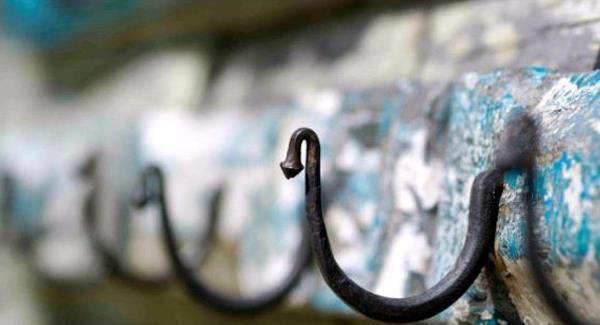
Vintage view: Coat hooks
A mute servant for the front hall, the hatstand or more elaborate hallstand was a vital piece of working kit for any respectable household. As the middle class developed, and copied the manners and modes of the gentry, the need for smaller hallstands for modest homes grew.
Vertical stands that thrust up flat against the wall with a small table beneath for gloves were ideal. Coiffed magnificent carving, delicate inlays and up-to-the-minute designs declared the good taste of the homeowner in the manor, or the terraced house.
Flanking the wall, many 19th century stands still have a stunning architectural presence in rich veneers, beautifully turned pegs, robust marble tops, and elaborate branching arms silhouetted against the wall.
Calling cards were left with a servant whether the person was at home or not, and there was a firm etiquette involving the folding down of the card corners to communicate further messages to the host or to indicate who the card was for. Shallow card trays and drip trays on the under-tier to catch moisture from resting umbrellas were built into finer stands.
The later hall-tree has a cut down minimal look with a central pole blooming into a crown of hooks, an ergonomic favourite in restaurants and bars to take hats and coats. Some were engineered with a turning top. With a loop of bentwood timber to hold umbrellas and sticks, the tree has remained an iconic design that is still heavily reproduced and interpreted.
Over-loaded, a freestanding bentwood tree is easily felled. Look for a meaty outline weighted to the bottom. Earlier trees were generally flat to the wall and are useful and attractive often with a carved central support. Hall stands and trees dating from the 1840s to the 1930s are a staple of most auctions and salesrooms, and have a decorative potential that outweighs their original usefulness.
Larger pieces can act as console tables and with an integrated mirror will bring light and interest to a boring hall or corridor. For a modern interior, lighter woods and finishes married to the more streamlined styles of the arts and& crafts and Edwardian era are ideal. With a little paintwork to that black faux Tudor carving, even a gloomy Gothic lion faced stand can roar again.
Left out in the cooler part of the house, veneers are often in amazing condition with little fading or peeling, but be wary of parking a good stand in a new position by a blazing radiator if it has lived in a dilapidated tomb for a century or more.
Late 19th century bamboo stands can be unstable as the bark ties unravel with time. Urban industrial is right on trend so look out for simple stands and hooks from shops, factories, and offices dating right up to the 1970s in wood and metal.
CONNECT WITH US TODAY



Be the first to know the latest news and updates