Vintage View
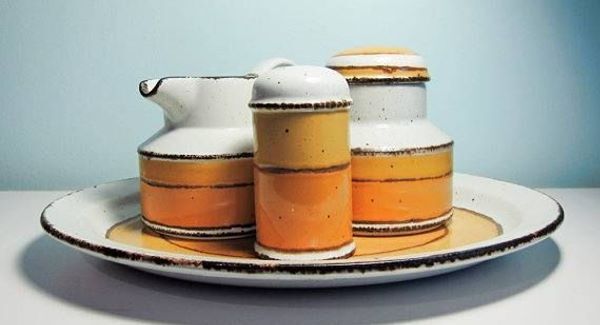
IN the heady years after WWII, design influences were eclectic, varied and reflected the energetic changes in fashion and interiors.
Space and science were making important strides in picking open the building blocks of life in the lab while plotting heroic journeys to infinity and beyond by rocket ship.
Planetary graphics and atomic motifs exploded onto the popular imagination in groovy constellations and witty nuclear nuance onto fabrics and flatware. Repeating, simple, frenetic motifs, bold stripes, spots, boomerangs, chic French poodles, sunbursts, stars and unlikely exotic beasts jitterbugged from enamel bread bins to curtains, cushions, artwork and most enduringly, onto household dishes.
Fifties and 60’s ceramic style in pottery and various forms of porcelain is a nostalgic familiar for Baby Boomers and their offspring. This clean, contemporary upbeat style has gathered a whole new generation of young collectors who are excited by the era as being soundly ‘period.’ The great news is you can find good revolutionary 50’s and 60’s kitchen and dining pieces in charity shops and boot sales, and with consistent visits to the best honey-holes, collectors’ items do slip under the eye of even experienced sellers, as relatively worthless.
An enduring and affordable classic, Homemaker by Ridgeway, was a collection of dishes sold by Woolworth in a plain white and black colourway scattered in desirable furnishing motifs of the time. Plates, cups and saucers are easily found, (savvy sellers have copped-on and plates change hands for as much as €15 on Ebay). Terence Conran’s early work for Midwinter including even the late, somewhat lumpen 1970s Stonehenge, is hot property.
Some pieces of ware were more vulnerable with elements likely to be chipped during normal domestic abuse. Look out for lofty waisted coffee pots with their original lids, often a key part of their overall look and line. They make stand alone items with their strange, sculptural beauty. Portmeirion’s Totem coffee pots, cans and accessories by Sally William Ellis (1963) with its raised primitive decoration and translucent glaze are already an investment buy. William Ellis found some dumped moulds for medical vessels at the Gray’s factory they had purchased, and seeing their innate charm, put the forms into production.
American Fiesta ware forms part of a family of robust picnic or occasion china in optimistic mid-century colours and shapes. Cabaret sets meant for belting into woven baskets for Enid Blyton style tents and tea excursions often have different colours to the saucers or the interior of the cups. If you’re not sniffy about Melamine, there’s a whole area of 50’s and 60’s favourites. Stick to mint, unscuffed examples.
Assemble a full set in your chosen pattern, colour or makers by keeping an eye online and applying to discontinued china specialists such as China Search to fill in gaps,www.chinasearch.co.uk. The hunt will console you through dozens of muddy winter boot sale safaris for Poole, Meakin and Royal Tara, and provides as much entertainment as finally seizing the pieces. Rarer pieces and attractive free-forms will obviously demand a fuller commitment of money and patience.
Most vintage china, with the exception of frail cabinet examples in eggshell porcelain, can still be used but keep it, and any painted decoration or gilding, out of the dishwasher.
Harlequin groups made up of different makes and patterns can look fantastic for a bohemian supper party or just everyday. If you see a colour, pattern or shape you respond to in a single side plate or cup or saucer, pick it up and put together your own trios ensuring the cup mates well to the indent in saucer. If you fancy taking your love of all things mid-century right into your wedding party, Pearl & Godivaoffer hundreds of patterns in billowing florals and partying 50’s fun for hire by the setting..
- Ceramics of the ‘50’s and ‘60’s: A Collector’s Guide Miller’s Collecting Guides.
- Stephen Jenkins. Ceramics of the 1950s
- Graham McClaren. Ceramics of the 50’s, (Shire Album)


CONNECT WITH US TODAY



Be the first to know the latest news and updates