Hungry gap stopper
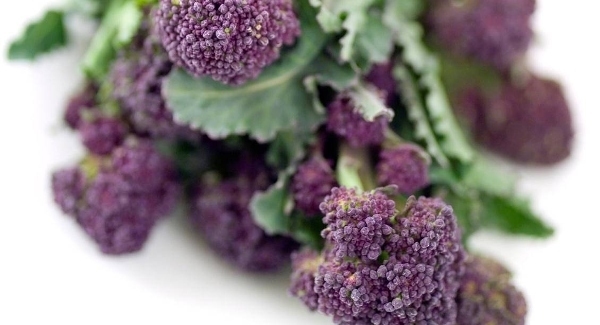
This tall and striking brassica is a pertinent player in the infamous ‘hungry gap’, coming into its own from mid-late February and cropping through March into April.
With its vivid purple buds and dark green leaves, purple sprouting broccoli, or conveniently referred to as PSB, not only looks good but tastes great and is packed full of nutrients. It has a decidedly nutty, sweet and crunchy texture, but like its cruciferous cousins, PSB will become sulphurous and soggy if over-cooked.
PSB is true broccoli and is familiar to most home growers and farmers’ market supporters. It is rarely spotted on supermarket shelves as preference is given to the convenient, larger-headed calabrese sold under the name of broccoli. Henceforth, people associate broccoli with large headed green florets which technically they are not.
A mere misnomer is not a problem until one is buying seeds and many novice gardeners have sown PSB, expecting to see a big floret in the summer and alas when none is visible by autumn, they lose hope and hoist out plants.
The only problem I can conceive with PSB is that it takes nearly a year to mature. The seeds are sown towards the end of April and the longish wait till the following spring may be a deterrent. Careful consideration of location is needed when planting, as a garden bed will be tied up with PSB for almost a year.
Plants grow to over 3ft so need staking and earthing-up to provide support. A fine netting will deter the cabbage white butterfly and protection from pigeons is vital later in the year, as they are also delighted to see an array of luscious leafy greens and purple florets after a sparse winter. These factors combined, indicate that PSB may not be the best crop for gardeners who are short on space and looking for quick results.
The only other problem with PSB, is that you never seem to have enough. Since the cropping season is short, (approx four weeks), sowing successionally, harvesting regularly and growing early and late varieties helps extend the season.
PSB is especially good when young and tender, so the best tip I can give is to use it up. Look for darkly coloured specimens with crisp stalks which snap cleanly when broken and keep picking the shoots regularly before the yellow flower buds open. Regular picking will encourage further cropping, but be warned, do not strip a plant bare in one go. PSB is picked and served ‘whole’, ie using leaves, stems and florets.
Since the cropping season is fairly brief and it doesn’t store that well, the best approach is to eat lots of it when the season strikes. Steamed, boiled, stirfried, added to pastas, tarts, quiches, risottos or used as a salad base with a lively dressing, this truly is a versatile vegetable.
It is yummy eaten raw as a snack — just wash it and add to salad, or serve with a dip asparagus-style using your fingers and discarding tough ends. It is particularly good with hummus or magically more-ish with melted stilton cheese dip.
If you really have a lot to use up, a soup will freeze better than the vegetable on its own, which tends to go mushy. PSB partners perfectly with almost any fish or meat dish and it can also take centre stage as a starter or main course. It’s actually so tasty, you don’t need to do much with it. As a rule of thumb, cook PSB as you would broccoli/calabrese, but for slightly less time, steaming for a couple of minutes is perfect.
As the PSB season is so short, make sure to make the most of it and eat as much as possible while you still can. If you go to a local farmers’ market there is plenty of PSP to tantalise taste buds.
CONNECT WITH US TODAY



Be the first to know the latest news and updates