Process to demolish Cork City's iconic R&H Hall to start within days
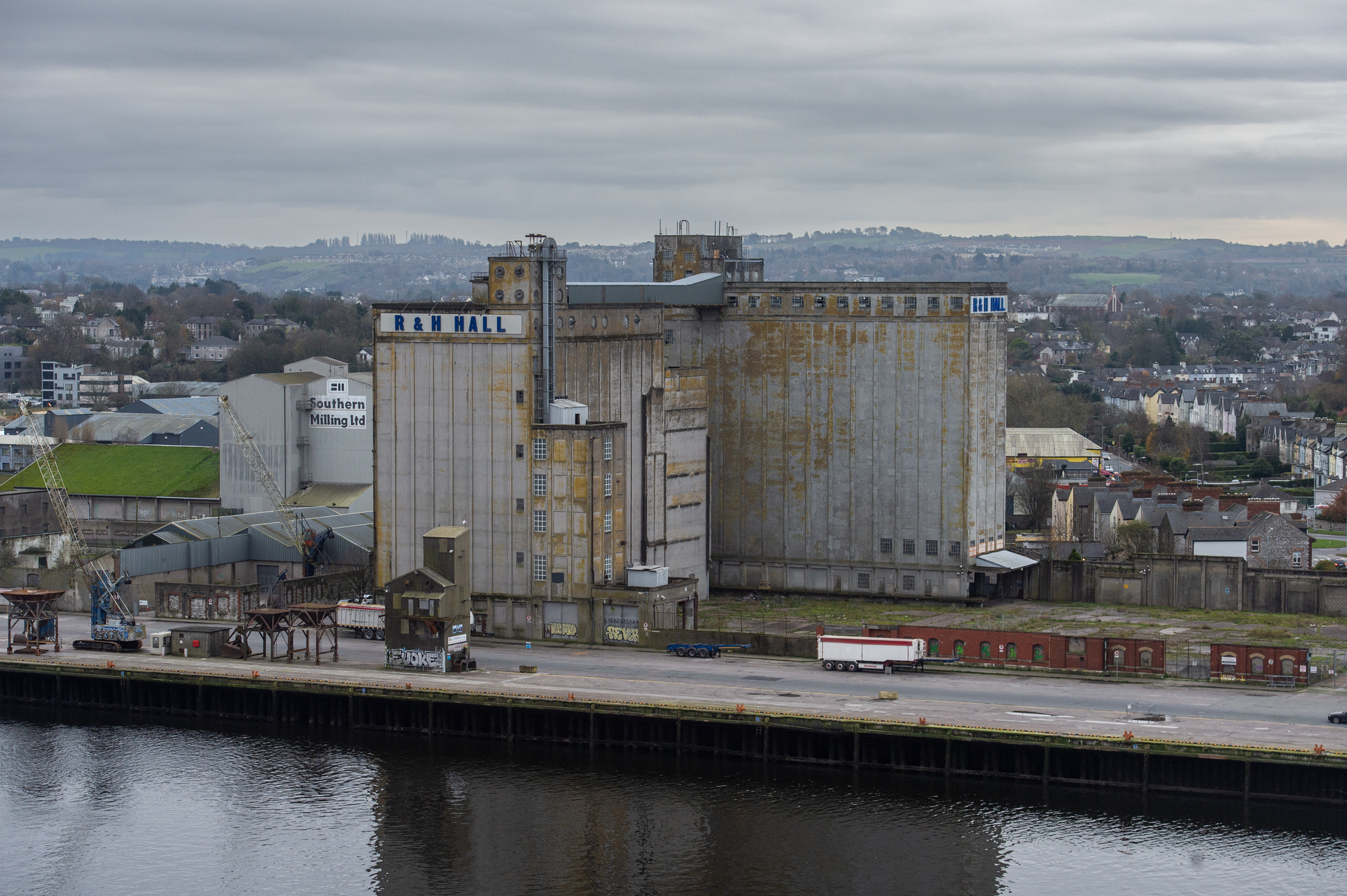
The R&H Hall grain silos. File picture: Dan Linehan
A six-month process to demolish the giant R&H grain silos that have dominated Cork City’s skyline for 90 years is due to get underway within days.
Conservation experts involved in the work have described as “groundbreaking” the scale of archaeological 3D recording being used in the process, in respect of historic industrial machinery. UCC's Dr Colin Rynne, director of the Historic Building Survey Unit, Department of Archaeology, said it was of a scale “not usual in this country”.
R&H Hall, which was founded in Cork in 1839, was one of Ireland’s biggest importers and suppliers of animal feed ingredients for feed manufacturers. Its iconic silos date from the mid-1930s to the early 1950s. The company was bought by the IAWS Group in September 1990.
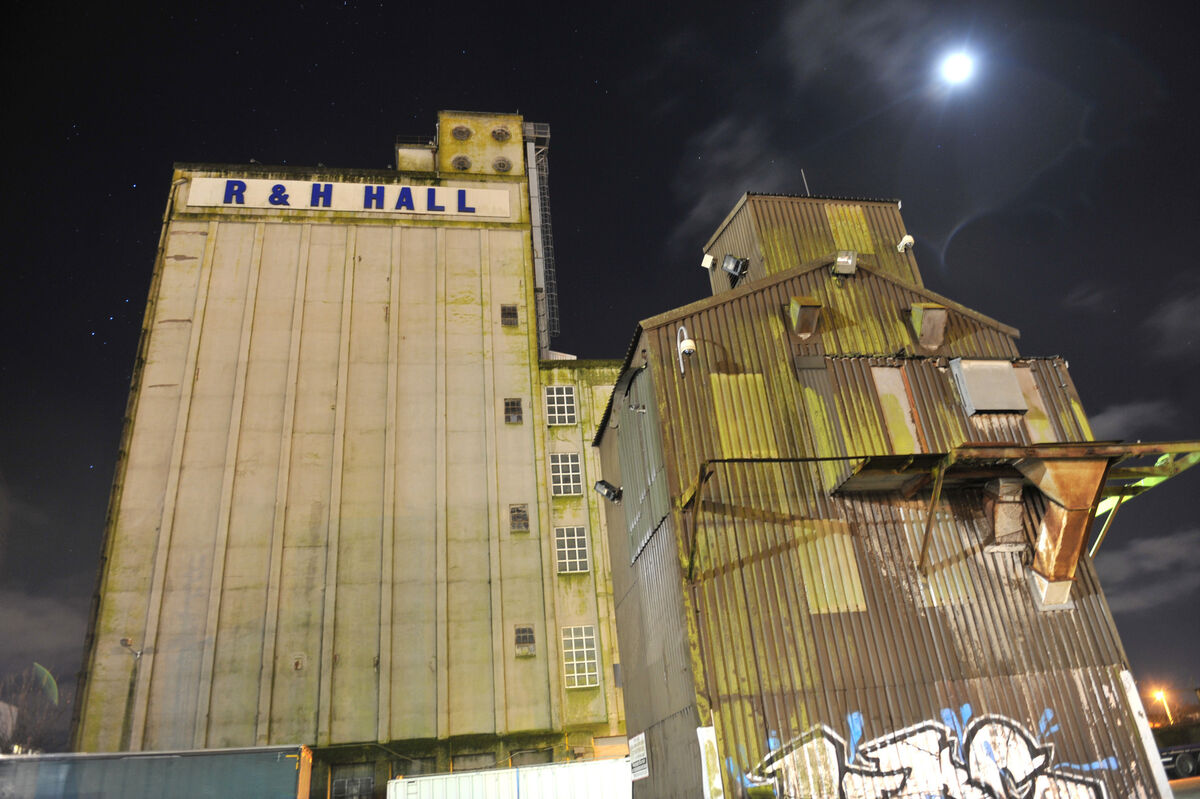
The demolition work will cause some disruption to car parking in the area.
The contractors, O’Kelly Brothers, have advised householders and businesses in the neighbourhood that cars cannot be parked on nearby Furlong Street or Marina Walk, with immediate effect.
“O’Kelly Bros require full access to these parking spaces from the implementation of essential safety measures for demolition work,” they said.
The removal of the silos from Kennedy Quay is key to kickstarting a game-changing €350m plan to transform the South Docks from an under-utilised, industrial landscape into a new and attractive city docklands quarter.

The O’Callaghan Properties (OCP) plan includes a new rehabilitation hospital, as well as office blocks and an apartment complex. At the heart of it is the old, iconic Odlums Mills building, which is to be restored and re-purposed, although plans to include a cinema have now been dropped. Instead, the developer is seeking permission for 14 additional apartments.
A second strand of the hugely ambitious OCP docklands plan is to build 1,325 homes to the rear of Kennedy Quay, at the Gouldings Fertiliser site on the Centre Park Road/Monahan Road. However, this proposal is contingent on Gouldings being cleared to move their operation to Marino Point in Cobh. A decision is awaited from An Bord Pleanála.
In the meantime, OCP has embarked on a comprehensive archaeological recording and conservation process within the R&H Hall complex, which did not prove technically viable to re-purpose. Overseeing the work is Dr Rynne, while heritage conservation specialists, Southgate Associates and Cork City Council are also involved.

The process is painstaking as some of the machinery in the silos, such as grain dryers, almost match the 33m height of the silos. The intention is to put some of this machinery on display in time as part of the overall Kennedy Quay re-development. This includes installing grain hoppers in the reception area of the new Silo Building, which will have the same footprint and will architecturally reflect the industrial characteristics of its predecessor.
It is also planned to dismantle and preserve one of the rare grain drying and conditioning machines. Dr Rynne said it has been a three-year process to date.
“This scale of 3D recording of everything in the building through laser scanning and photogrammetry is groundbreaking in terms of industrial archaeological monitoring.
“The conservation of historic industrial machinery is very welcome, and is not usual in this country, unfortunately. Much of our historic industrial machinery and artefacts have been lost,” Dr Rynne said.

Chris Southgate, of Southgate Associates, said that while the city was “losing an industrial structure which has dominated Cork’s skyline for 90 years, we are not losing the special atmosphere of the area, with the active retention and re-use of the most significant industrial elements from within the building”.
He said a vision to deliver homes on the lands “was first envisioned by Cork Corporation in 1780, and will eventually be delivered in the 2020s“.

A collection of the latest business articles and business analysis from Cork.
CONNECT WITH US TODAY



Be the first to know the latest news and updates