Fire your imagination
Given to the Diocese of Cloyne in the 19th century by the Blarney Estate, this beguiling period property just eight miles against the River Lee’s flow from the city was home to various Roman Catholic clergymen, hence the appellation and spelling Canon’s Cross.
But, in earlier ownership, local history recalls its initial ownership in the name of a Fitzgibbon family, a member of which fought in the Crimean War – and who returned to live here with two souvenir cannon which stood at its entrance.
Those military remnants of the Crimea on the River Lee have long since vanished from the property, and the last clergyman to live here was back in the mid-1990s.
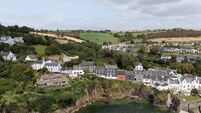
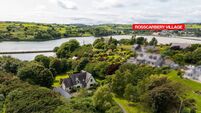
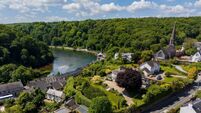
Bought 12 years ago by a family with Irish and British backgrounds, the former Parochial house has been carefully laicised, made into a very comfortable and easily kept country family home, with old stone buildings and gardens on a green 2.9 acre footprint. The setting is at a road junction to Tower/Blarney and this privately-set home is a mile downriver from the dam at Inniscarra.
The house with a southerly aspect, a visiting bishop remarked it had the warmest front door he’d ever stood at, is surrounded by woodland and hardwoods, oaks, beeches, chestnut, Scots Pine, while dense laurels screen the private grounds from a walkway beneath, running a mile or more along the Lee’s northern bank, where a sullen river swell this week hadn’t brought many anglers out in hope of salmon. To call this stretch of river – parts of the riverbank wouldn’t look out of place along the Rhine – under-appreciated is an understatement.
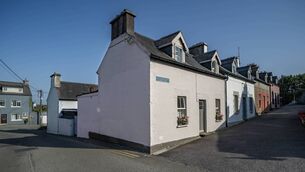
The house hides its age well, and has hidden depths: the front portion is Victorian, with bright and lofty formal rooms, but it then sort of staggers back into one or two further, older sections, with a strong, low-ceilinged Georgian rear wing or annex.
It’s not overly restored, but carefully and fairly expensively upgraded nonetheless. More was spent on its conservation and renovation than it cost to buy at the time.
Thus, it has been re-roofed, with a new breathing membrane under the slate, it is re-insulated from the roof down, northerly walls are dry-lined, original fireplaces all work, oil heating has been installed, damp proofing has been tackled, while the main rooms have new wood floors.
The distinctive and the original sash windows have been re-hung, with new cords, and most windows shutters work as well.
Asking price for the Parochial House is €950,000, via joint selling agents Savills, and Irish and European, who last sold it some 12 years ago, when it needed work, and a bit of project-management courage.
Having done valuable work in saving not only the house but also the various early 19th century stone building, now secure under corrugated new hats, the low-key owners are seeking to trade down.
They can take a bow, for a discrete job well done.