Letters to the Editor: Croke Park should be for Gaelic games
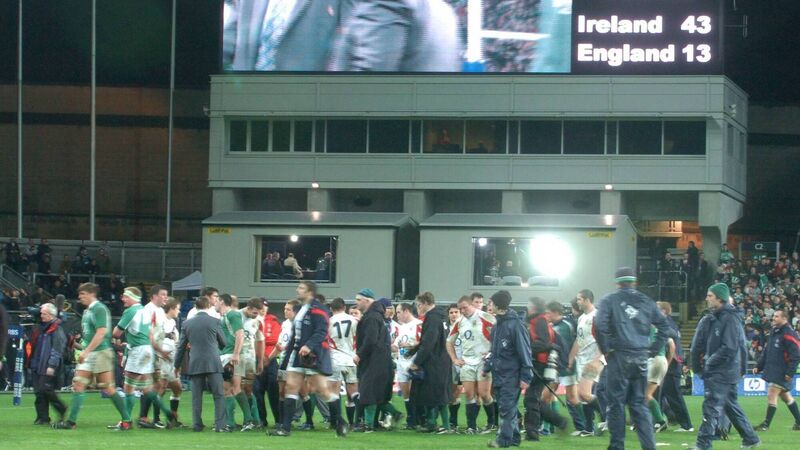
The Ireland and England teams at the end of their game at Croke Park on February 23, 2007. The GAA displayed 'typical Gaelic sporting ecumenism' to allow soccer and rugby to be played on the hallowed turf. Irish Examiner Archive picture: Des Barry
I read with interest Colin Sheridan’s comments in Monday’s Irish Examiner sport supplement (“Stay rooted in community”, April 13). He delved into the possibility of the GAA staging a Champions League final in the 82,000-capacity Croke Park.
He wrote the telling truism: “But ambition can drift in to detachment.” My sentiments exactly — not just now, but down the years. On April 16, 2005, the GAA voted to abolish Rule 42 , which had meant GAA grounds were to be used exclusively for the playing and promotion of Gaelic games. I opposed such a move for reasons such as those expressed by Colin.
Some 21 years ago, the old Lansdowne Rd grounds were going to be redeveloped.
A dilemma faced the rugby and soccer fraternities — they were homeless, and the possibility of having to play home games away was on the horizon. Nevermind that hundreds of thousands of soccer fans from this country travel weekly to support teams across the water, but having to travel to play all internationals during the pitch re-development was like staring into a sporting abyss.
So, being good neighbours and displaying typical Gaelic sporting ecumenism, the GAA agreed to give the use of Croke Park while Lansdowne Rd was being redeveloped.
I and others felt it was the thin end of the wedge, and how right we were. Gaelic games are amateur sports.
We cannot offer contracts, wages, and transfers to our players. Nor do we have European or world tournaments in our native sports.
I pointed out then, and still stand over it, that the one great plus we had was we could say to any boy or girl in any parish, village, or town in Ireland: “You too can play with your club or county in the world-class stadium named Croke Park” — and SuperValu Páirc Uí Chaoimh too.
No other sport in Ireland could say that.
Now all’s changed, changed utterly, as anyone who plays rugby or soccer with a provincial or national side, or with Leeds or Manchester United etc, has the same opportunity as our hurlers or footballers.
As Colin wrote: “The GAA is not just a stadium operator, it is a community institution, built from parish fields up.”
Well, that’s what I always thought the GAA was, and should remain.
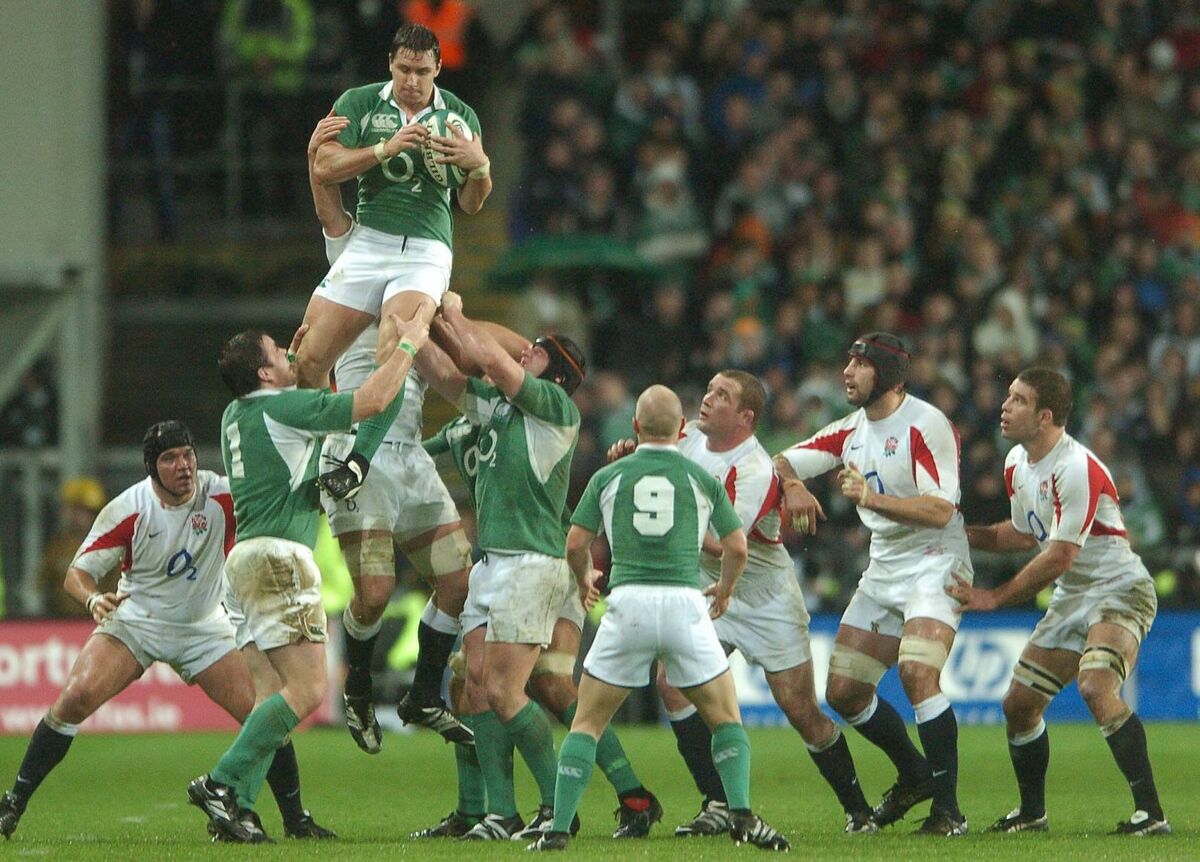
I hate no sport, but are we an amateur organisation or not?
Many sports are now huge, international worldwide businesses. Gaelic games are not. I know it will be thrown at me: “But look at all the money the GAA are making from soccer and rugby games and it filters down through the grassroots.” I’ve heard all that before, but it’s a sad day for the GAA if the association continues to prostitute itself on the financial altar of expediency.
Read More
As the final term of the school year commenced, around 250,000 children in Ireland were not attending school at all or cannot attend full-time.
Tusla says one in five children missed at least 20 days in 2022-2023, and this crisis is worsening.
A recent study by the Economic and Social Research Institute (ESRI) on the link between school absence and negative outcomes in education, health, and social relationships, especially for young people with disabilities, risked confusing correlation with causation.
Tusla’s current Anseo campaign attempts to boost attendance by emphasising the value of education and encouraging children to “push through” adversity.
Schools are advised to use rewards such as hot chocolate tokens, pizza parties, cinema trips, and public charts tracking attendance, with prizes for those with the highest rates. This “positive reinforcement” strategy is rooted in applied behavioural analysis (ABA), a technique also used in dog training programmes.
In one Anseo webinar, a National Educational Psychological Service psychologist explains that children with “good enough” caregiving backgrounds can tolerate rewards and punishments, but those who have experienced adversity may require support from multiple agencies. The same webinar acknowledges that many children who struggle to attend school have faced trauma or hardship, and mental health issues are on the rise among those affected by the attendance crisis.
This psychologist further emphasises the necessity for schools to be both physically and psychologically safe, providing adequate time for eating, resting, and regulation, as well as access to safe spaces without stigma. However, this critical point is often overlooked when the main strategy is to make attendance more appealing, rather than improving the school environment and culture.
Treating absence as a single behaviour that can be nudged by incentives is misguided, and it fails to address the underlying reasons why so many children struggle to get to, or remain in, school.
In January 2025, the National Council for Special Education (NCSE) recommended that schools move away from positive reinforcement and adopt a regulation-first approach for all pupils — not just those with additional needs.
Despite this, because the advice came from the NCSE rather than the Department of Education, it has largely been overlooked, and schools have not received the necessary resources to implement meaningful changes. Alarmingly, some schools are offering monetary rewards for attendance, effectively paying children to return to environments that may not meet their needs.
To address Ireland’s attendance crisis, the Department of Education and its agencies need a co-ordinated plan that targets the root causes — disability, unmet needs, trauma, anxiety, burnout, unsuitable school environments, and inconsistent access to support.
Investment in regulation-first practices and psychologically safe school cultures is vital. Success should be measured by lasting student engagement and wellbeing, not by short-term spikes in attendance driven by prizes.
As I was preparing to cycle home along the greenway after an invigorating swim in Fenit on a beautiful day during the Easter break, an acquaintance, whose glass is always half empty, complained to me about the inclement weather.
“The early months of 2026 have brought nothing but rain, wind, and storms. Today’s good weather won’t last and we’re staring scaraveen in the face,” he said.
Aware that I’d just enjoyed a dip, he twisted the knife by quoting the old Irish rhyme: “April and May keep out of the sea, Billy boy. June and July swim ’til you die”.
His reference to the scaraveen — in Irish, 'garbh shíon na gcuach' — “the rough weather of the cuckoo” was timely.
Once April arrives, scaraveen is second only to football in the conversation of Kerry people. Apparently, it occurs from mid-April to mid-May, when mild spring weather yields to wet and windy weather.
The cuckoo, a solitary bird, returns to Ireland from sub-Saharan Africa in early spring to lay her eggs in the nests of small birds. Once hatched, the cuckoo chicks eject the legitimate occupants and are then fed by the unsuspecting foster parents. Folklore has it that scaraveen is the price we all pay for the cuckoo’s misdeeds.
However, I think the much-maligned cuckoo is innocent as Irish weather is so unpredictable that rough weather can occur any time. I was determined to have the last word as I hopped on my bike.
“Make the most of the good weather while we have it. The cuckoo might have been confused by climate change and arrived early this year, so scaraveen may have come and gone!”
Read More
The Government created two rainy day funds in 2024, incorporating the previous National Reserve Fund created in 2019.
The combined value today is approximately €17bn. The economic rain is pouring, and the fund should be used to alleviate the worst effects of the rise in the cost of fuel. The average price of diesel before the war on Iran began was €1.70 per litre, of which the government take was €1.02.
The Government could therefore add this to the current raw cost of fuel at €0.92 (€1.94/litre) without losing revenue.
The cost of the subsidy is €2.30 minus €1.94 = €0.36/litre. Ireland uses approximately 4.7bn litres of diesel per year (including marked diesel) and 1bn litres of petrol, so the annualised cost of both would be 5.7x€0.36 = €2.05bn or 12.1% of the €17bn rainy day funds over a full year.
The figures for home heating oil are 1.2bn litres, €430m, or a further 2.5% of the rainy day funds; or 14.6% total for all three. This is not only doable but the right and sensible thing to do.
Everything else being equal, we could do this for 6.8 years. Instead of an affordable €2.48bn, the Government has allocated a measly €750m subsidy to hard-pressed hauliers, bus drivers, farmers, home-owners and the general public, leading to the collapse of many businesses. This is madness, especially as this fuel crisis may only last three to six months with consequent halving or quartering of the annual cost.
Yet again, this Government has shown itself to be completely out of touch with the will of the Irish people.
National Arthritis Week is April 20-27 this year. Arthritis is a chronic, degenerative condition, and one of the leading causes of pain and disability in Ireland impacting on every aspect of daily life.
Early diagnosis and treatment prevents long-term joint damage and enables the person to maintain mobility.
The current wait times in the West of Ireland is up to nine months (public) and up to four months (private). You can check estimated waiting times through the HSE website and the NTPF waiting list figures.
The Government’s waiting time action plan 2026 aims to tackle these lists. In 2025, 31.8% were within the targets where €420m was allocated to the waiting time action plan for 2025.
There are too few rheumatologists in Ireland. I would ask readers during this National Arthritis Week to contact their local representatives to highlight this, and seek clarity on the plans to recruit the specialists/virtual appointments/outreach clinics.
I contacted a rheumatologist in the North of Ireland on a Monday and was informed the next available appointment was the following Wednesday. A hospital in Turkey offered me a diagnostic appointment with a rheumatologist within a week.
People with the pain and stiffness of arthritis and its related conditions would have great difficulty and discomfort attending either of these appointments.
We should and we must do better.