Letters to the Editor: There is no substitute for real on-campus college life
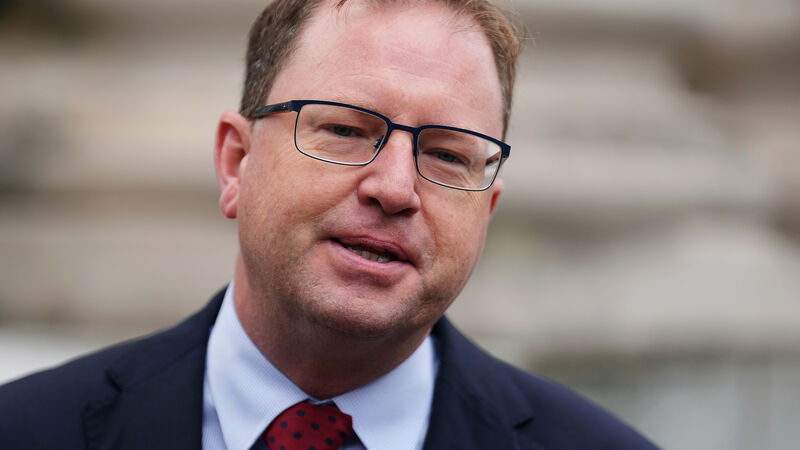
Further and Higher Education Minister James Lawless writes: 'I am determined to meet the growing need for high-quality, purpose-built student accommodation and to meet the goal of 42,000 new student spaces over the lifetime of the strategy'. File picture: PA
I read with interest the opinion piece by Mary McAuliffe in Wednesday’s paper regarding the criticality of campus life beyond the lecture hall, and found myself in strong agreement with it. I was disappointed, however, to see it declared within same that I had advocated that colleges would ask students to stay home from campus — reflecting an earlier headline in Monday’s paper.
I do not believe I have ever made any such statement and in fact it conflicts with my philosophy on education. Rather an early draft of an — unapproved — strategy found its way into the media and then became a lightning rod for comment.
The challenge when engaged in any significant exercise with multiple stakeholders and consultations, not to mention numerous drafts, is that sometimes a nugget falls out and is presented as a central pillar of a strategy. ‘Smarter scheduling’ is one suggestion that has been made, but is by no means a core policy.
Everything, from concentrating ‘core modules’ into a Monday-Wednesday block to extending classes into Saturdays to running the same lectures twice each week to allow a student “catch up”, has been suggested. It is unlikely that any of these will make their way into the final strategy — but a good strategy teases out all ideas.
Nonetheless, it can be frustrating to see a concept in development picked up and presented as though it were a core plank rather than a potential footnote.
Keeping students away from campuses couldn’t be further from my vision of a ‘broad education’ — one where students are empowered to experience life inside and outside the lecture theatre.
Read More
It is a philosophy I subscribe to and what I consider to be part of a classical education, one that embraces not just the core discipline of study but a wider exposure to many fields, including elective modules from other faculties. Not to mention participation in student societies, coffees after class, network- and relationship-building, students union participation, and all that goes with the student experience.
When I was a student myself, we used to joke that the only thing that got in the way of college life was college itself! The serious point being that the classroom is only the start of the educational experience.
I myself experienced two rounds of college — once as an undergraduate when, along with a part-time job and a weekend commute to my then home in Wexford, I combined academic experience with involvement in all that college had to offer — from students union to societies to friendships, socialising, and exploring every side of the campus. Later, as a mature student, I studied law by night, which involved lectures four evenings a week after a day’s work.
I used to cycle across Dublin to lectures in King’s Inns before rushing to catch the train back to Kildare where I was, at that stage, married with two young children. Four years of that certainly showed me the challenge of combining commuting and college.
There is certainly a case for hybrid or remote participation in today’s busy world — where many students combine commuting with part-time jobs and responsibilities and life beyond campus. I do harbour reservations about the mental health effects of entirely online courses — and however useful, they are no substitute for real-life interaction.
But whether to participate remotely or in person should only ever be by choice, not through necessity, and certainly not through a lack of available bed spaces in or around campus.
That is why I am determined to meet the growing need for high-quality, purpose-built student accommodation and to meet the goal of 42,000 new student spaces over the lifetime of the strategy.
Currently being finalised, I intend to bring it to Government in the coming weeks — and then, far more critically, to get busy building and delivering those beds.
In Maslow’s hierarchy of needs, shelter comes first — which in turn enables creativity and content to follow. The same principle must surely apply to student life.
It is well in the public domain now that there is a government-to-government agreement, soon to be formally confirmed, between France and Ireland, both EU members, for the acquisition of a number of variants of armoured fighting vehicles. This represents a serious investment in Ireland’s ability to contribute and benefit from a stake in European security. It is most welcome.
Getting equipment from EU partners is indicative of forward thinking and a strategic approach to our future. It will enable Ireland to make neutrality a meaningful political and diplomatic position.
Maintenance, repair, and servicing functions can be devolved to this country in the first instance, creating high-skilled sustainable jobs and traineeships.
The manufacturers, far from being monolithic ‘military/industrial’ actors, have been tasked with providing Ireland with a fleet of armoured but versatile vehicles that will allow us, as a nation, to participate further in EU-endorsed peacekeeping and ceasefire-supporting missions.
This programme is very positive, for concerned citizens, political and diplomatic representatives, and members of the wide defence community (families, friends, veterans and other supporters).
This initiative can be sustained and supported, locally and nationally, for the benefit of all.
Your columnist Colin Sheridan makes a welcome and serious contribution to a much-needed grown-up debate on Irish security and defence policy.
His assertion that any increased investment in defence assets must be focused on “effective mission-consistent capabilities “ is absolutely correct.
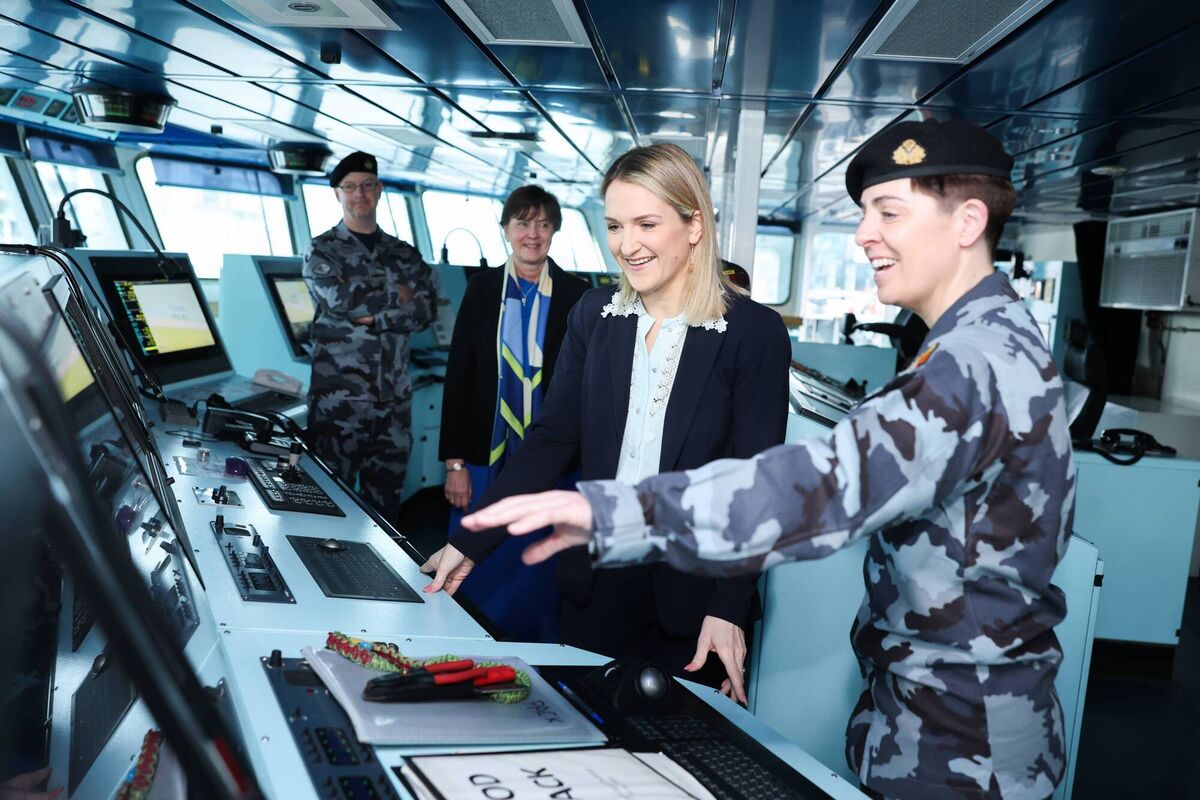
Having read the most recent Defence Strategy Statement 2025-2028, I can assure him that unnecessary expenditure on “things that go bang” is certainly not planned. Mr Sheridan may, however, know something that those of us on the outside are not privy to, as a result of his “having seen defence politics from the inside”. He might consider elaborating.
Given the minuscule nature of defence expenditure relative to other European neutral states, it is difficult to agree with the statement that “speed and scale of the increase are still significant for a neutral country”. Malta, our closest comparator in defence expenditure as a percentage of GDP, currently spends 0.5% and has increased such spending by 40% since 2022. Other neutrals, despite spending between 1% and 2%, are also
increasing expenditure.
These increases are directly related to the fact that the traditional backstop of European defence, the USA, has, in fairly blunt terms through its own National Defence Strategy, made it clear that Europe must look to its own defence in future. They also presumably reflect the Russian invasion of Ukraine.
Read More
As your contributor correctly points out, we do indeed rely on a “network of international security ties”. I note and welcome the fact that defence minister Helen McEntee is reported as intending to put these arrangements on a more formal basis.
These security partners, not “allies”, are entitled to expect us to develop relevant capabilities so that we can contribute to our mutual security in accordance with our means. This will require greater ambition than that demonstrated in the aforementioned Irish Defence Strategy Statement.
Defence Force members, Mr Sheridan’s “human capital”, do indeed suffer from underinvestment. In particular, the failure to retain sufficient skilled technicians, as well as experienced middle-ranking officers and NCOs, is a key issue.
I’m not convinced that language or cultural awareness training will suffice to address that particular problem. It certainly would not increase naval service capacity to crew its ships, or air corps to crew surveillance aircraft.
As your contributor argues, we must spend wisely on skills and assets that will enhance relevant capabilities . By so doing, we can make a proportionate and meaningful contribution to our own security and that of our EU partners, while also not shamefully leaving every aspect of airspace security to our former colonial master.