Letters to the Editor: Choosing to have a child should not place families in financial distress
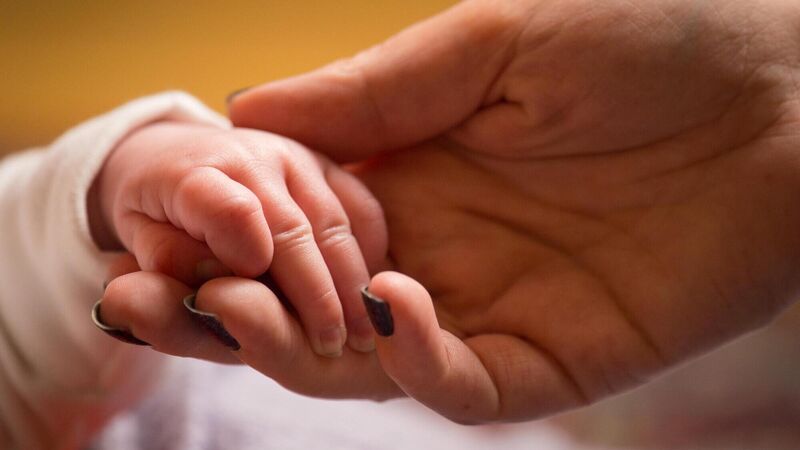
'Once paid maternity leave ends, I face the very real prospect of months — possibly much longer — without any income.' File picture
When I discovered I was pregnant, I felt the same emotions most expectant parents feel: Joy, gratitude, and cautious excitement, alongside the natural nerves that come with such a life-changing moment.
What I did not expect was the steady, creeping anxiety that soon followed — not about my baby’s health but about how we are expected to survive financially once maternity leave begins.
I live and work in Galway. I am in my 30s, and have been working since I was 18 years old.
Like many in my generation, I followed the path we were encouraged to take: I stayed in education, built a career, paid my taxes, and tried to save with my partner so that we could one day provide stability for a family of our own.
I have steady employment and, by many measures, I am considered fortunate.
Yet, when my baby is born, I will receive less than €300 per week for six months. My employer does not offer paid maternity leave.
After nearly two decades of contributing to the system, this is the full extent of the financial support available to me during one of the most vulnerable periods of my life.
If I take the additional 16 weeks of maternity leave, I will receive no income at all. Returning to work at that point is not a realistic option either, because childcare simply isn’t available.
Like countless expectant parents, I contacted childcare providers across Galway in the hopes of securing a place.
Each conversation ended the same way: Full waiting lists, no guarantees, and no certainty. The earliest childcare place I have been offered is when my child turns two years old.
Like many parents, I then turned to informal options. I contacted private homes in my area that offer childcare, hoping this might provide some flexibility.
Unfortunately, I encountered the same obstacle again: They too are full to capacity. At every level, the message has been consistent — there simply are not enough childcare places.
This means that, once paid maternity leave ends, I face the very real prospect of months — possibly much longer — without any income, not through choice but because there is nowhere for my child to go.
This reality quietly shapes every day of my pregnancy.
Instead of spending this time preparing emotionally for my baby, I find myself constantly doing mental calculations: How much of my wages I can set aside, which bills might be reduced, and which costs will inevitably increase?
I think about winter approaching and the need to keep our home warm for a newborn, knowing heating is not optional.
I think about food, electricity, and the everyday costs of living that continue regardless of whether an income is coming in.
Even during the six months of maternity payments, finances will already be extremely tight, as the payment is less than half of what I normally earn, while my mortgage and household bills remain unchanged.
I want to work. I want to earn a living and continue contributing, as I always have, to support my family.
Equally, I would be happy to stay at home longer and fully enjoy the precious early years with our first baby.
Yet, it is difficult to think positively about any option when so much of the future feels uncertain and so heavily shaped by money rather than choice.
I am deeply grateful to be pregnant, and I do not take that gift lightly. I am also acutely aware that, despite these fears, I am still better off than many parents across the country who are facing far greater financial pressure, health challenges, or personal circumstances.
That awareness is exactly why this feels so urgent. If this level of anxiety exists for those who are relatively secure, it is frightening to imagine the reality for those who are not.

From speaking to others, I know my experience is far from unusual. Many parents in Galway and across Ireland feel abandoned by a system that leaves families financially exposed, unable to access childcare, and struggling to plan even a few months ahead.
We are told children are valued, yet the structures needed to support families at the most critical stage simply are not there.
Culturally, parents are often quiet about these struggles. We absorb the pressure, struggle privately, and move on without complaint.
Increasingly, I believe silence is part of the problem.
The cost-of-living crisis, the severe lack of childcare places, and the reality that most households cannot survive on a single income are well known.
Yet, parents are still expected to quietly make it work — often at the expense of their wellbeing during pregnancy and early parenthood.
Choosing to have a child should not place families in financial distress or constant uncertainty.
We urgently need adequately paid maternity leave, accessible and reliable childcare, and policies that reflect how families actually live today.
Until then, too many parents will continue entering one of the most important stages of their lives with fear instead of security — and that should concern us all.
In order to complete the National Garda Vetting online form, any street name which includes an apostrophe (for example “St Patrick’s Crescent”, “St Colmcille’s Rd”) presents an obstacle unless the possessive apostrophe is omitted.
Given that every teacher in Ireland — whether primary, secondary, or third-level — is obliged to fill in this form as part of the necessary vetting procedure, it must have raised an eyebrow among our educators who surely are the gatekeepers for maintaining standards of English grammar.
I, for one, would miss this handy little grammatical subvention, as it does a good job clearing up any confusion around the number of St Patricks and St Colmcilles wandering around our streets — a little logic inserted into the equation.
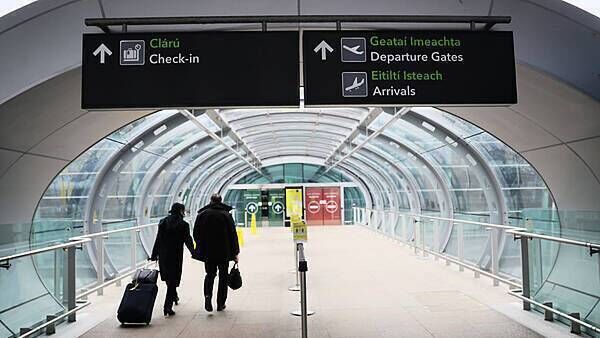
Confirmation that the Government is to legislate to lift the passenger cap at Dublin Airport is a sign, once again, that when faced with sustained pressure and bullying from powerful interests, we fold like a pack of cards.
One of the main justifications is that Dublin Airport is “vital” to the economy and for connectivity. What the Government is saying is that growth must be facilitated regardless of climate and health impacts or policy.
And it ignores the fact that Ireland is already failing to meet its legally binding climate targets, and that aviation accounts for roughly 10% of national emissions.
This decision is not economic leadership. It is dire policy failure.
Lifting the cap without equivalent climate limits pushes costs onto households, taxpayers, and younger generations.
It signals to every other high-emitting sector that constraints are negotiable if you are loud and large enough.
Unfortunately, this pattern is not uniquely Irish. Across Europe, corporate pressure has steadily hollowed out climate and sustainability policy.
The EU’s Corporate Sustainability Due Diligence Directive has been substantially weakened in the name of “competitiveness”, despite clear evidence that strong, enforceable rules are what attract long-term, responsible investment.
Aviation and shipping continue to enjoy special treatment while other sectors are told to decarbonise at pace.
Ireland’s upcoming presidency of the EU Council will be a moment of truth, particularly on the future expansion of the EU emissions trading system and the inclusion of international aviation.
Europe was created to protect its members from exactly this kind of external coercion.
That protection only works if member states are willing to stand firm.
Ireland can continue its pattern of capitulation to the likes of Ryanair CEO Michael O’Leary, who publicly accused Micheál Martin of being a “do-nothing” Taoiseach, and the trade body representing major US carriers, Airlines for America, or it can help lead a Europe where real competitiveness depends on climate ambition, policy consistency, and political courage.
With €50m of a price tag on completion back in 2009 on the waste facility that was never utilised, plus millions spent over the years on maintenance and security, is it any surprise that Cork County Council is reluctant to be transparent as to the overall amount spent to date on what is essentially a white elephant?
To put the scale of the abuse of public funding into context, this is the same local authority that, for years, continues to deny the entire population of the Fermoy municipal district, consisting of three towns and numerous villages, the most basic environmental infrastructure — namely a civic amenity site.
Considering the above, can there be any doubt in the public mind that the waste management strategy of Cork County Council is not fit for purpose.
While rugby will never “defeat” hurling in my sporting or indeed my emotional world, one aspect of the oval ball game that continues to outscore hurling is in how well the game is refereed — especially the emphasis on head protection — and the level of respect shown to referees.
Having watched both the hurling and the rugby last weekend, I concluded — and not for the first time — that the referees of our “ancient game” are deserving of and must be supported in obtaining at least a modicum of the respect rugby players must show their “man in the middle”.
Or might this take from the “manliness” of the game being demanded by Cork manager Ben O’Connor?
I usually look forward to Fergus Finlay’s musings.
However, it seems to me that he was looking through the proverbial rose-tinted glasses in his defence of Keir Starmer this week.
He blithely passes off Starmer’s appointment of Peter Mandelson as US ambassador as a decision he “outsourced” to his advisers.
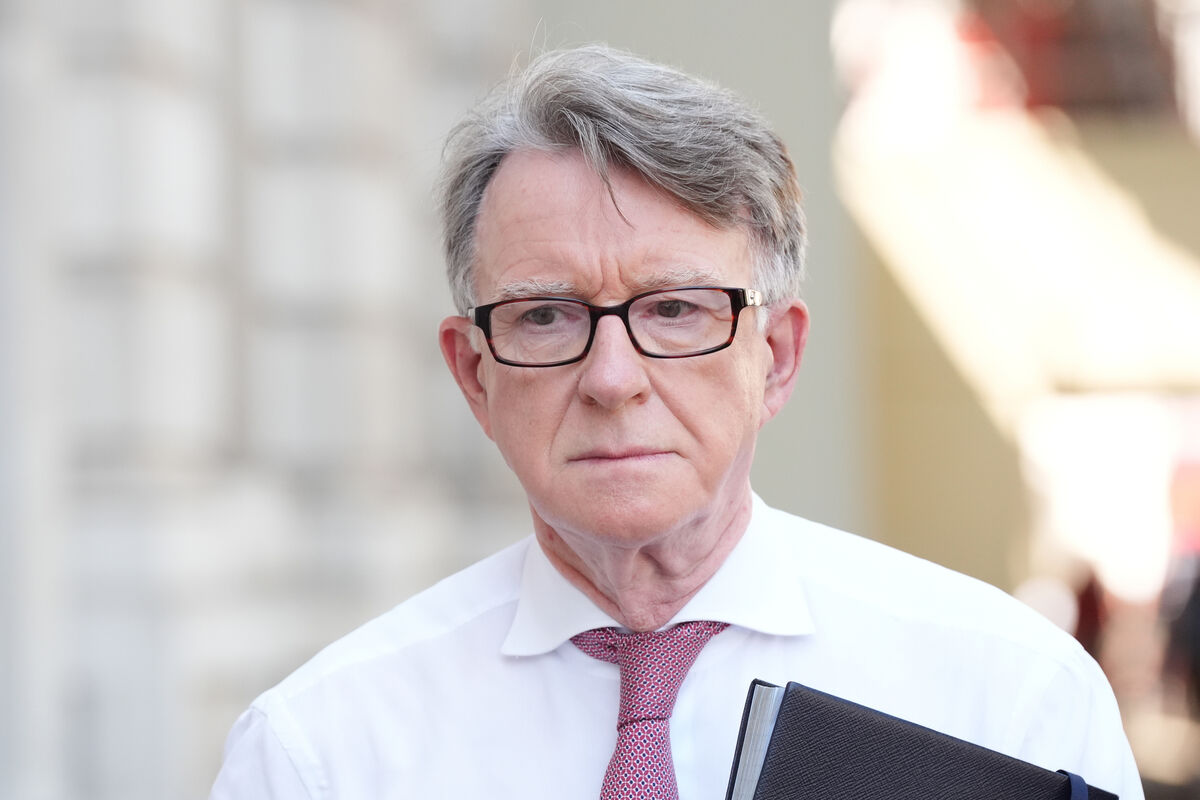
This claim is beyond credible when you consider that Mandelson had been sacked twice from previous Labour administrations.
The fact that Starmer, who Finlay claims was a first class “human rights” lawyer, knew about the post-conviction contacts between Mandelson and Epstein, shows the utter disdain Starmer had for the Epstein survivors. I see no evidence of human rights concerns.
The argument could be extended to the complicity of British governments in the Gaza genocide — no evidence of human rights concerns there either when the Labour administration continued the military and intelligence support for Israel from their military base in Cyprus.
Again, Finlay chooses to ignore this shameful behaviour. Britain under Labour, as it always has, remains just as imperial in its outlook as any Tory.