Letters to the Editor: What is the role of our umpires?
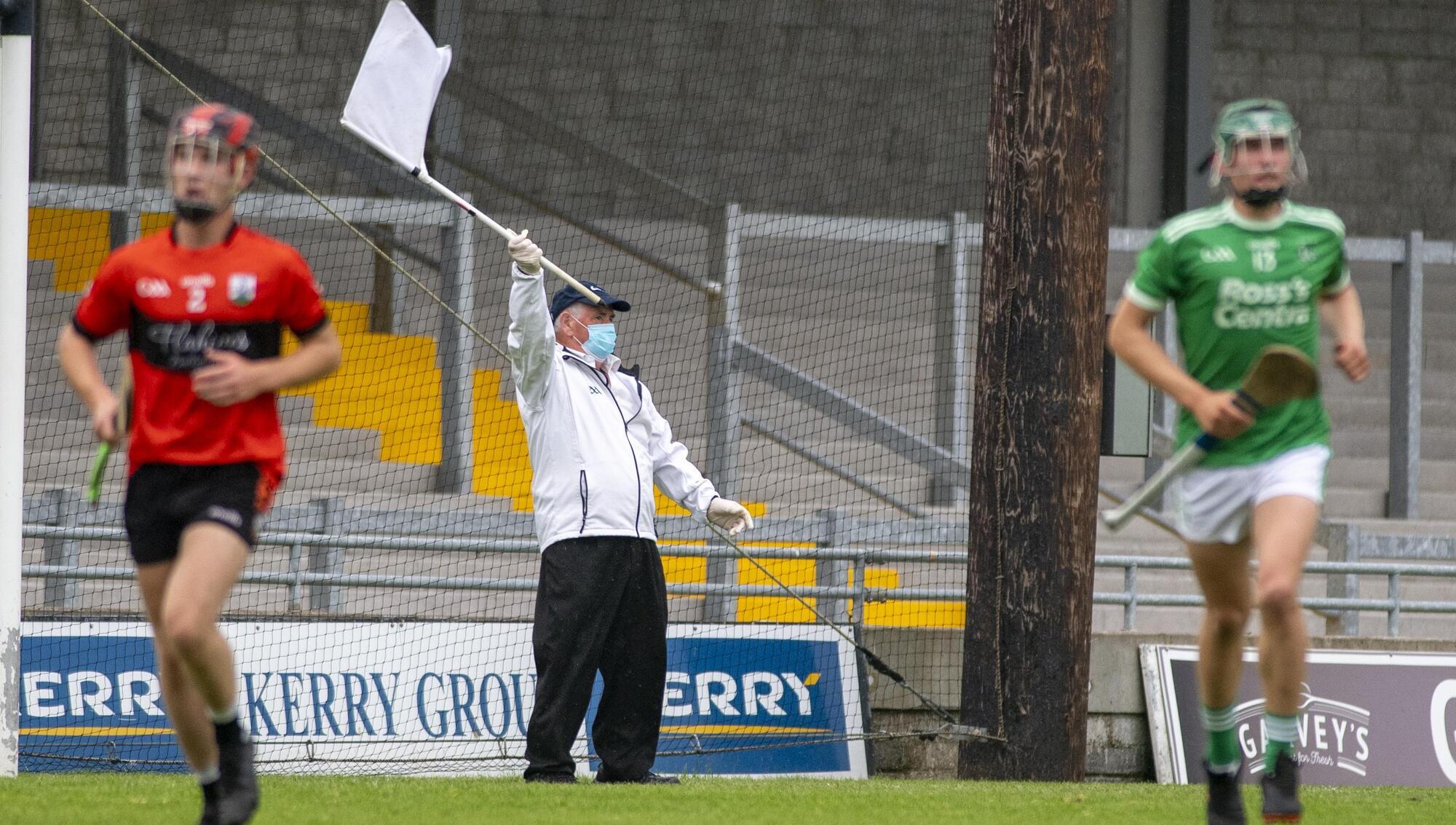
Letters to the Editor: What is the role of our umpires?

'I have seen a corner-forward pulled and dragged, getting a dig of a hurley in front of two umpires and they totally ignore it despite the forward appealing for protection.'

Regarding the role of the umpire in today’s GAA games. As a person who was involved in the game as an umpire in both codes but in particular hurling during the 1980s-1990s era having officiated at All-Ireland finals in club, minor, U21, and senior level and have seen some of the greatest players of that time. So, I think that I would like to ask the question: Why has the role of the umpire seemed to have changed over the years?

What I mean by that is having been to matches where I always like to position myself behind the goals, so I have a good view of what goes on around the square off the ball, how often have I seen a corner-forward been pulled and dragged, getting a dig of a hurley in front of two umpires and they totally ignore it despite the forward appealing for protection.

Outgoing GAA president Larry McCarthy has spoken several times about the respect for officials in our games. I often wonder how a manager has to watch this carry on and nothing is done about and is told by Croke Park to keep your mouth shut. Yet we never hear about what happens to referees who make blatant mistakes. I would certainly like to hear from the present-day referees what is the role of the umpire in today’s games. Maybe Croke Park might know.

Michael Barrett

Newcastle West, Co Limerick

Boardrooms calling shots on energy

How is it possible to achieve Ireland’s future energy security if the control and output from our sizeable “green energy” developments both on land and sea are controlled by boardrooms and shareholders of private individuals and companies?

We are at a critical juncture to ensure that our nation is set on the right path to real energy independence which will contribute hugely towards a decent standard of living, healthcare, housing, and for the general development of our nation into the future.

The position of the island on the Atlantic seaboard is well placed to attract investors to build wind, solar, and other forms of energy production. Maintaining meaningful and permanent control of our energy output for the benefit of all into the future is vital for our independence. Failure to consider the very costly lessons of the past will ensure a continued struggle for financial stability and loss of that independence and the enrichment of our nation in so many ways.

Placing the future of our natural energy resources in the hands of private boardrooms and the international markets will be a blunder of monumental proportions and tragically ensure that our nation will struggle year after year to balance the books from the confines of a debtor’s prison.

Joe Brennan

Ballinspittle, Co Cork

Looking after nation’s wildlife

It’s a sin to kill any creature on the road because they can’t defend themselves. They are then just left there as a feast for crows. Wild deer might be safer if we could teach them the rules of the road. They couldn’t be any worse than people driving without insurance. Even highly populated Britain has road crossings for ducks, otters, frogs and hedgehogs, to name but a few. Why is this simple consideration so beyond us? What happens to creatures will soon happen to us.

Dr Florence Craven

Bracknagh, Co Offaly

Our relations with other nations

The 59th Munich Security Conference concluded recently with Russia’s war on Ukraine dominating discussions.

In his speech, Wang Yi, director of the Office of the Foreign Affairs Commission of the Chinese Communist Party (CCP) Central Committee, insisted that peace in Ukraine and elsewhere in the world is Beijing’s top priority as is respect for sovereignty and territorial integrity, words which belie China’s moves to deepen ties with Russia as was seen by his subsequent visit to Moscow.

During the follow-on interview session Wang was asked if he “could reassure his audience that a military escalation over the Taiwan issue was not imminent?” His reply was to blame “Taiwan independence forces” for undermining peace and stability in the Taiwan Strait which is why, he said, “we must oppose Taiwan independence” and “observe the one China principle”, the latter which he said was “a consensus of the international community”.

Wang Yi’s diatribe was an excellent example of how the CCP seeks to distort facts and conflate terminology to create the illusion of broad agreement of their claim over Taiwan, thereby empowering them to admonish individuals, companies or countries that don’t “comply”.

The “one China principle” which Wang referred to is distinctly different from the “one China policy”. The latter is a diplomatic acknowledgment of the CCP’s position that there is only one Chinese government whereas
the “one China principle” insists that Taiwan is an inalienable part of a Chinese state represented by the People’s Republic of China (PRC) and will one day be “reunified” with the motherland.

Various countries have adopted different positions on the meaning of “one China”. A recent paper entitled The Many “One Chinas”: Multiple Approaches to Taiwan and China written by Chong Ja Ian at the Carnegie Endowment for International Peace, presents a concise up-to-date explanation of this topic. According to his analysis, only 51 countries maintain positions that are consistent with the “one China principle” rather than the 181 claimed by Beijing.

Ireland belongs to a group of 41 countries that “recognises PRC as sole legitimate government of China with no explicit mention of Taiwan’s sovereignty”. That said, Ireland’s relationship with Taiwan (or lack of) is very much out of step with the EU which recognises the PRC as the sole legitimate government of China, but maintains relations and close cooperation with Taiwan on areas of common interest. The EU operates an economic and trade office in Taiwan which it deems “a reliable and valued like-minded partner” and supports the presence of 15 member state offices in Taipei. Unfortunately, the Irish Trade and Investment Office in Taipei was closed in 2012 and the Irish Government has refused to reopen it despite numerous requests from commercial interests and politicians.

Back on the sidelines of the Munich Security Conference, Tánaiste Micheál Martin tweeted last weekend how he had a “constructive meeting” with Wang Yi. Chinese state media wasted no time reminding everyone that Ireland “...looks forward to strengthening exchanges at all levels with China to promote greater development of bilateral relations”, adding that Ireland “will continue its firm stand on the one China policy”. Perhaps Ireland would be better served by building relations with “reliable and like-minded” partners, rather than focusing on appeasing those who have little regard for democracy but require us to “firmly adhere” to their conflated policies and principles.

Neil O’Sullivan

Co Kerry

How about a no-day workweek?

The recent trial of a four-day workweek, while still being paid the same, has shown that most of the workers were less stressed and had a better balance in life.

I am happy to participate in a more in-depth, longer-term trial to investigate a no-day workweek and I am sure the results will show that I am free of stress, workplace accidents, and bullying will cease, and production problems will disappear.

Always willing to make a useful work contribution or in this case a non-contribution.

Dennis Fitzgerald

Melbourne, Australia

Start getting used to public travel

The only reason I can think for refusing funding to do the first upgrade to the N25 since its building in 1968 is the new transport policy for Ireland 2050, as part of net-zero emissions. Then transport for all will be provided mainly by bus, rail, cycling, electric scooters (hopefully regulated by then).

Using a car will be restricted and confined to those who can afford electric cars, can afford replacement batteries, high congestion charges and very high taxation to discourage the use of the road by private individuals.

Thus the N25 will be allowed to crumble along with the rest of County Cork’s roads.

I suggest all the travelling public in the realms of East Cork should start familiarising themselves with the joys of bus and rail travel. Good news is that catering has been reintroduced on the trains and you can recover from your early morning dash to catch the train with a cup of tea or coffee. And of course your contribution to saving the planet will guarantee your entry to a green heaven.

John O Riordan

Glasheen, Cork

Why do we have elections?

The new citizens’ assembly on liberalising Ireland’s drugs laws “will be a difficult debate, but it needs to happen, the Dáil has heard’", Irish Examiner, February 21. I agree.

However, could I point out that we already have an elected citizens assembly, it’s called Dáil Éireann, where our representatives and Dáil committees continually seek expert advice and make recommendations on our behalf. Referring issues to unelected quangos is a convenient escape route for those who lack the backbone to represent the views of their own constituents. What’s the point in having elections?

Peter Mulvany

Clontarf Dublin

x

More in this section

Revoiced

Newsletter

Sign up to the best reads of the week from irishexaminer.com selected just for you.

Cookie Policy Privacy Policy Brand Safety FAQ Help Contact Us Terms and Conditions

© Examiner Echo Group Limited