I am the chairperson of the Coalition of Mother And Baby home Survivors (CMABS) and I was born in Castlepollard M&B home in 1964; Clodagh Malone was born in the notorious Saint Patricks on the Navan Road in Dublin.
Now that the commission of inquiry has issued its long-overdue final report and the Taoiseach has formally apologised in the Dáil, it seems an opportune moment to draw a deep breath and step back and reflect on the wider issues surrounding these historic events.
The State are already trying to exclude as many survivors as possible from redress by arbitrary setting a deadline of a “six month” stay.
The sad fact is that losing a baby to forced adoption is a traumatic event in a mother’s life causing a form of post-traumatic stress disorder and it makes zero difference how soon after birth this trauma is inflicted; the horror remains, the depression, anxiety, nightmares, flashbacks.
Sadly, the commission’s final report is deeply flawed, although it could never have been any other way since its narrow terms of reference effectively excluded important sections of our wider community.
Up to 15,000 people in Ireland and abroad were illegally adopted during the timeframe under investigation, and they were excluded despite the fact that our campaign for truth and justice emphasised that many of these people were unaware they were adopted and, consequently, they have spent their entire lives giving false, misleading and potentially lethal family medical histories to doctors and hospital staff.
Furthermore, the rest of the county homes were ignored by this commission — more than two dozen escaped investigation. These institutions were simply the renamed Victorian workhouses. During the early days of free Ireland, most of them had no electricity or basic sanitary facilities; babies died by the thousands in these hellholes directly as a result of the early state’s policy of semi-official discrimination against single mothers and their babies. Where is their truth and justice? It appears that despite our age, we will have to dust off our placards and zimmer frames and head for the Dáil again.
We listened to both Taoiseach Micheál Martin and Tánaiste Leo Varadkar apologise in the Dáil against a backdrop of empty seats. It seems the vast majority of our so-called public representatives didn’t feel that it was worthy enough to attend the House.
I noted one thing in common with both their speeches. Neither mentioned their own political parties nor their culpability in what is essentially Ireland’s own little holocaust (9,000 babies dead and many thousands more deaths ignored): insult to injury and salt thrown in the wounds by the empty seats.
It appears both the Taoiseach and Tánaiste have been reading the Catholic church’s bumper book of excuses as both tried desperately to deflect the blame from the State and their respective political parties.
Apparently, it was “society’s fault”. As another TD noted, “when everyone is to blame, no one is to blame”. How convenient but then again they are merely following the disingenuous lead of the inquiry’s report which laughingly says (executive summary 8) “There is no evidence that women were forced to enter mother and baby homes by the church or state authorities” while the following sentence says that “Most women had no alternative”.
We, the taxpayers of Ireland, paid over €20m for this contradictory mess?
Many of the statements in the report mention certain issues but then claim they can neither be proved nor disproved. Is the commission saying they don’t accept the testimonies of the 500-plus survivors who testified to the Inquiry? What was the point in our testifying if our word was to be doubted? Our testimonies are the proof.
Neither of this sickening double act in the Dáil bothered to talk about real and immediate action for living survivors. Seasoned campaigner Derek Leinster of the Bethany Home group has consistently maintained that the living survivor community must take priority over exhuming dead bodies; this message has clearly escaped the double act who, of course, did not commit to the second recommendation of the inquiry that a referendum be held to overcome the complex legal quagmire that hampers all attempts to open the sealed adoption record so that aging mothers who lost their children to adoption, and adoptees, may finally reunite. But not to worry,”it will be examined”, they proclaim.
Survivors have heard enough political waffle to last a lifetime, we need action while some of us are alive.
Paul Jude Redmond and Clodagh Malone
Coalition of Mother And Baby home Survivors (CMABS)
I only met my mother in 2017, yet I was lucky
On December 10, 1991, the day after my 18th birthday, I made my way into town, from my shared flat on Upper Leeson St, in Dublin City. I walked hastily, excited and full of fantasies about what I might discover. I rapped on the big, red, glossed door of the CĂşnamh Adoption Agency (formerly Catholic Protection and Rescue Society of Ireland, or CPRSI) on 30 South Anne St, just off Grafton St.
Eventually, the heavy door was half-opened by a young female, who I assume was a secretary. I told her that I had phoned many times over the preceding years and that I was now 18 and legally of age to get
the information pertaining to my adoption. I asked to speak to the woman who had presided over my adoption.
The young lady asked me to wait a minute. I was thoroughly unaware of my youthful naivete. I had no clue what I was about to encounter and the profound effect it was going to have on me.
The door squeaked open again and another woman impatiently ushered me into a small foyer behind the door.
I told her my name and I asked if she remembered me. I have a recollection of her saying that she remembered my “adopted father was an inspector in the police”.
She asked what it was that I wanted. I told her I was there for my file, or for any letters my mother might have left, keepsakes, etc.
In the most condescending, passive-aggressive voice I have ever heard (apart from my last interactions with a social worker in Cúnamh, in 2017), she replied: “I’m afraid your birth mother probably won’t want to hear from you and, in fact, it’s most likely that she is dead, at this stage. However, if you still want to proceed with the tracing, there is a four-year waiting list.” These words were spoken to me by the woman responsible for the running of the Catholic Protection and Rescue Society of Ireland (Cúnamh Adoption Agency), on the doorstep of their premises.
I walked down South Anne’s St and exited the world into Kehoe’s Pub, where my tried-and-tested method of blocking out the pain commenced.
I fought for 27 years with that agency to get my information and was rejected, time and time again, by a succession of Catholic social workers claiming to be “just doing their job”. Eventually, a private investigator who worked with me (pro bono) was able to discover my ancestry. My original birth certificate stated that my name is Paul Anthony Johnson and that I was born in an outhouse shack up on the Navan Rd, far enough away from the main building and the street that the screams of the women in labour couldn’t be heard. I am the son of a tailoress from The Marylands in Dublin 8, who, when I finally met her in 2017, was so distraught when recounting her experience in St Patrick’s mother-and-baby home that she couldn’t stop trembling, shaking, apologising, and crying.
I’m not sure how I feel about the report that was leaked and then released yesterday, and nor am I sure about the Government’s response. My thoughts are with the women who had to endure these hellholes: They suffered because society rejected them and their children. A lot of these women were raped, coerced by overpowering, misogynist men or impregnated as a result of incest.
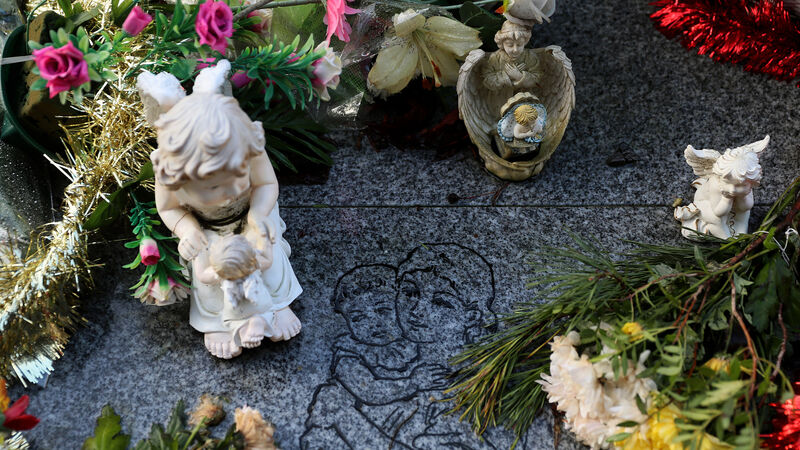
Many were simply experimenting with their sexuality and, as a result, were terrorised by the Church, the State, and society. I am one of the lucky ones: I got out alive and found a family that loved me and always made me feel “legitimate”. Nine thousand of my peers didn’t survive and many lie in unmarked, mass graves.
It is not acceptable, anymore, for us, as a people, to continue to blame just the Church and State. We need to quickly grow up and accept our part in these atrocities. We continually voted these people in, we shook their hands at our doorsteps, we attended their Mass, and put money in their baskets.
We welcomed them into our homes and gave them the best biscuits in our good rooms.
We let them christen our children long after we had found out the true extent of their sexual abuse of the most vulnerable in our society. We thronged to their churches to get married. We decided it was more important to protest water charges than denounce an institution and government that presided over the rape and abuse of our most vulnerable people. And we voted them in, time and time again. If this is not a mandate, then what is?
Ronan J O’Halloran,
aka Paul Anthony Johnston
Naas
Co Kildare
Oppression of women was goal
Micheál Martin and Archbishop Eamon Martin have both apologised, profusely and unreservedly, for the society that created the mother and baby homes. However, they gloss over the fact that the Church and the conservative political parties created this society.
The conservatives wanted to oppress women, and so did the Church. In 1922, Michael Collins denied the vote to women under 30. We could have had a very different society, but they chose to mould one based on conservative and religious values. This can’t be a situation of forgive and then forget certain details.
Jack Desmond
Bandon
Co Cork
Misogyny to blame for scandal
“The only thing necessary for the triumph of evil is for good men to do nothing.” - Edmund Burke.
Our cruel, misogynistic society has so much to answer for.
Emer O’Shea
Dublin 18
Front page was the best I’ve seen
The front page of Wednesday’s Irish Examiner, on the mother and baby homes scandal, was so powerful.
For me, this is one of the most extraordinary I’ve seen: Well done.
Angela Dowling
Tralee
Co Kerry
Taoiseach sorry, but we pay
The Taoiseach’s apology, this week, for the mother and baby homes, is not worth the paper it is written on.
Why should our taxes pay for governmental or religious mistakes?
Liam Mounsey
Ballyfoyle
Co Kilkenny
The injustice in our midst
How we treat the most marginalised in our society is the touchstone of our humanity.
Our cold and cruel inhumanity towards unmarried mothers and their children has been laid bare by those who have testified to the Commission of Investigation into Mother and Baby Homes.
But another, festering, gaping wound of injustice within our society is present for all of us to see and nobody in the future can say they weren’t aware of it.
I’m speaking of the State’s unjust treatment of asylum seekers, which will return to haunt us.
We can’t wait for another commission of inquiry to shame us into action.
Brendan Butler
Malahide
Co Dublin
Thinking behind homes still there
The coverage of the recent report speaks of the mother and baby homes as a shameful legacy, but the word legacy brings with it a false sense of completion.
We may have closed the doors to the homes but the thinking that supported their existence remains very much alive.
The use of term legacy leads us to believe that the segregation and removal of basic human rights that contributed to the abuse within these homes is something of the past.
Something the current Government would have no part in.
Maybe instead of neatly confining the events in the mother and baby homes to the past we should, do as the nuns suggested, look to our sins. We should look at how we continue to treat the most vulnerable in society. How our treatment of people turns them from potential members of the community to vulnerable outsiders kept at arm’s length.
We should look at how we treat those who come to our country in search of a new home. Our country of cĂ©ad mĂle fáilte seeks only to marginalise and isolate those who seek asylum here.
People are left to wait for years in sub-standard, often overcrowded accommodation, while they have multiple restrictions placed on their human rights before their case is even heard.
Let this report be a forewarning for the future of the true cost of institutionalisation not an attempt at closure of an issue that can never be healed. Let us all wear our shame so heavily that we refuse to let anyone live anything close to that experience ever again in our country. Let there be an end to it. Let’s end institutionalisation in all its forms. Let that be the legacy of our country.
Ann Marie O’Sullivan
Cork City
Leaving stress at an all-time high
I would like to address two things; firstly, the Government of Ireland, who, up until now, have been extremely hesitant to listen to the pleas of my fellow students and I, and secondly, the Leaving Certificate students themselves. I hope that what I have to say is both relatable and understandable and that it will lead to some clarity.
Firstly, I would like to address the Taoiseach MĂcheál Martin and the Minister for Education Norma Foley to express my intense worry for the Leaving Certificate examinations, that are said to be taking place in June.
I would like to start by thanking you, for finally addressing the physical health of me, my fellow students and our families, by not forcing us to return to school last Monday, January 11. However, I think it’s about time for you to address our mental health now.
The Leaving Cert is a stressful and anxious time for every student. It requires so much time, effort and devotion. Last year, with the arrival of Covid-19, the stress, anxiety and worry of students multiplied exponentially. Now, not only are we frightened for our exams, but we are frightened for our lives, and the lives of those around us. We are unprepared to sit our exams in June, never mind mock examinations in three weeks. We are concerned about our practicals, orals and schoolwork, and we have been voicing these concerns continuously over the last few weeks on social media platforms, only to be ignored.
It is clear from a number of surveys online that an overwhelming majority of students feel it is unfair to sit the traditional Leaving Certificate this year. We have missed out on much more time than last year’s students. We are the first cohort of students in the history of the state to face major disruption to two of our senior cycle years. Some students feel predicted grades should be made optional, and others wish to sit their exams. Each and every student deserves to be listened to. That is why I have a number of proposals for you:
We make predicted grades optional by allowing those who want to sit their exams to do so.
We delay the exams so that students can have an adequate amount of time to prepare for them.
We create a fairer Leaving Cert, in which changes are made that are much more substantial than the changes that have been made so far.
I would like the Government to open their eyes to the thousands of students pleading for help, by considering the proposals I have outlined, particularly that of making predicted grades optional.
My fellow students, to each and every one of you, I am so sorry for everything you’ve had to endure this past year. I am with each and every one of you.
I know it’s been extremely difficult, but I can promise you that an end will come to the anxieties of both the pandemic and the Leaving Certificate.
Jake O’ Loughlin
Leaving Certificate student
Gaelcholáiste an Chláir
Ennis, Co Clare
Not all students want cancellation
I was surprised to read in yesterday’s paper the unqualified claim that “Secondary school students are calling on the education minister to cancel the traditional state exams for 2021” (“Secondary school students call for alternative format to traditional state exams,” January 13).
There are doubtless some who are doing so. However, to phrase their demand in such terms gives the impression that those few represent the many, and can speak with authority on their behalf.
On the contrary, the article reveals that the claim is being made by the Irish second-level students’ union.
I do not doubt its bona fides, but I also believe that hardly any of the students this body purports to represent have ever heard of it, or, at least, had not before the recent furore over the Leaving Certificate. The majority of the country’s pupils certainly played no role in electing its officials.
As such, its opinions can hardly be considered representative of the wider view among this year’s Leaving Certificate class. As a member of that group of students, and being cognisant of the imperfect nature of calculated grades, I can certainly say it is not representative of mine.
Oscar Despard
Portobello, Dublin
A Covid-19 perfect storm?
Is the Irish government responsible for creating a Covid-19 perfect storm, through scientific ignorance and poor decision-making? The cumulative scientific evidence on the risks to public health of social gatherings in a variety of controlled settings was clear by mid-November and was set out in several published studies: None of the measures being taken by cafes, restaurants, gyms, and so on, could mitigate the risk of super-spreader events, which are responsible for between 80% and 90% of Covid-19 infections. On November 10, Nature published a paper that found that, “on average, across metro areas, full-service restaurants, gyms, hotels, cafes, religious organisations, and limited-service restaurants produced the largest predicted increases in infections, when reopened”.
However, super-spreader risk factors aside, a study published by South Korean researchers, at the end of November, indicated that even in protected hospitality environments, diners between 4m and 6m from an infected person in an air-conditioned restaurant became infected. The 1m-2m social-distancing control fails to mitigate infection risk where airflow is concerned: This has significant implications for all social gatherings.
Why, then, did the Government ignore scientific evidence, downplay the risks, and open hospitality and other settings?
Government policy in several other countries, led by science rather than by economic opinion and industry lobby groups, protected citizens’ health and saved many lives and livelihoods. As this paper noted, reopening hospitality in December ran counter to Nphet advice. It is not unreasonable to conclude that reopening restaurants, cafes, and gyms, and relaxing household restrictions created a Covid-19 perfect storm, the responsibility for which lies with the Government.
Their actions gave the public a false sense of security in the weeks before Christmas, with disastrous consequences, as Nphet indicated might happen.
The people of this country do not need future government apologies for avoidable Covid-19-related deaths and long-term health issues, or for the associated social and economic consequences of failing to control the spread of the virus. They need the Government to act now: To adequately assess, mitigate, and control Covid-19 risk; to learn from its many mistakes, and to be science-led, and only science-led, in all risk-informed decisions to protect public health.
Professor Tom Butler
Courtbrack
Blarney
Co Cork
Accelerate the vaccine rollout
The rollout of the vaccine is not what it should be. I am concerned by the lack of communication between those in charge and the people who need the vaccine.
I had a heart transplant a couple of years ago, so my immune system is shot. I have insulin-dependent, type-2 diabetes and I am on dialysis three days a week; I fear for the health and wellbeing of nurses, staff, and doctors who give us (dialysis patients everywhere) specialised care in the hospital.
I am 67 and a productive member of society. I have been through a lot the last few years.
I struggled with physical and emotional ups and downs, and I’ll be damned if I am going to let something I cannot see take my life. So, I am asking the HSE to get their act together and roll the vaccines out. Work 24/7.
Kevin Devitte
Westport
Co Mayo
Lockdowns are short-term pain
Surely, as regards lockdowns, we take the short-term pain to deal with the long term. Those who claim to be the most sensible on matters of economy are blinded by their own short-sightedness, but it is the rest of us who pay the price.
Glenn Fitzpatrick
Blessington,
Co Wicklow

Subscribe to access all of the Irish Examiner.
Try unlimited access from only €1.50 a week
Already a subscriber? Sign in