Irish Examiner view: It's in our interest to support bees
It is vital that pollinators not only survive, but thrive 
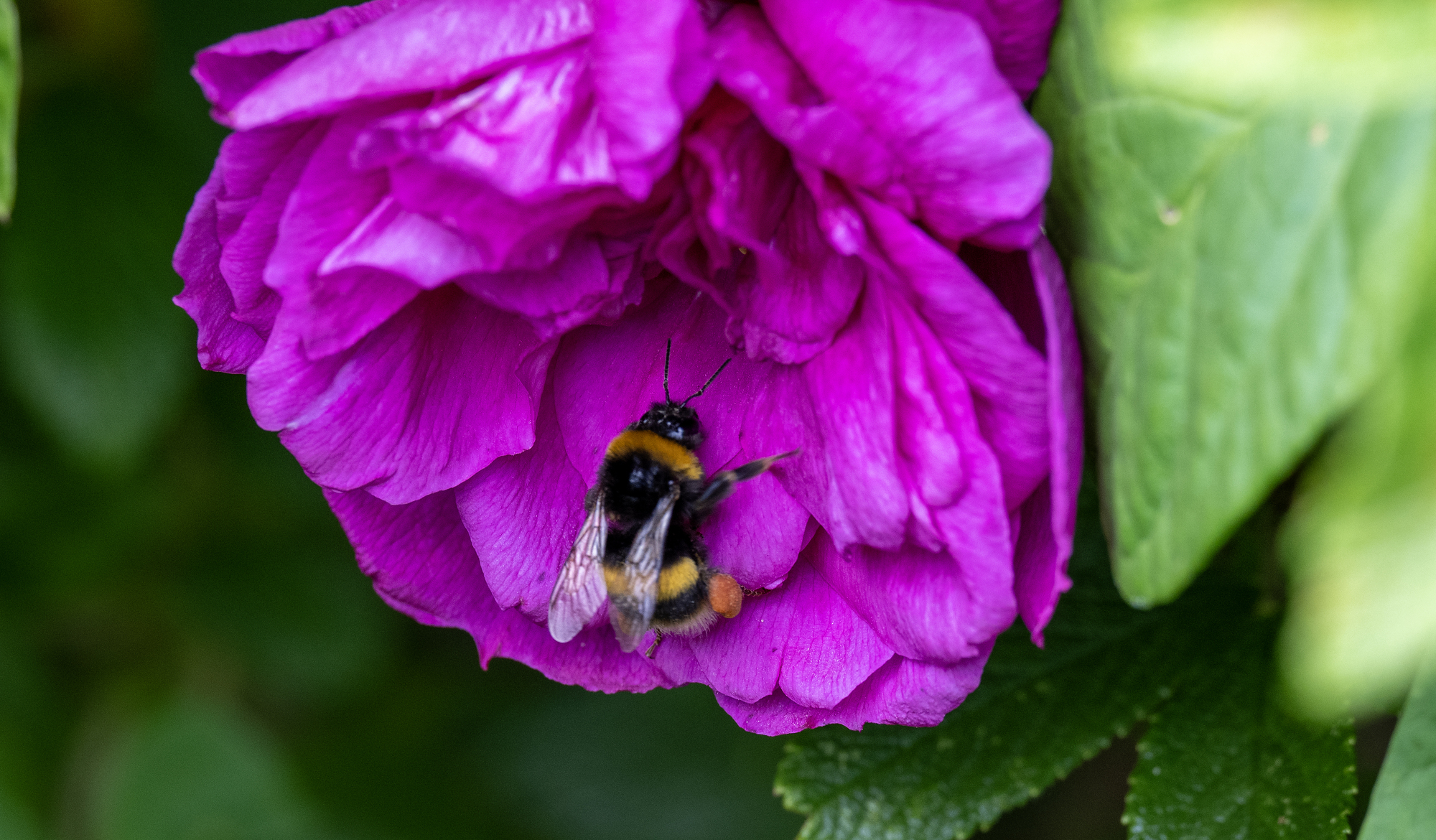
To maximise biodiversity, the range and quantity of bees and other pollinators must be maintained and supported so that food production will not be imperilled. File picture: Domnick Walsh

To maximise biodiversity, the range and quantity of bees and other pollinators must be maintained and supported so that food production will not be imperilled. File picture: Domnick Walsh

Even if our motives are entirely self-serving, it pays to save the bees. Getting in step with an ambitious new five-year strategy which has just been launched is something we should do eagerly if only to save ourselves.

It can take a while for the penny to drop but by now it is resoundingly clear that we need to take action.

The latest phase of the all-ireland pollinator plan, coordinated by the National Biodiversity Data Centre, is described as a strategy to provide pockets for nature every 200 metres to support pollinators — not least our pollinators-in-chief, Ireland’s 100 species of bees — as they only travel that sort of range from nest to feeding site. Worryingly, up to one third of them are now estimated to be at risk of extinction.

To maximise biodiversity, the range and quantity of bees and other pollinators must be maintained and supported so that food production will not be imperilled.

Today’s pollinator plan is not, however, yet another story of environmental doom.

To a degree it is inspirational in its call to action, bringing together farmers, local communities, businesses, public bodies, and indeed anyone with the proverbial yard of grass outside their door.

It is a vision for the future of the Irish landscape with biodiversity at its heart. Rather than taking the view that this is a rural challenge, it is in fact a national one, where everyone is invited to put their shoulder to the wheel.

In terms of the island of Ireland it is also an issue without borders. There are basic actions that could make a fundamental difference.

For instance, with grass-cutting, don’t mow, let it grow. Or reduce mowing to once every four to six weeks. This encourages dandelions and clover to establish naturally, providing food and shelter for bees.

And, when planting trees, choose willow, hawthorn, rowan, crab apple, and holly, select plants that are nectar- and pollen-rich, and avoid insecticides.

Minister for nature, heritage and biodiversity, Christopher O’Sullivan, says that — in co-operation with his counterpart in Northern Ireland, Andrew Muir — there are 42 councils, more than 120 organisations, and in excess of 400 businesses lined up to play a part in the programme.

On this larger scale, the plan covers sectors including farmland, public land, transport networks, communities, and businesses, which the biodiversity centre says today will “drive landscape-scale change, connecting individual actions into a coherent ecological shift towards an island where pollinators can survive and thrive”.

When the many thousands of gardeners — of all ages — join the campaign, with baby steps and bigger strides, it will be an opportunity for everyone to light a candle rather than curse the darkness.

The plan appeals in equal measure to our better nature but also our selfish interests.

Wild plants that are mostly animal-pollinated are, the plan says, “fundamental to tackling climate change: Plants take carbon dioxide out of the atmosphere, convert it, and store it in their tissues. They form windbreaks, prevent soil erosion, slow down flooding, mitigate extreme temperatures, and neutralise pollutants.”

We should do it for the bees. We should do it for ourselves.

Survey shows pressure faced by young people

Friday is World Population Day, and the UN is marking it with the results of a survey of over 100,000 young people in 73 countries, from America to Zambia.

While Ireland is not one of the surveyed countries, it may have echoes for those aged between 25 and 39 here.

Despite myriad social changes globally, marriage continues to be seen as the ideal relationship arrangement among most surveyed young adults.

Over two thirds of respondents aspire to marriage, either directly or following a period living together. While the number happy to be single is substantially smaller, it is still a relatively significant minority, with 16% saying they are happy to stay single.

Wanting marriage or a similar partnership is one thing but finding somebody is not automatic — even with the prospects dangled by social media dating platforms such as Bumble, Tinder, and Hinge — and “the survey underscores a notable gap between partnership aspirations and current relationship status.

Approximately one quarter of respondents aged 25-39 who ideally want to marry or live with a partner are currently single and not dating.

The report challenges the age-old gender notion that it’s a man’s world. When it comes to being lucky in love, the survey says that, of the men wanting to settle down with one person, 30% of them remain single.

And, in this survey the number of women who are single, even though they’d like a permanent relationship, is 19%.

Housing, unsurprisingly, is an issue that surfaces throughout. ‘Plus ca change’, whether it is France, Sri Lanka, or Azerbaijan.

“Economic and housing constraints are the most commonly reported barrier to partnership,” the report says. And these are the same obstacles to having a baby.

World Population Day — yet another day when the advocates for an issue are looking for a moment of attention from policy-makers pulled hither and yon by lobbyists to the left and right.

Hopefully, some of the realities of life for young people in 2026, as borne out by this survey, will be heard above the clamour.

More in this section

Revoiced

Newsletter

Had a busy week? Sign up for some of the best reads from the week gone by. Selected just for you.

Cookie Policy Privacy Policy Brand Safety FAQ Help Contact Us Terms and Conditions

© Examiner Echo Group Limited