Irish Examiner view: Questions arise about our tribunal system
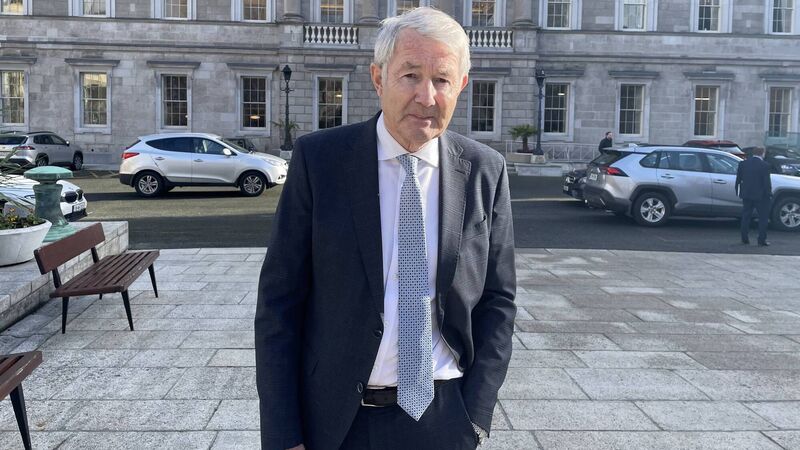
Michael Lowry TD hit back this week at the Moriarty Tribunal. File picture: Gráinne Ní Aodha/PA
For many readers, the Moriarty Tribunal is a phenomenon from a nostalgia show like Reeling In The Years, destined to be associated forever with brief news clips of suited gents slipping into the lobby of an office building.
This week, the Moriarty Tribunal was in the news all over again, however, when Independent TD Michael Lowry said the Director of Public Prosecutions had opted not to bring charges against him from the findings of that tribunal. A garda spokesperson later confirmed that no charge would be brought.
For those in need of a refresher course, the tribunal was originally established in 1997 to examine payments made to former taoiseach Charles Haughey and to Mr Lowry. Its final report was published in 2011, when it was found that Mr Lowry had had an “insidious and pervasive” influence into the awarding of the State’s second mobile phone licence to Esat Digifone, a company owned by Denis O’Brien.
Mr Lowry hit back this week at the tribunal, saying: “Despite the unfair and unfounded opinions of the Moriarty Report, there are no charges being brought against me arising from the award of the licence; no charge of corruption, or misfeasance in public office; no charges of personal gain or bribery on my part . . .”
Readers may have little or no interest in the operation of the Moriarty Tribunal, but one of Mr Lowry’s assertions is worth considering. Pointing out that the tribunal took 14 years from its beginning to the publication of its final report, he added that the report was referred to the Gardaí for an investigation which then took 15 years.
This is unacceptable under any circumstances. Even allowing for a painstaking investigation into a challenging subject, this matter has been under scrutiny for almost three decades.
Questions arise here about the basic efficacy of the tribunal system and the processes of the gardaí which need to be answered. When any citizen must face 29 years of investigation, a worrying precedent is being set.
National defence has been a topic of discussion for some time now in Ireland, one made all the more timely because of the ongoing war in Ukraine and the more recent conflict in Iran. These conform to our image of modern warfare, from ground fighting to missile and drone strikes, but the dangers facing us are far more diffuse and complex.
For instance, some of our critical national infrastructure is seen as particularly vulnerable. Undersea communications cables off our coasts, along with gas pipelines and electricity interconnections, could be open to attack in the same way that undersea infrastructure in the Baltic Sea has been repeatedly damaged in recent years, with some of the nations involved blaming Russia for sabotage.
This context makes defence minister Helen McEntee’s plans for new legislation all the more timely. She is expected to give the naval service a new “clearly defined” ability to act unilaterally in some situations, including the power to board vessels operating in Irish waters and inspect their documentation, equipment, and activities on board.
It is clearly a basic tenet of security operations that those in the field have the ability to be proactive, to assess situations as they develop, and to respond accordingly. The minister is providing the legislative framework not just to empower the naval service to be proactive, but to improve co-operation between State security agencies.
The legislation also seeks to formalise the Defence Forces’ role in providing aid and support to bodies such as An Garda Síochána and the Revenue Commissioners.
The obvious question to ask is why we have waited so long for this level of co-ordination to be put on a formal footing, given the sheer variety of security challenges we face? At least it is being done now, and hopefully we will all reap the benefits.
The annual Cheltenham Festival continues across the water, with the annual pilgrimage of Irish supporters streaming into Prestbury Park every day for a feast of horse racing.
How many people are now making that pilgrimage, however? The event organisers are cognisant that visitor numbers have fallen in recent years — after an understandable spike in attendance immediately after the pandemic, last year’s meeting had an overall attendance of 219,000, the smallest in 10 years.
Different explanations have been offered for the decline, such as the racing industry’s general difficulties in attracting new supporters to the sport. Cheltenham Festival organisers have taken specific steps to revive their event — one strategy being used to boost those numbers is the reintroduction of Ladies Day for this year’s festival.
Two years ago, Ladies Day was renamed as Style Wednesday, but that did little for attendances: last year’s Style Wednesday brought in 41,949 attendees, the lowest festival crowd since 1993.
Cheltenham officials are not the only sports administrators facing attendance challenges. Four soccer games in Mexico were postponed recently after violence flared near Guadalajara, one of the host cities for this year’s World Cup.
That violence erupted after the death of drug lord Nemesio Oseguera, El Mencho, in a police operation — his cartel colleagues carried out attacks across Mexico, killing at least 25 members of the state security services.
The attacks have led to questions about security at the upcoming World Cup, and the safety of supporters travelling to Mexico in particular. The situation certainly puts renaming Ladies Day in perspective.


CONNECT WITH US TODAY



Be the first to know the latest news and updates