Irish Examiner view: Conservation plans will not be fulfilled without money
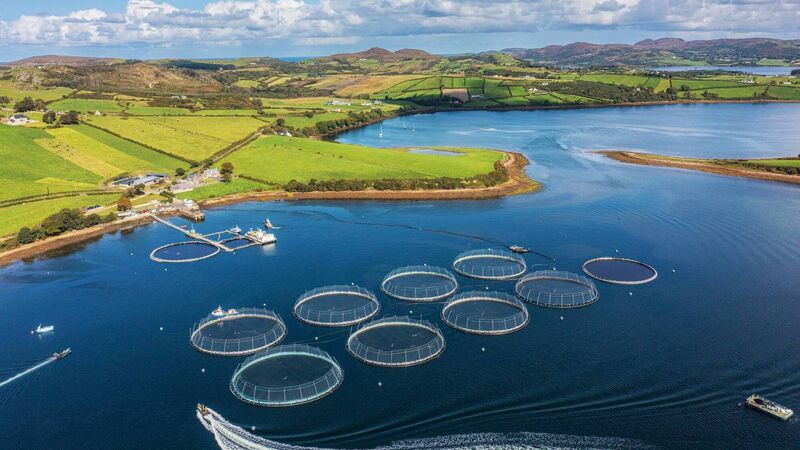
The bald fact is that we have never protected nature well and, as a nation, we are failing to provide the resources necessary to meet environmental targets, both notional and real
Irish Examiner view: Conservation plans will not be fulfilled without money

That an ever-increasing number of habitats have been designated as “inadequate” or downright “bad” is a sad indictment of a country which brags openly about the pristine beauty of its land.

The pressure on government resources has never been greater than it is at present, with all manner of sectoral pressures being piled on the exchequer for cash to assist in a dizzying array of much-needed supports.

But our unique environment — one of the main selling points for Ireland Inc — is one area where under-resourcing is reaching a critical touchpoint. If it is not swiftly addressed, it is something we will very quickly come to regret.


Ireland has never paid enough notice to protecting our unique habitats and animal species but, if we have to pay a price to do so, it will never be enough if we can preserve and propagate those things which we say we hold so dear.

The bald fact is that we have never protected nature well and, as a nation, we are failing to provide the resources necessary to meet environmental targets, both notional and real. The truth is that aspirational plans to protect nature will never be fulfilled unless we spend the money necessary to achieve workable aims.

These hard truths were outlined to the Oireachtas committee on fisheries and maritime affairs by a variety of experts this week, who reasoned that there is potential for so much hope when things are done well.

That we have to be told that we have — collectively, at least — never protected nature here, either on land or sea, and have singularly failed to resource properly those bodies tasked with doing just that, is a poor reflection on us as a nation.

As proud as we are of the beauty of our island nation and its unique environment and wildlife habitats, we have been shockingly bad at keeping it both healthy and thriving.

That we have never, for example, provided the necessary budgeting for such bodies as the National Parks and Wildlife Service is a matter for shame.

That an ever-increasing number of habitats have been designated as “inadequate” or downright “bad” is a sad indictment of a country which brags openly about the pristine beauty of its land. That we are now also in a cycle of climate change means necessary investment is vital.

We are still waiting on promised legislation to underpin a national protection strategy aimed at safeguarding 30% of our marine areas by 2030. It has not materialised and, if we delay much longer, we may be left with much to lament.

Seán Ó Sé is remembered as a cultural giant

Cultural iconography is a strange and sometimes wonderful thing that is often generational either by nature or necessity, but the ability to transcend age and peer groups is something few individuals or collectives ever achieve.

Seán Ó Sé was one such and, while in some parts of the world the Cork singer and raconteur might have been labelled simply as a “one-hit wonder”, here in Ireland he became a living touchstone to times past and connected people with a time and place few actually experienced.

His rise to fame — much as he abhorred to think he had achieved such a thing — was as spectacular as it was unusual. His association with Seán Ó Riada cemented a relationship which was central to the Celtic revival in the 1960s, and it laid a template for many others to follow.

In fact, his deep personal relationship with Baile Mhuirne and Cúil Aodha, somewhat unusual for a city boy, was nurtured by his attendance at Coláiste Íosagáin in the late 1940s and early ‘50s. It was where he first heard An Poc ar Buile, the story of a mad puck goat, the song which would make him famous.

But it was not just that song which defined Ó Sé, as his association with Ó Riada led him from success at the Feis na Mumhan to an involvement with Cabaret Gael Linn and subsequently Ceoltóirí Chualann were the stepping stones to his becoming something of an unwitting national treasure.

That Ó Riada liked his rich tenor led to the pair recording an EP for the Gael Linn imprint which was to become an instant hit here and almost certainly the first Irish language song to gain such popularity.

But, ever modest, Ó Sé stuck with his day job as a school principal in Cork City, and was very nearly as highly regarded as an educationalist as he ever was as a singer.

Still, his recording of The Banks of My Own Lovely Lee, with Ó Riada and the Radio Eireann Symphony Orchestra, for the Louis Marcus film Rhapsody of a River, is still regarded as the definitive version.

His was a life of modesty, but filled with an endeavour which engendered a popularity he never quite wanted but adapted to with a quiet acceptance.

He was an undoubted Irish cultural giant.

Guinness: The golden egg is losing its lustre

A pint of plain, Flann O’Brien famously reasoned, is your only man.

The ubiquitous pint is, however, becoming a very expensive item indeed and the 20c price hike indicated this week by Diageo, the owners of the Guinness brand, will be rolled out early next month.

Although Diageo will only be increasing the price by 7c, when Vat and publicans’ margins are factored in, the net cost will go up by as much as 20c.

Blaming the old staple — “industry-wide cost pressures” — the drinks company says that the increase is essential for Diageo to maintain sustainable operations in Ireland.

For many people, publicans included, this is palpable nonsense and simply another way of sustaining remarkable profit levels and shareholder satisfaction.

That it is the fifth price hike announced by Guinness in the past three years suggests an intent to kill the goose that laid the golden egg. That view is supported by publicans, many of whom are struggling to survive in a much-changed post-pandemic pub sector, collared by rising labour costs, increasing energy prices and ongoing inflation.

A pint of plain might still be your only man; soon it could be yesterday’s man.

x

More in this section

Revoiced

Newsletter

Sign up to the best reads of the week from irishexaminer.com selected just for you.

Cookie Policy Privacy Policy Brand Safety FAQ Help Contact Us Terms and Conditions

© Examiner Echo Group Limited