Irish Examiner view: What is the point of a minister if the OPW is not held accountable in the Dáil?
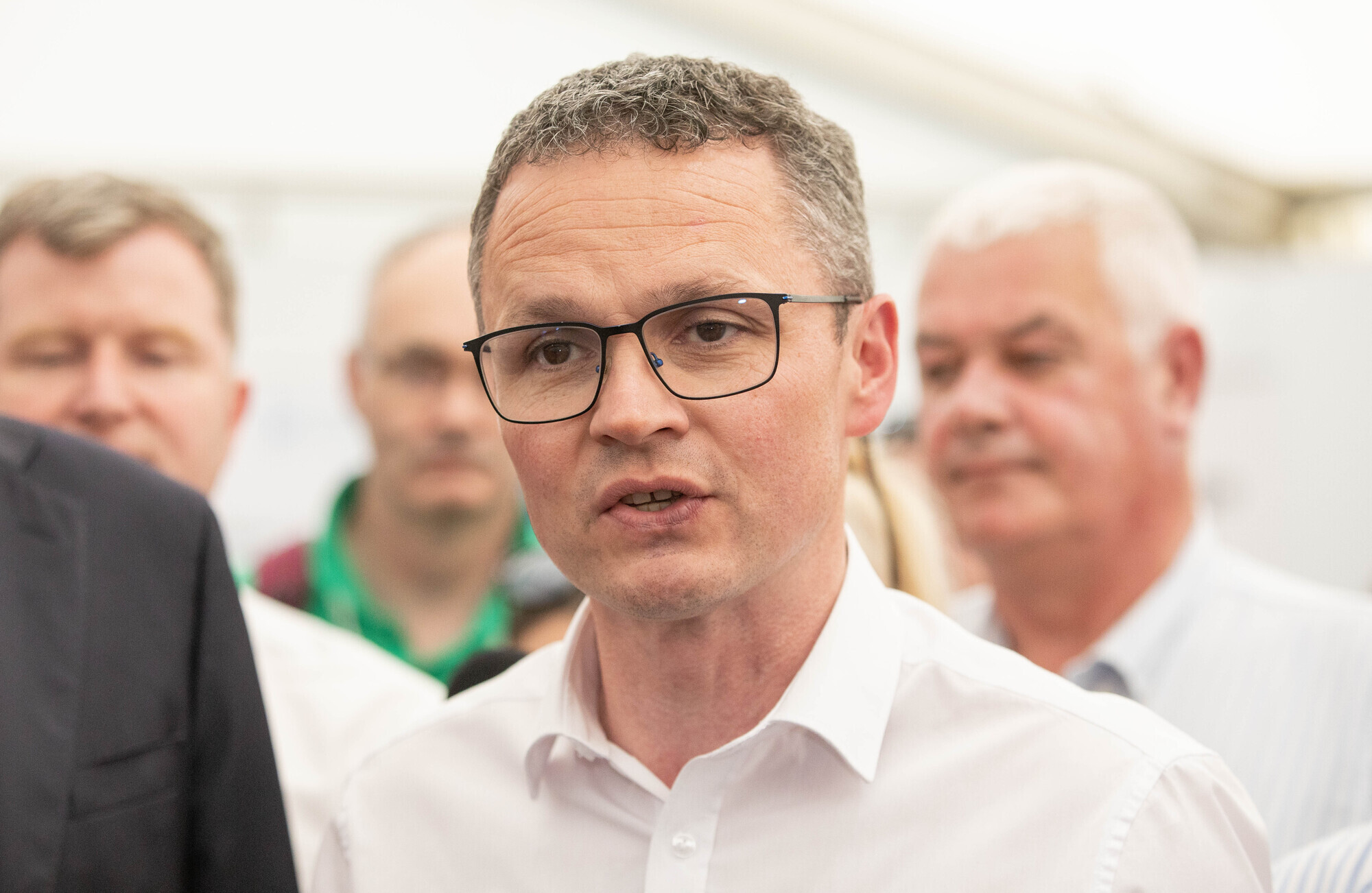
Limerick County TD Patrick O’Donovan was bullish when asked about the Leinster House bike shed and Government Buildings security hut
Irish Examiner view: What is the point of a minister if the OPW is not held accountable in the Dáil?

Limerick County TD Patrick O’Donovan, now the Further and Higher Education minister, was the minister of state with responsibility for the Office of Public Works when the controversial bike shed and security hut were constructed. Picture: Gareth Chaney 

There’s a story about Rupert Murdoch. When called before a select committee of the British parliament he was asked to explain the objectives behind the introduction of the Page Three girl to The Sun newspaper nearly 54 years ago.

“I don’t know,” answered the man from Melbourne, smartly. “The editor did it while I was on holiday.”

It’s apocryphal, as the best stories often are, but it was difficult not to think of it this week when two news stories ventilated the twin issues of accountability and responsibility within Irish society.

Limerick County TD Patrick O’Donovan said that the first time he heard of the €1.4m spend on the security hut at Government Buildings was when the Public Accounts Committee was informed.

The former minister of state with responsibility for the Office of Public Works (OPW) was in the role at the time both the security hut and bike shed were constructed.

However, Mr O’Donovan said he only became aware of the price tag on the hut when the chairman of the OPW appeared before the committee, and that he heard about the €336,000 bike shed through the media. 

And he was bullish about the reasons.

“I wasn’t responsible for it,” said Mr O’Donovan. “I didn’t approve money scripts because that is not the role of the minister of state for the Office of Public Works.

“The minister doesn’t make decisions or order particular projects to be done.”

He said that, as minister, you do not get a day-by-day detailed analysis with regard to individual projects as there are thousands of projects under way at any given time.

The minister is not the accounting officer and the minister is not the person who signs off on expenditure with regard to the OPW. 

Not on his watch then, but in accepting that the bike shed scandal was “embarrassing” for the Government, he acknowledges that there are political ramifications to this semi-detached approach.

One might imagine that there is a formal progress review, as there are in practically all other commercial concerns: “Are there any projects over-running; what are the main overspends; can the situation be recovered? Crucially, is there anything which is going to be difficult to explain to voters?”

Otherwise, what is the point of a minister of public works if the office is not to be held accountable in the Dáil?

If this episode was the only example before us this week, then it could perhaps be dismissed as one of those unfortunate things that we learn from and move on.

But the Comptroller & Auditor General’s report illustrates a range of systemic issues — overruns and difficulties in providing modular homes for Ukrainian refugees; huge delays in transport infrastructure, including the Limerick to Foynes rail project; failure to claw back money from 53,000 people who claimed the pandemic unemployment benefit while still working.

The report notes how the OPW has spent just €167,000 on adapting its flood management plans in terms of the onset of climate change over the past five years, particularly infuriating given disastrous weather events such as last October’s Midleton floods.

“To say that money management within the State is not ideal would be an understatement,” said PAC vice chairwoman Catherine Murphy.

Ms Murphy added that accountability in public services spending should be “the number one priority for Government.” 

Quite. One wonders why it isn’t already. 

Mary O'Rourke blazed a trail

The sad news of the passing of Mary O’Rourke means that Ireland has lost a senior figure and a doughty campaigner. She helped bridge a period where women went from being the power behind the throne to highly influential and visible power brokers.

Mrs O’Rourke came from a leading Fianna Fáil family and was a familiar face in three decades of government and opposition. She was a best-selling author and an in-demand media pundit. Her senior ministerial portfolios included public enterprise and education, and she was deputy leader of her party for eight years. She shared the Longford-Westmeath constituency with another of FF’s big beasts, Albert Reynolds, and their rivalry regularly toppled over into entertaining public squabbles.

At the ‘Battle of Tang’ in the 1987 general election campaign, the opponents and their supporters squared up to each other outside a church where Mass was being held.

Mrs O’Rourke was an enthusiastic supporter of Charles Haughey during his tenure as leader, a commitment that did not play well with Albert Reynolds, who demoted her when he became taoiseach. She took that as part of the weft and warp of the political game. When Bertie Ahern took over, she was swiftly returned to the party’s front rank.

Among her critics was Ryanair chief Michael O’Leary, who found her over-generous in her attitude to Aer Lingus and to Dublin Airport Authority. She also blocked a plan to connect the city’s two Luas lines, a decision which, it is suggested, followed strong lobbying from the capital’s business interests. It was reversed more than a decade later.

Assisted dying 

Changes in assisted-dying legislation gathered pace this week among our near-neighbours, and it is inevitable that reverberation will be heard in our own jurisdiction.

Labour MP Kim Leadbetter says her private members’ bill will give terminally ill adults a choice, while strengthening protection for loved-ones. “Too many people have been condemned to die in misery and pain,” Ms Leadbetter says. “My assisted-dying bill can change that.”

British prime minister Keir Starmer is supporting a change in the law, although MPs will get a free vote as a matter of conscience. The government will support the later, complex stages of drafting.

Legislation is also under way for Scotland, the Isle of Man, and Jersey. Under current rules, anyone in England, Wales, or Northern Ireland who travels with a loved-one to Dignitas in Switerland, or comforts them at home, remains vulnerable to prosecution for up to 14 years after the event.

In Ireland, in the spring, our parliamentarians recommended assisted dying for people with an incurable disease and just six months to live, or those with 12 months if they have a neurodegenerative condition.

Progress was delayed, firstly by the distraction of the Leo Varadkar resignation and then by a failure to reach consensus within the committee established to weigh the arguments. Its chair, Michael Healey-Rae, did not support the conclusions and produced a minority report.

This was always likely to be a contentious issue, particularly in rural Ireland, where the Catholic religion still makes its presence felt.

The Irish Examiner’s Rural Ireland Thinks Survey, which did face-to-face interviews, found that people who considered themselves religious outnumbered those who had no religion by 2:1.

Somewhat counter-intuitively, given that Pope Francis is an implacable opponent of euthanasia, and was for many years before his papacy, our survey found that a majority (57%) of people in rural Ireland would support laws to enable assisted dying: 32% strongly agreed, 25% somewhat agreed, 10% neither agreed nor disagreed, 5% somewhat disagreed; 16% strongly disagreed, and 9% didn’t know.

While the political timetable looks messy — no one is going to introduce a new and complex law now — it will be interesting to see whether any of the party strategists are tempted to place it in the grab bag of election promises.

For now, the numbers don’t stack up. But given 12 months’ experience by the folks next door, the proposition may start to look compelling.


x

More in this section

Revoiced

Newsletter

Sign up to the best reads of the week from irishexaminer.com selected just for you.

Cookie Policy Privacy Policy Brand Safety FAQ Help Contact Us Terms and Conditions

© Examiner Echo Group Limited